
RIYADH: “Continuum,” which runs until Nov. 7 in Diriyah, presents works by 17 emerging artists from 12 countries who’ve spent the past year participating in Diriyah Art Futures under the mentorship of artists Louis-Philippe Demers and Rick Treweek. The four pillars of the exhibition are: “Memory as a living process, exploring personal, collective, environmental and cultural remembering”; “Systems of power and optimization, examining technology as an extension of human decisions, desires and control”; “The body, perception, and presence, focusing on embodiment, interspecies relationships and immersive sensory environments”; and “Repetition, rhythm, and collective experience, exploring automated systems, labor, and human endurance.”
Here, we present five works from the exhibition.
‘Being Beside’
Evgenii Popov
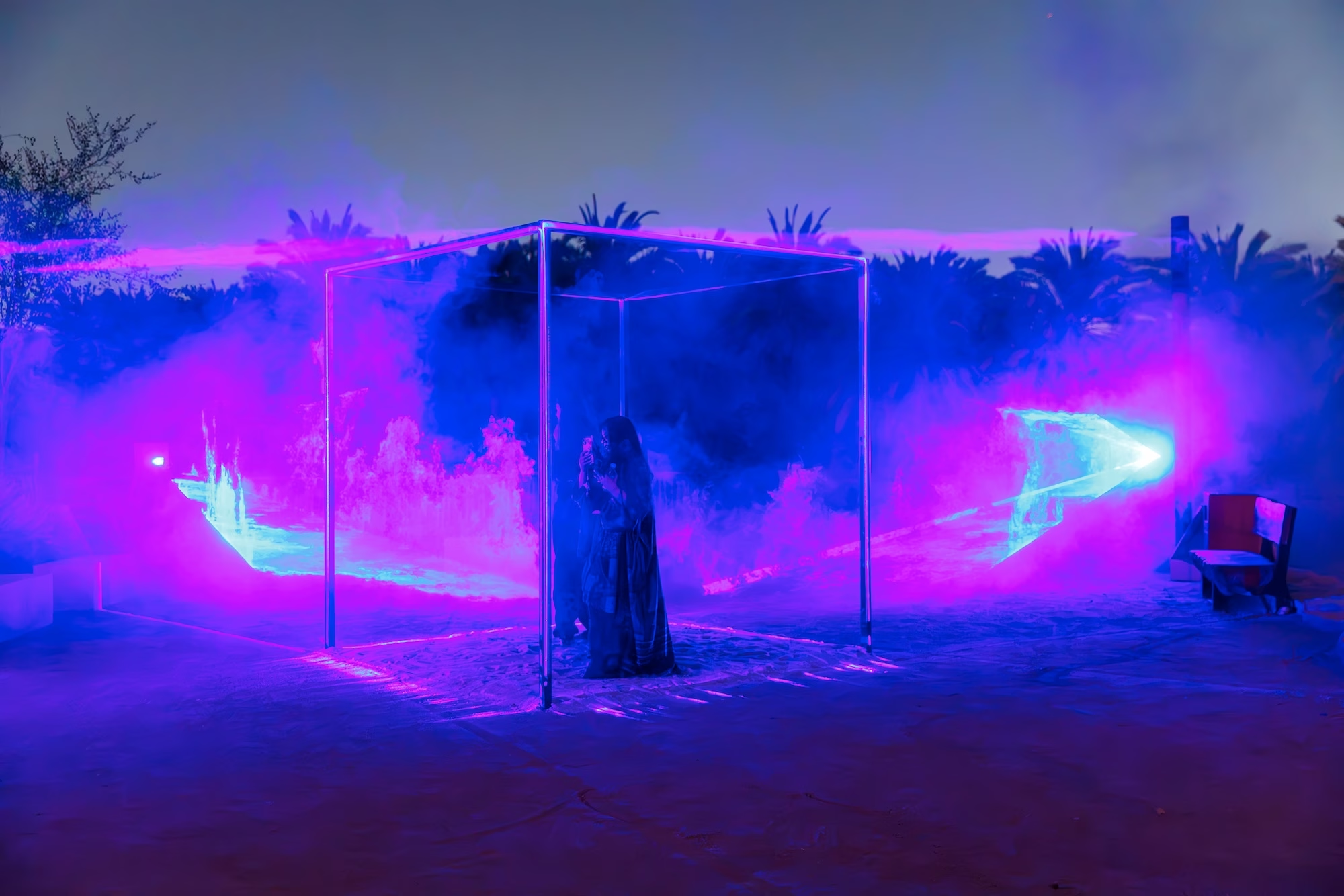
The Russian artist’s contribution to the group exhibition initially seems like a sculptural installation. However, the show notes explain, “once entered, it shifts observation to embodied participation.” Popov’s intention with “Being Beside” is to “momentarily unsettle the visitor’s sense of self.” Once you enter the structure, “four vanishing points pull visual attention toward the light itself, reducing reference to the external environment. As attention is reallocated, orientation becomes less stable spatially, perceptually, and cognitively.”
‘This is All a Big Test’
Njood Albawardi
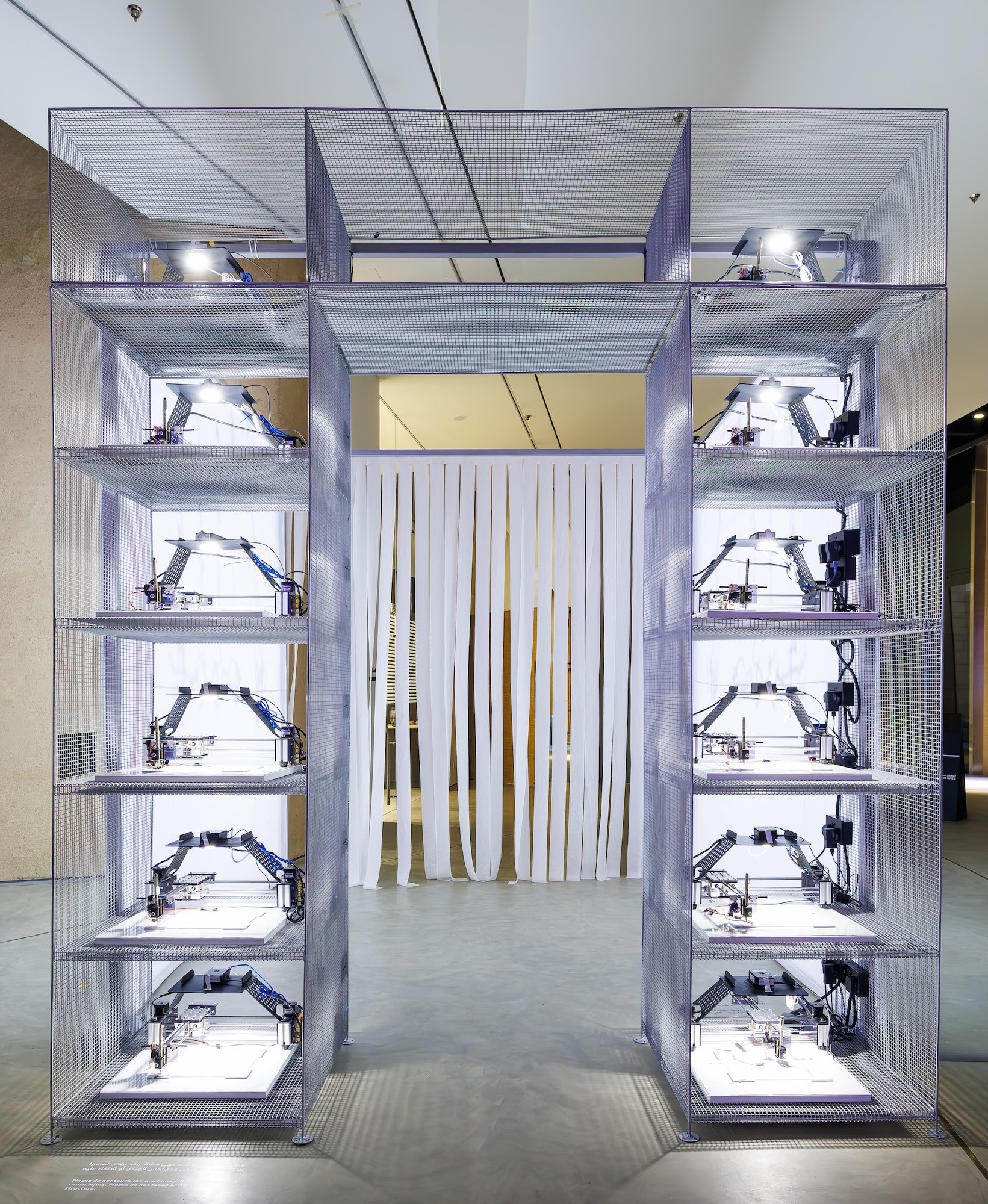
In her exhibition piece, Saudi artist Albawardi “explores the human relationship with automation,” positing that while machines are often seen as “clinical objects that somehow emerge fully formed from a void, entirely independent of human touch,” the reality is that all such constructions — “every precise layer of our technological landscape” — is in fact “an accumulation of deliberate human choices, from the specific structural layout of a microchip to the mechanical code running an interface.”
‘Does the Sea Die?’
Ezzat Shdad
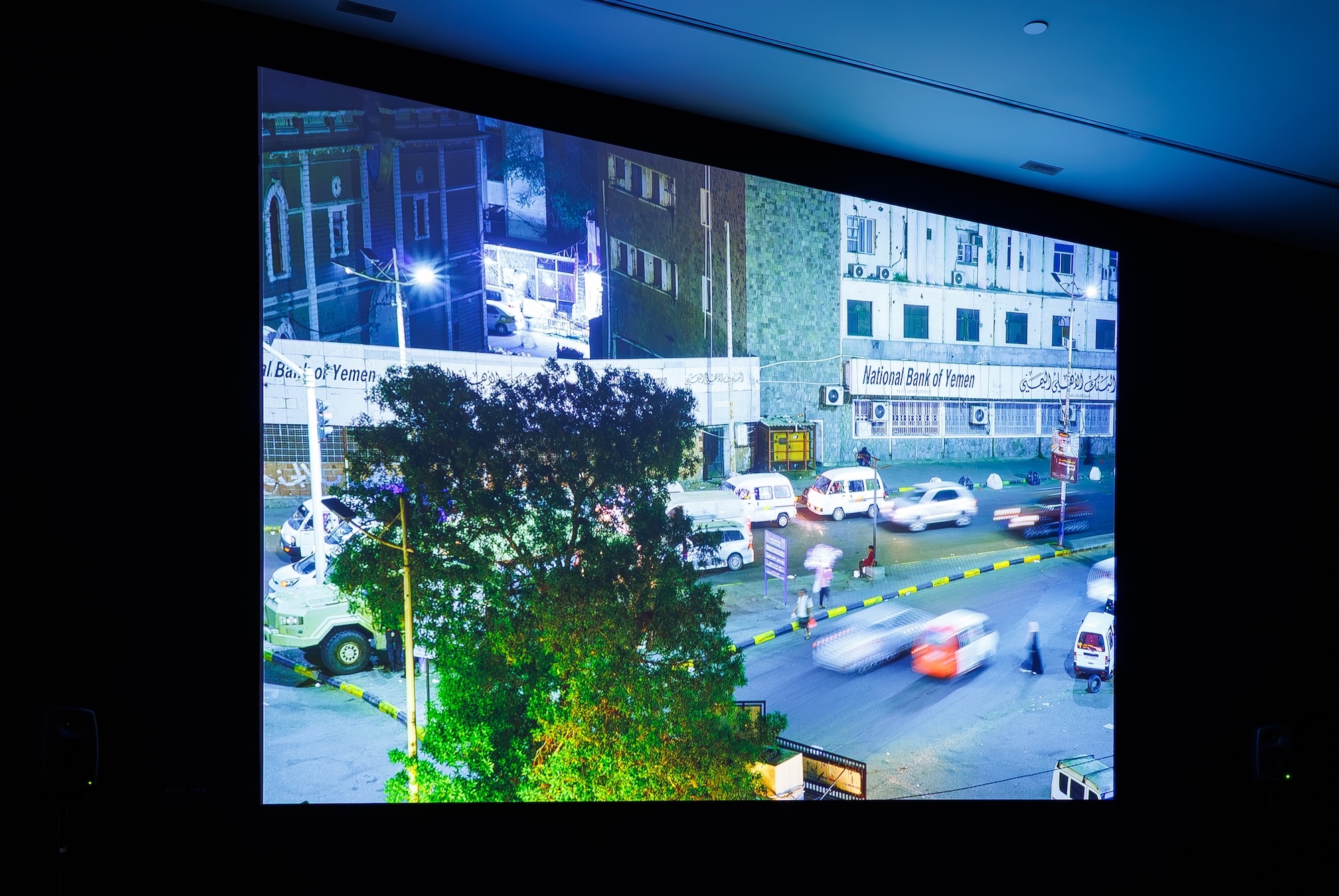
The Yemeni artist’s practice, according to the exhibition organizers, “addresses collective memory, urban deterioration, and postcolonial narratives.” For the show, he contributes “a film-based spatial installation” set in Aden and “concerned with the fragile space between holding on and letting go.” According to the notes, it “follows a man carrying the last trace of his mother. The sea, the city, and the wind become witnesses to an intimate act of grief: the attempt to release what cannot fully be released. Rather than approaching loss through direct explanation, the work moves through gestures, pauses, textures, and atmosphere.”
‘Avoid Nil’
Gabriela Reyes
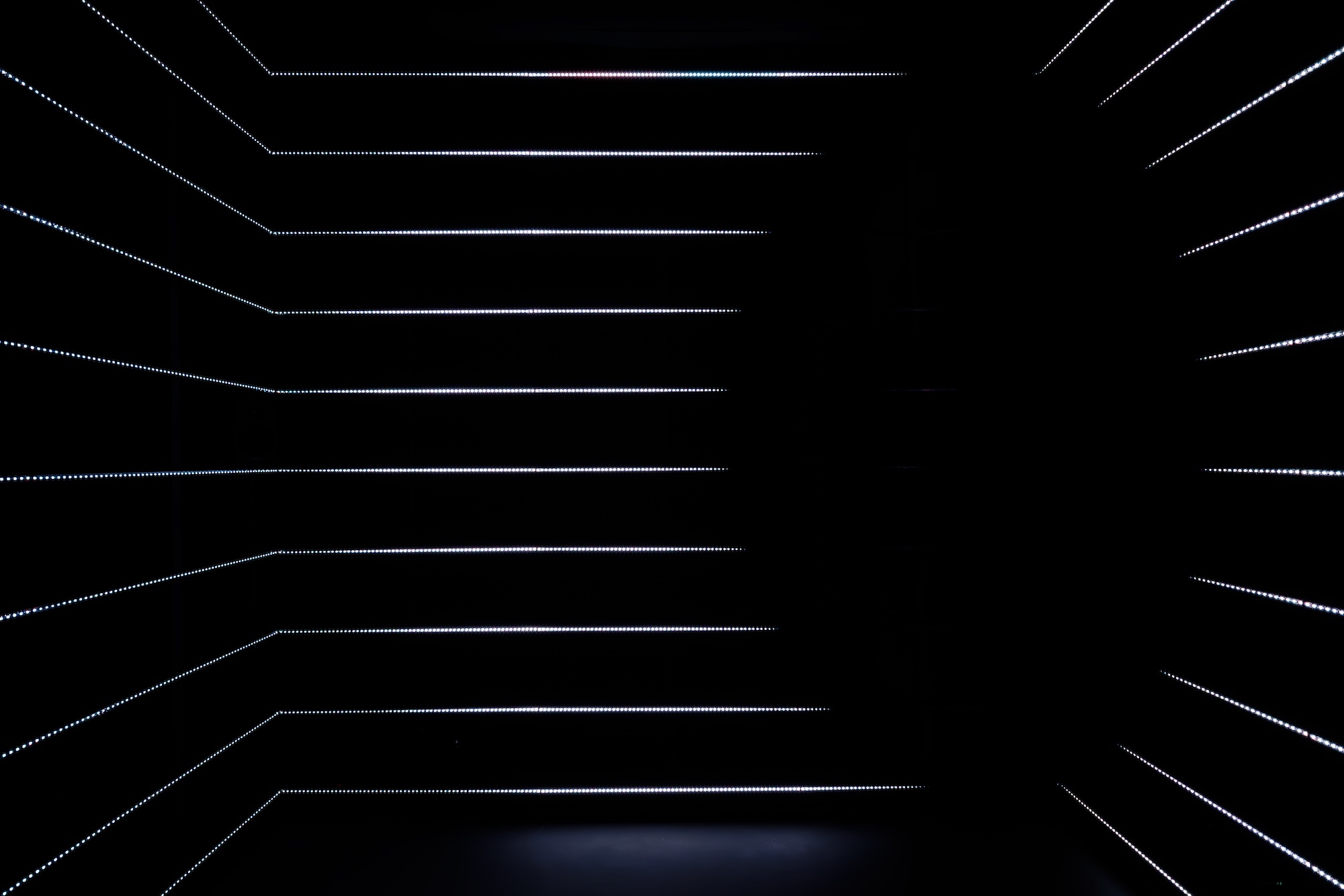
The Mexican artist, who works under the name Cero Tres, contributes this light-and-sound installation which extends the logic of visual programming interfaces (in which the term “avoid nil” is used to replace nil values, which cannot be processed, with 0 — “a potential value that represents absence while enabling presence or existence”) to perception and space. Thus, the piece “treats the void as an active medium, one in which intangible forces and basic conditions of perception become apparent.” It “proposes emptiness not as nothingness, but as potential: a condition that can host and reveal non-material phenomena through carefully tuned audiovisual stimuli.”
‘You may not like it, but this is what peak performance looks like’

Y7
Y7 consists of UK artists Hannah Cobb and Declan Colquitt. For “Continuum,” the duo tasked an AI system to make a video essay called “The Lazarus Mechanism: How Your Cells Cheat Death.” According to the show notes: “Y7 took the group exhibition as a design brief, working towards a single goal: to produce, through entirely quantitative means, the work most likely to capture attention.” Their chosen method meant “abandoning traditional notions of authorship,” instead “ceding creative decisions to a system” and thereby investigating “whether novel artistic methods can be derived from AI slop pipelines: processes in which content is shaped by its capacity to game human attention and to circulate, not by aesthetic intent or meaning-making.” It’s like a 2026 version of the Infinite Monkey Theorem.
