
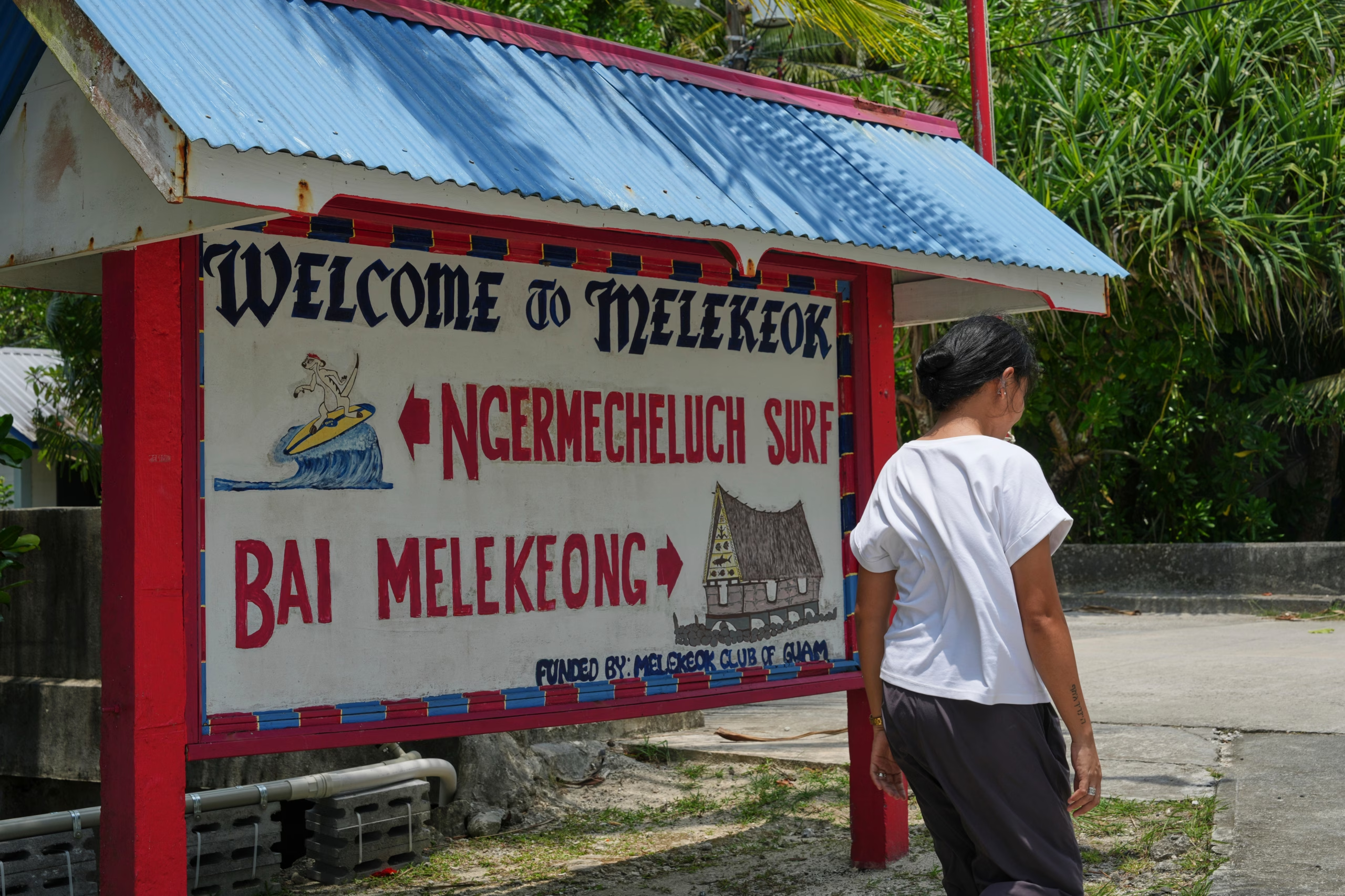
The United States (US) military will invest US$500 million (SR1.88 billion) to reconstruct and expand the main port in Koror, Palau, according to official statements from the Palauan government and the United States Department of Defense (US Department of Defense). The project, which involves rebuilding a deteriorating wharf originally constructed by Japan during the Second World War, expanding it to accommodate United States Navy (US Navy) vessels, and dredging the harbor to support military logistics, has raised concerns among local residents and officials about the potential for renewed superpower conflict and environmental harm.
Strategic significance of Palau for United States military operations
Palau, an island nation located approximately 500 miles (805 kilometers) west of the South China Sea and home to 17,000 people, is set to become a key site for United States military infrastructure. According to the Palauan government, the island will host a crisis-ready stockpile for United States Marines (US Marines), with land being cleared for a military radar installation and a remote airfield being widened to accommodate heavy aircraft. A petition signed by 2,000 residents was submitted to Palau’s National Congress, requesting assurances from the United States regarding the safety of the population in the event of conflict.
Under the Compact of Free Association, Palau receives substantial funding from the United States in exchange for granting the US military access to its territory. This port reconstruction marks the first major United States military construction project under the compact, according to Palauan officials. Ongerung Kambes Kesolei, founder of the Congress Point Institute, stated that Palau’s role in the Pacific’s second island chain has become increasingly prominent, making it a potential target in the event of regional conflict. At a recent community meeting, United States officials presented the port’s potential benefits, including images of cruise ships, but concerns remain about the absence of a dedicated passenger terminal.
Environmental and tourism impacts
The reconstruction of the port in Koror, Palau’s main tourism hub, has also raised concerns among traditional chiefs, scientists, and tour operators, according to interviews conducted by the Palauan government and local media. Environmental advocates, including biologist Ron Leidich, have expressed fears that the project will disturb vulnerable dugong populations and threaten nearby World Heritage-listed lagoons. An environmental impact assessment commissioned by the Palauan government indicated that dredging in Malakal Harbour would result in the loss of coral habitat, affecting endangered species. Leidich stated that the effectiveness of proposed measures to protect marine life during construction is questionable, and that the mitigation strategies may not be sufficient to prevent harm to the ecosystem.
Official responses and ongoing concerns
President Surangel Whipps of Palau acknowledged the necessity of upgrading the port, emphasizing its dual benefits for the Palauan people and for regional defense. The United States military’s Joint Taskforce-Micronesia stated that the port expansion would enhance Palau’s commercial shipping capacity and support United States military logistics. Plans include the construction of a restricted-access warehouse to facilitate United States Navy operations. Despite these assurances, concerns persist among local residents and environmental advocates regarding the potential for environmental degradation and increased geopolitical tensions. The United States Department of Defense and Palauan authorities have stated that further consultations and environmental monitoring will be conducted as the project progresses.
