
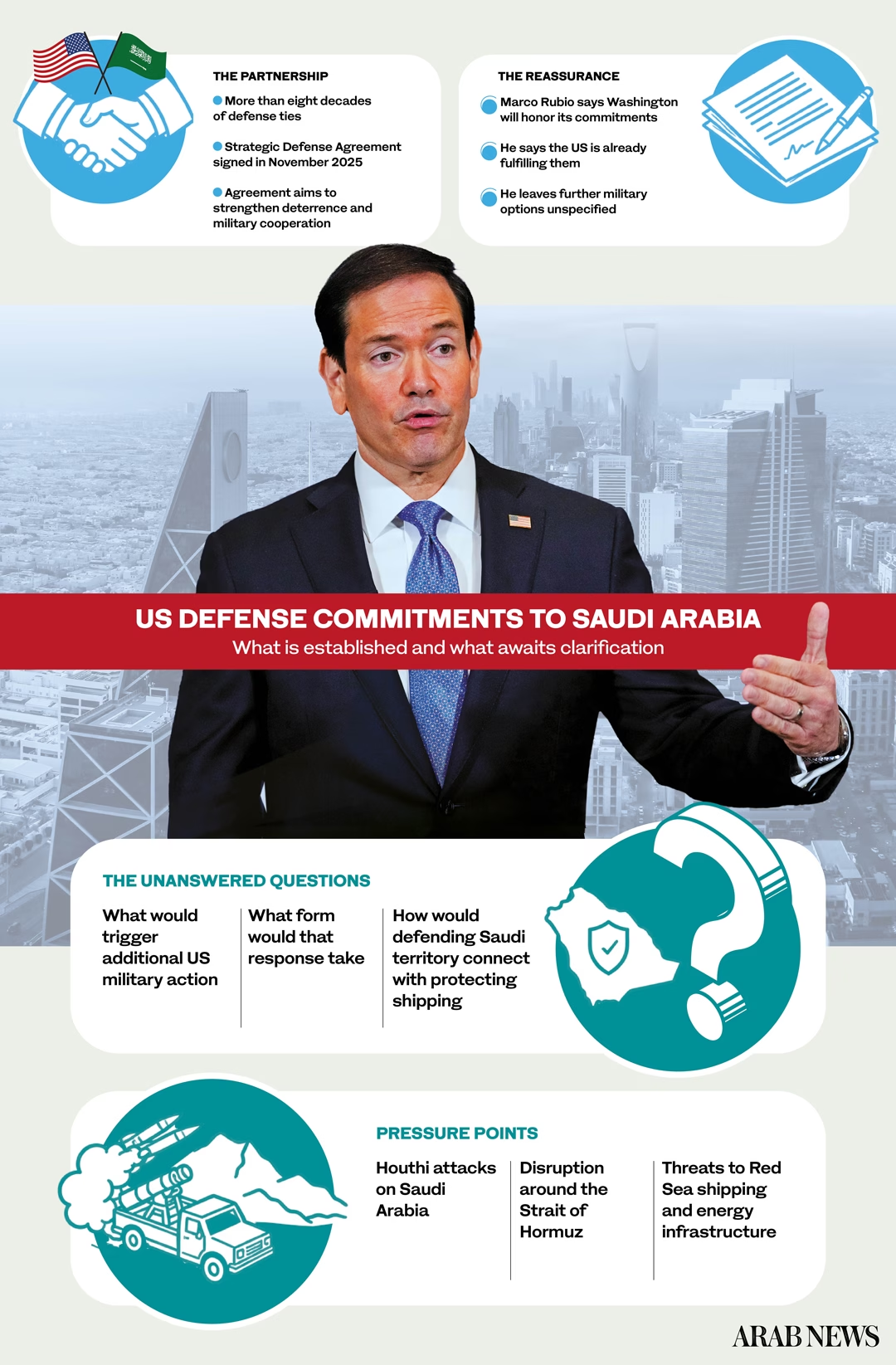
LONDON: From the perspective of Saudi Arabia, the value of Washington’s renewed defense assurances will lie in the support they deliver as Houthi attacks intensify, according to Abdulaziz Sager, founder and chairperson of the Gulf Research Center.
“For Riyadh, that support rests on three areas: military equipment, operational expertise and intelligence,” he told Arab News.
A partnership intended to strengthen deterrence is now being tested by attacks on Saudi territory and threats to the waterways on which regional trade depends. The immediate question, Sager said, was how Washington would put its commitments into practice.
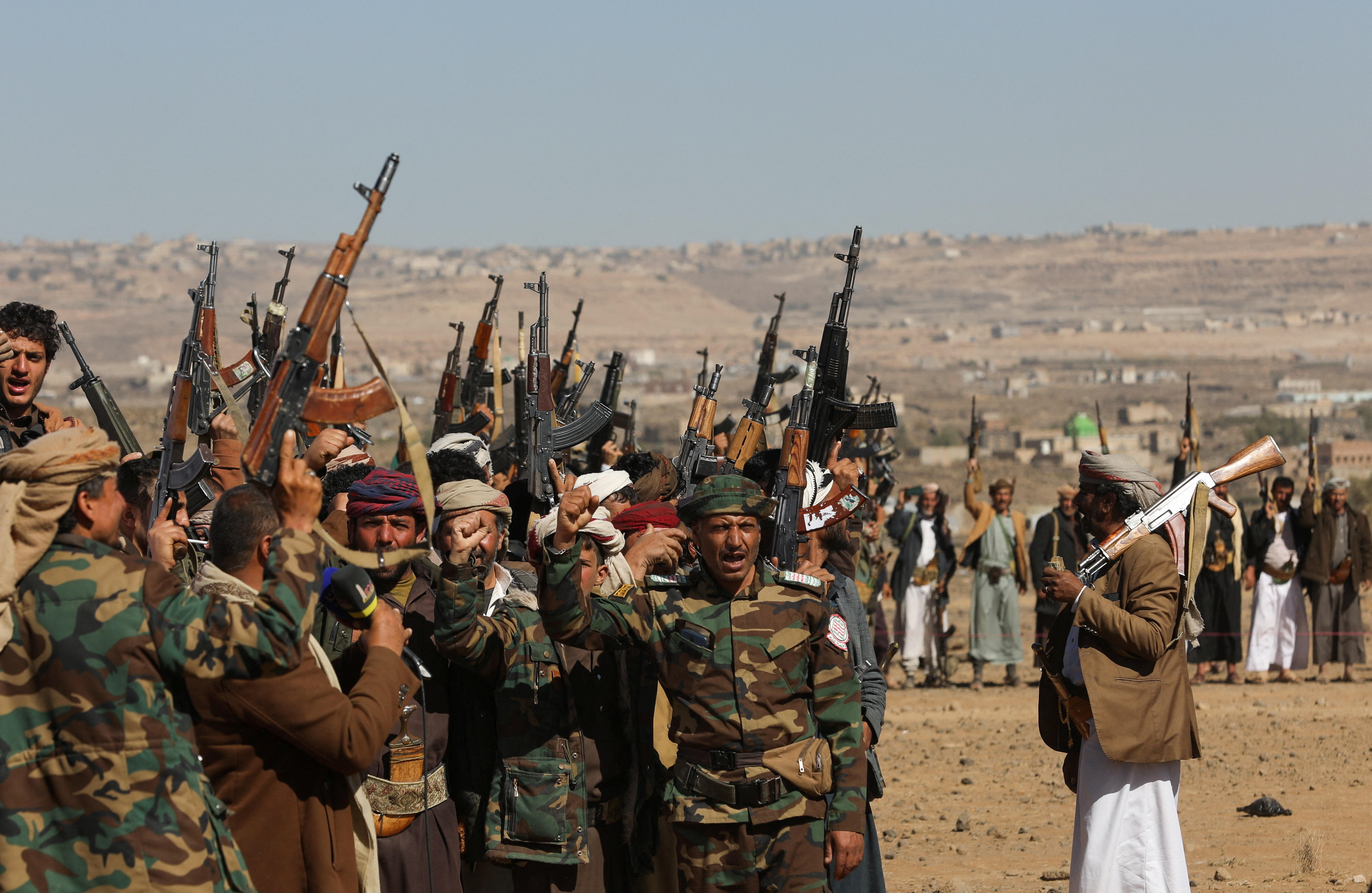
On Thursday, the Coalition to Support Legitimacy in Yemen said Saudi air defenses had intercepted six ballistic missiles fired by the Houthis toward Taif and Yanbu. Damage or casualties were not immediately clear, Reuters reported.
“Escalations and violations by the terrorist Houthi militia will be dealt with firmly,” the coalition’s spokesperson, Maj. Gen. Turki Al-Maliki, said.
The Houthis separately claimed, without providing evidence, that they had used missiles and drones to attack military sites in Jazan.
The latest developments followed an assurance from US Secretary of State Marco Rubio on Wednesday that Washington would honor its defense commitments to Saudi Arabia, and was closely monitoring the regional situation.
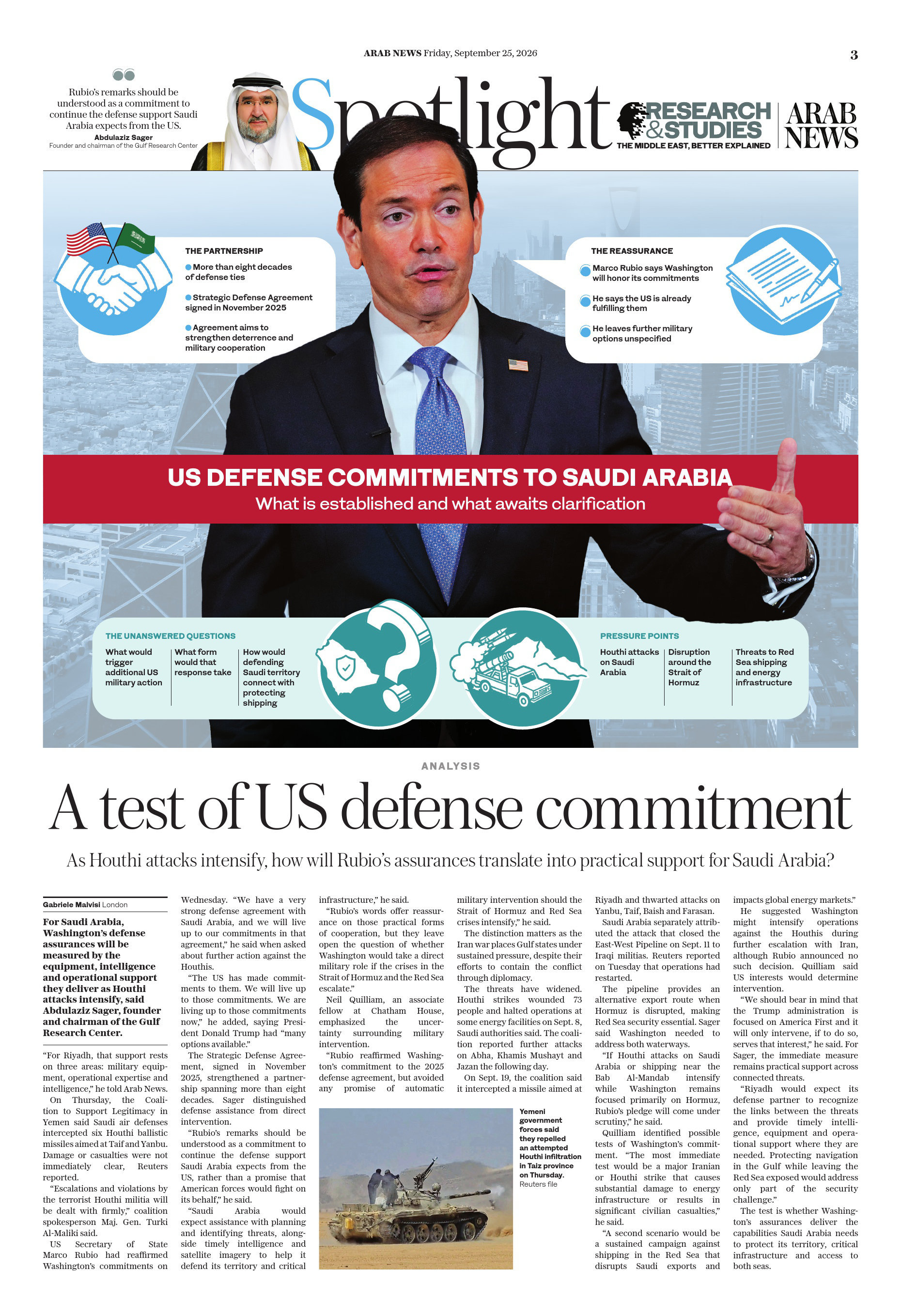
“We have a very strong defense agreement with Saudi Arabia, and we will live up to our commitments in that agreement,” Rubio said when asked whether President Donald Trump was prepared to take further action against the Houthis.
Rubio declined to specify what further military action Trump might take, while reiterating Washington’s commitments to Riyadh.
“The US has made commitments to them. We will live up to those commitments. We are living up to those commitments now,” he said, adding that Trump had “many options available” without specifying what they might be.
The distinction between practical defense assistance and direct US intervention is central to understanding that pledge, Sager said.
“Rubio’s remarks should be understood as a commitment to continue the defense support Saudi Arabia expects from the US, rather than a promise that American forces would fight on its behalf,” he explained.
The US-Saudi Strategic Defense Agreement, signed in November 2025, built on more than eight decades of defense cooperation. The White House described its aims as a strengthening of the partnership, and reinforced deterrence across the Middle East.
According to Sager, the immediate question was not whether Washington would honor the agreement, but how it would do so, particularly in terms of strengthening readiness and coordinating defense capabilities.
“Saudi Arabia would expect assistance with planning and identifying threats, alongside timely intelligence and satellite imagery to help it defend its territory and critical infrastructure,” he said.
“Rubio’s words offer reassurance on those practical forms of cooperation, but they leave open the question of whether Washington would take a direct military role if the crises in the Strait of Hormuz and the Red Sea escalate.”
Neil Quilliam, an associate fellow with the Middle East and North Africa Programme at Chatham House, offered a slightly different reading of the scope of Washington’s assurances.
“Rubio’s remarks were essentially a sop to Riyadh, offering reassurance without removing the ambiguity that surrounds US support for Saudi Arabia,” he told Arab News.
“He reaffirmed Washington’s commitment to the 2025 defense agreement, but avoided any promise of automatic military intervention should the Strait of Hormuz and Red Sea crises intensify.”
Those questions have become more pressing as the war with Iran increasingly places Gulf states under sustained security and economic pressure, despite their efforts to contain the conflict through diplomacy.
The scale of the pressure was apparent even early in the war. An Arab News analysis published on March 26 found that Gulf Cooperation Council member states had faced 83 percent of the Iranian missile and drone attacks tallied since the conflict began on Feb. 28, compared with 17 percent directed at Israel.
The defensive response has also been substantial. Adm. Brad Cooper, commander of US Central Command, told Congress in May that regional missile defenses had intercepted more than 6,000 attack drones and more than 1,500 ballistic missiles targeting US and partner forces, according to reporting on a subsequent Pentagon inspector general’s review.
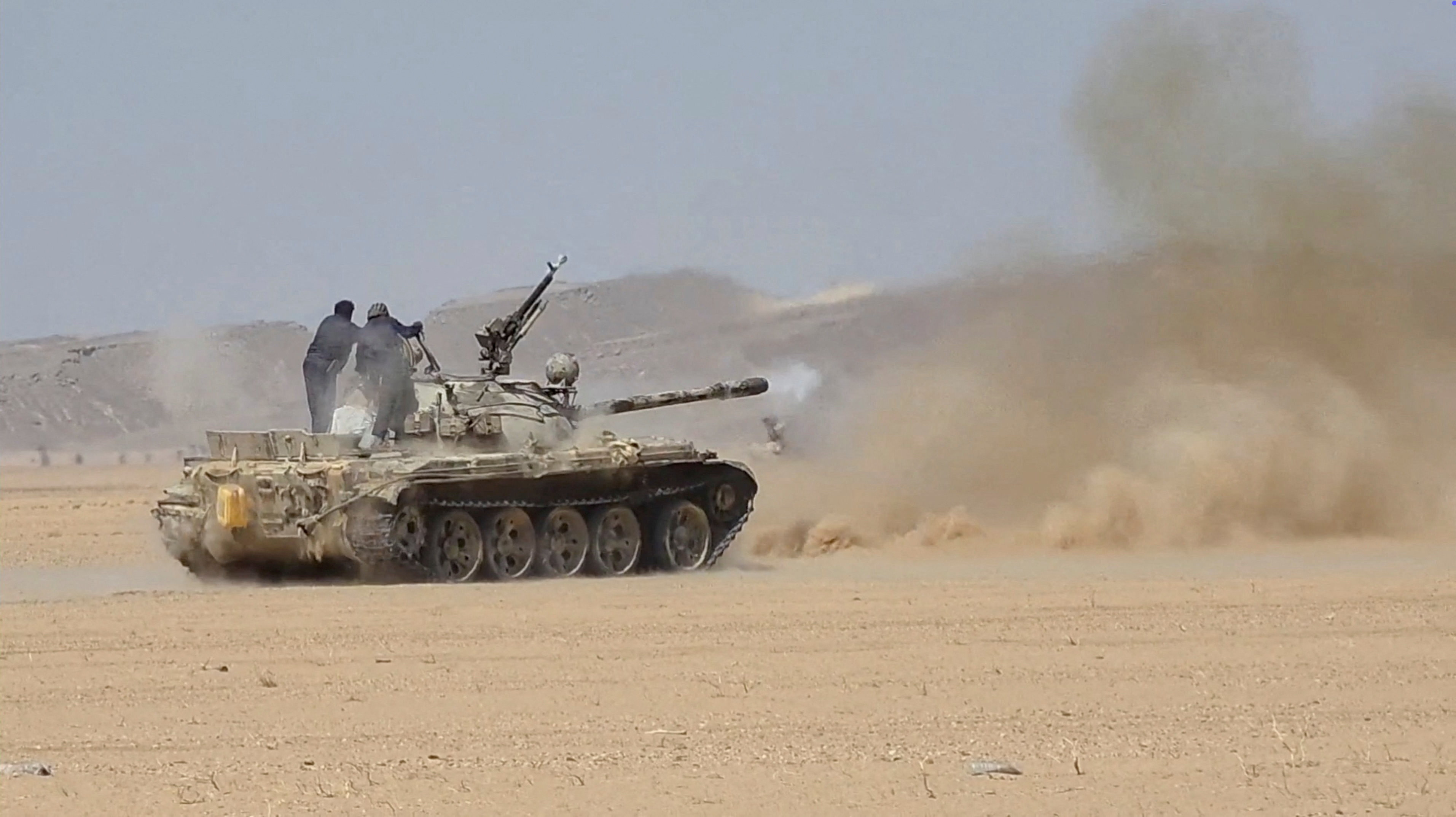
Houthi attacks have intensified over the past month, targeting Saudi cities and energy infrastructure. On Sept. 8, a wave of strikes wounded 73 people and caused fires that halted operations at some energy facilities, Saudi authorities said.
The following day, the Coalition to Support Legitimacy in Yemen reported further ballistic missile and drone attacks on Abha, Khamis Mushayt and Jazan.
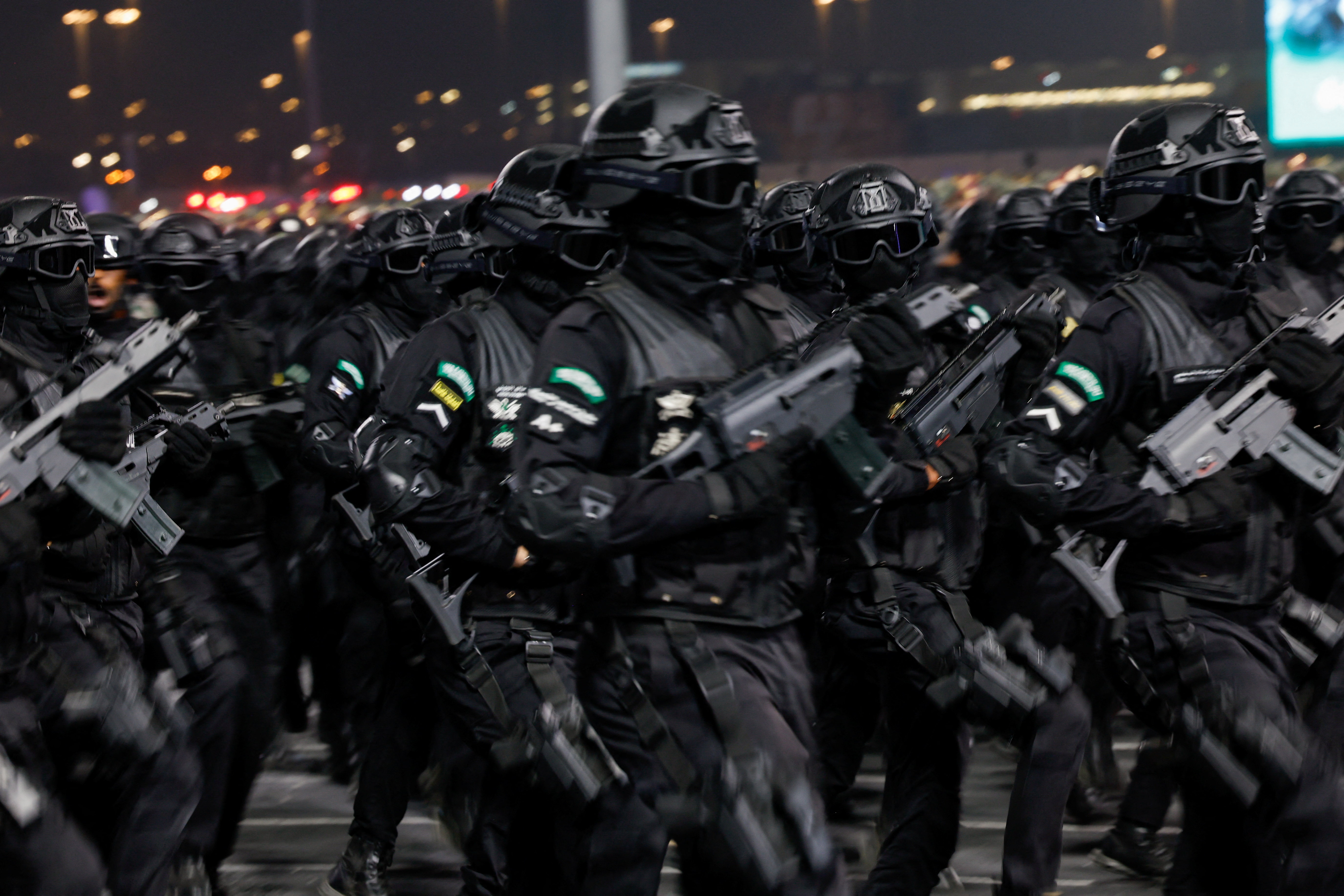
By Sept. 19, the escalation had reached Riyadh, with the coalition reporting it intercepted a ballistic missile aimed at the capital, and thwarted attacks on Yanbu, Taif, Baish and Farasan.
The expanding geographic reach of the attacks underscored the challenge of protecting population centers and critical infrastructure while also safeguarding the Kingdom’s Red Sea export route.
The pressure on energy infrastructure has come from more than one direction; Saudi Arabia attributed a drone attack that forced its East-West Pipeline to close on Sept. 11 to Iraqi militias. Reuters reported on Tuesday that pipeline operations had restarted, citing sources briefed on the matter.
The pipeline provides an alternative delivery route to the Red Sea for Saudi crude when passage through the Strait of Hormuz is disrupted. Protection of that route therefore requires security for both the infrastructure that carries the oil and the shipping lanes used to export it.
Rubio did not directly address media reports of requests to Trump for US intervention, but described attacks on regional energy infrastructure as “very disturbing.” His remarks came as a Houthi military adviser told news agency Agence France-Presse that the group would target US interests in the region if Washington intervened in the conflict in Yemen.
Disruption in the Strait of Hormuz and the escalation in the Red Sea have underscored how closely interconnected are the Gulf’s territorial security and economic interests. Attacks on energy facilities or shipping can affect regional revenues, international supply chains and global markets.
Sager said a key test of the US-Saudi defense agreement would be whether Washington treated Hormuz and Bab Al-Mandab as parts of the same security challenge.
“If Houthi attacks on Saudi Arabia or shipping near Bab Al-Mandab intensify while Washington remains focused primarily on Hormuz, Rubio’s pledge will come under scrutiny,” he said.
Quilliam said there were several scenarios that could test the US commitment.
“The most immediate test would be a major Iranian or Houthi strike that causes substantial damage to energy infrastructure or results in significant civilian casualties,” he said.
“A second scenario would be a sustained campaign against shipping in the Red Sea that disrupts Saudi exports and impacts global energy markets.”
He suggested that Washington might act before either scenario fully materialized, although Rubio had announced no such decision.
“The US appears to be preparing for another round of escalation against Iran and may use that opportunity to intensify military operations against the Houthis,” Quilliam said.
“Rubio’s remarks may therefore have been intended to reassure Riyadh ahead of a possible expansion of US military activity in the region.”
The security debate is unfolding alongside broader bilateral collaboration. In July, Washington and Riyadh signed a peaceful nuclear cooperation agreement, providing a legal foundation for US participation in Saudi Arabia’s civilian nuclear energy program.
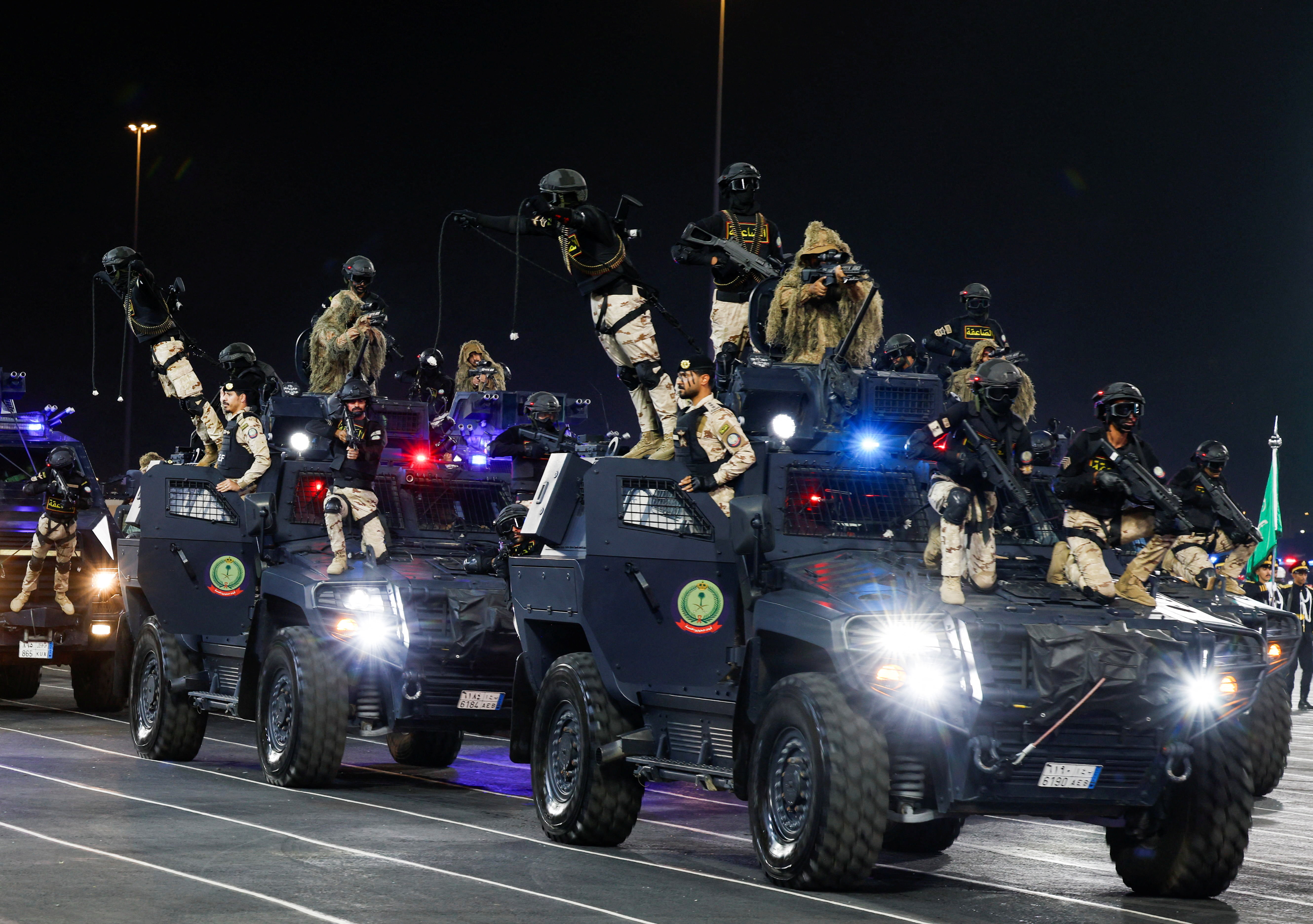
That expanding relationship provides context for Rubio’s assurances, but does not in itself define at what point Washington would commit forces to another military campaign. Quilliam said any such decision would be shaped by the administration’s approach.
“We should bear in mind that the Trump administration is focused on ‘America First’ and it will only intervene if to do so serves that interest,” he added.
According to Quilliam, Gulf “decision-makers have learned over the past decade — and even more so during the current Trump administration — that US policy is now unpredictable and poorly served by an overarching strategy, and so must plan for all eventualities and take regional security into its own hands and share the burden with regional partners.”
Sager said the most immediate measure of the partnership remains the practical support available to Saudi Arabia across the connected threats it faces.
“Riyadh would expect its defense partner to recognize the links between the threats and provide timely intelligence, equipment and operational support where they are needed,” he added.
“Protecting navigation in the Gulf while leaving the Red Sea exposed would address only part of the security challenge.”
The test, then, is how assurances from Washington translate into the capabilities Sager identified — and whether those capabilities help protect Saudi territory, critical infrastructure and access to both waterways.
 |
||
|---|---|---|
