
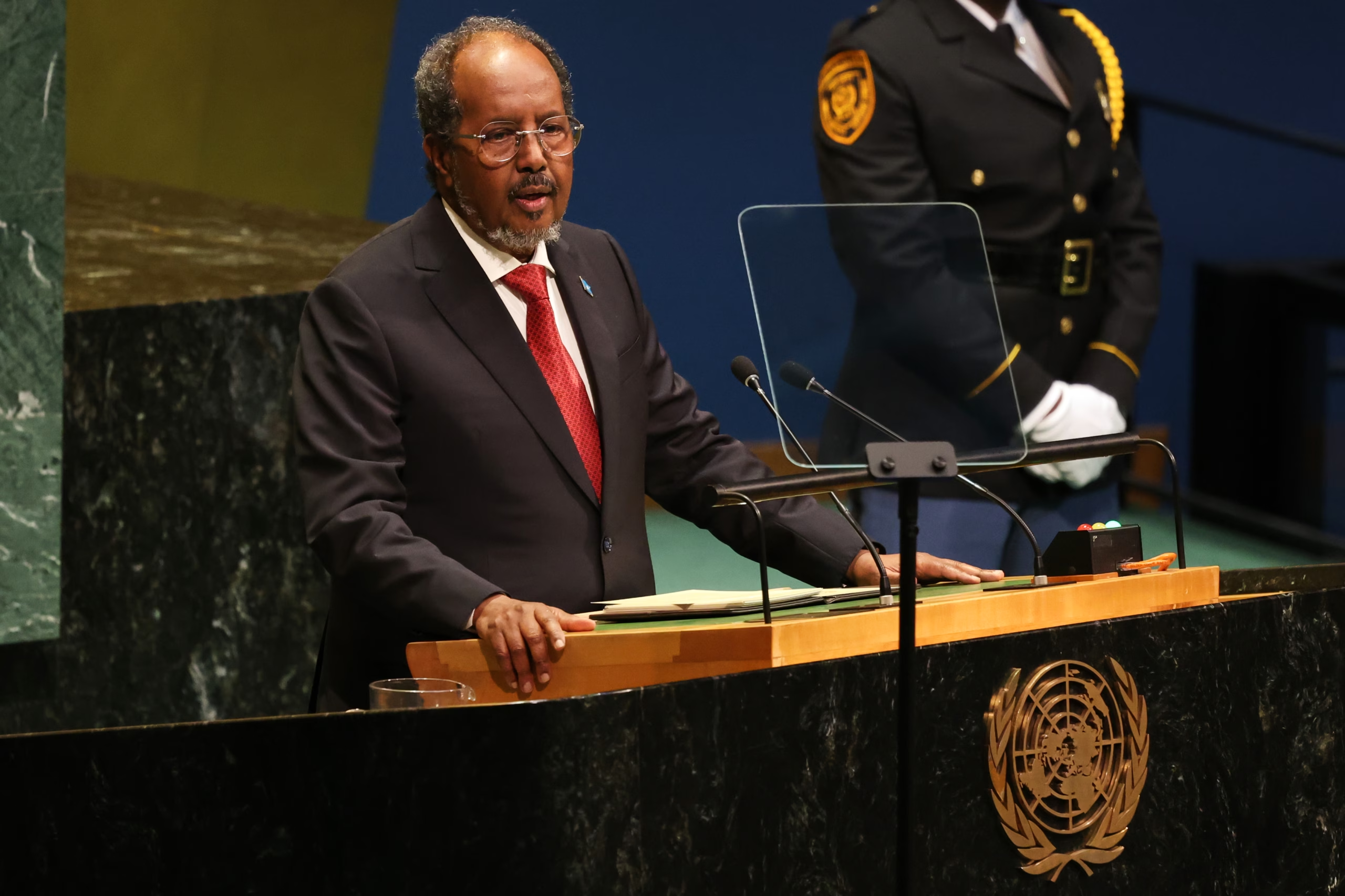
LONDON: Somalia called for a resolution to the plight of the Palestinian people on Thursday, while saying the crisis in the Strait of Hormuz poses a threat not only to itself but the rest of the region.
Speaking at the UN General Assembly in New York, Somali President Hassan Sheikh Mohamud warned that the world faces uncertainty amid escalating political, military and climate crises, calling on the organization to reform and improve to better serve the needs of the world’s most vulnerable.
“For millions of vulnerable people, global development can sometimes appear to be moving from one framework to another framework,” he said.
“Trust in the UN won’t be restored through declarations alone. It will be restored when institutions act constituently, uphold international law and produce results that people can see and experience.”
On the issue of Palestine, Mohamud was clear: “Somalia stands firmly with the Palestinian people and their legitimate right to self-determination and statehood.
“We reaffirm our support for a just and lasting peace based on a two-state solution with an independent and viable Palestinian state along the 1967 borders.
“A just resolution of the Palestinian question remains essential to lasting peace and stability in the Middle East and beyond.”
He added: “Respect for international law is becoming increasingly selective. Multilateral cooperation is weakening; conflict, geopolitical rivalry and mistrust are becoming the defining features of our time. Uncertainty, unfortunately, has become the new norm.”
Mohamud warned that it is not just conflict that poses a threat to humanity, raising climate change as a profound concern of his government and others.
“Humanitarian needs are rising while the resources available to meet them are rapidly declining.
“Nationalism, intolerance and political polarization are weakening the spirit of international cooperation.”
He added: “The climate crisis continues to destroy lives, livelihoods and public infrastructure, particularly across the developing world.
“According the UN, over 40 percent of the global population are vulnerable to the destructive effects of climate change, and governments in developing countries spend over 10 percent of their GDP (gross domestic product) to respond to this.
“This painful fiscal trade off comes at the expense of investment in education and health, which should never be the case.”
The escalation of the conflict in the Gulf, and the closure of the Strait of Hormuz, have placed great strain on Somalia, he said.
“For Somalia, disruptions in the Strait of Hormuz have serious economic and humanitarian consequences.
“As an import-dependent country reliant on the Middle East for much of our food, fuel, trade, Somalia is already facing rising prices, inflation.”
He added: “Ensuring free and fair navigation through the strait is therefore essential to protecting vulnerable economies like Somalia, and sustaining stability, advancing development and delivering basic services.”
As a non-permanent member of the UN Security Council, Mohamud called for reform of a body that has failed with African representation despite the continent’s various conflicts over the years.
The UNSC “must become more representative, transparent and effective,” he said. “Africa remains unrepresented in the permanent category … This historical injustice against 54 sovereign states can’t be postponed indefinitely.
“Somalia supports the common African position and meaningful representation in both categories of the council.
“Given that many of the discussions directly concern African states, they have the right to full representation on equal par with all other permanent Security Council members.”
His country, Mohamud said, has played an outsized role in maintaining international security in its fight against organized terrorist groups in East Africa.
“Somalia continues to confront international terrorism with determination and with the support of our international partners.
“We’re strengthening our national security institutions, improving force generation, developing intelligence capabilities and expanding security cooperation with our neighbors and the rest of the world,” he said.
“But the fight against terrorism in Somalia mustn’t be understood as Somalia’s responsibility alone.
“We stand on the frontline for a struggle that directly effects regional and international security.
“We therefore call for predictable, sustainable support for Somalia’s security transition, including adequate financing for an African Union mission in Somalia.”
He noted that negative effects of international intervention in African states has affected Somalia in particular, saying: “Respect for national sovereignty, unity and territorial integrity isn’t an abstract principle for Somalia only.
“It’s a foundation for peace and stability in our country, our region and the wider international community.
“Therefore, Somalia firmly rejects unilateral actions that undermine its sovereign, unity and internationally recognized borders.”
Mohamud also focused on the need for UN assistance in his country to be better organized and coordinated to allow the government to lead its own development.
“The majority of UN assistance continues to be delivered through parallel structures, fragmented projects and off-budget arrangements in Somalia.
“This makes it difficult for the government to plan, coordinate resources, measure results and build institutions required for long-term stability.
“Let us be clear here, Somalia isn’t calling for the UN to withdraw, we’re simply calling for a more accountable, strategic and result-oriented partnership where Somali institutions are in the lead when it comes to implementation.”
Political progress and reform, he said, are of paramount importance for Somalia’s development.
“Our people have dreamed of choosing their leaders through their vote. The last democratic election that took place in Somalia was held in 1969. Today, we’re determined to change that history.
“Through constitutional reform, we’re laying the foundations of universal suffrage, accountable institutions and a multi-party system that allows every Somali citizen to have a voice.
“Our aim is to become an effective democracy where differences are resolved through dialogue, law and elections, not violence.”
Mohamud concluded: “Somalia is proudly playing an active role in global stability, both at home and within the key existing multilateral structures of global governance.
“We’re also rebuilding our economy and (are) unwaveringly committing to democracy and people-centered, people-led, people-owned development.
“As we march forward with purpose and determination, we invite Africa and the rest of the world to remain our steadfast champions on this journey.”
