
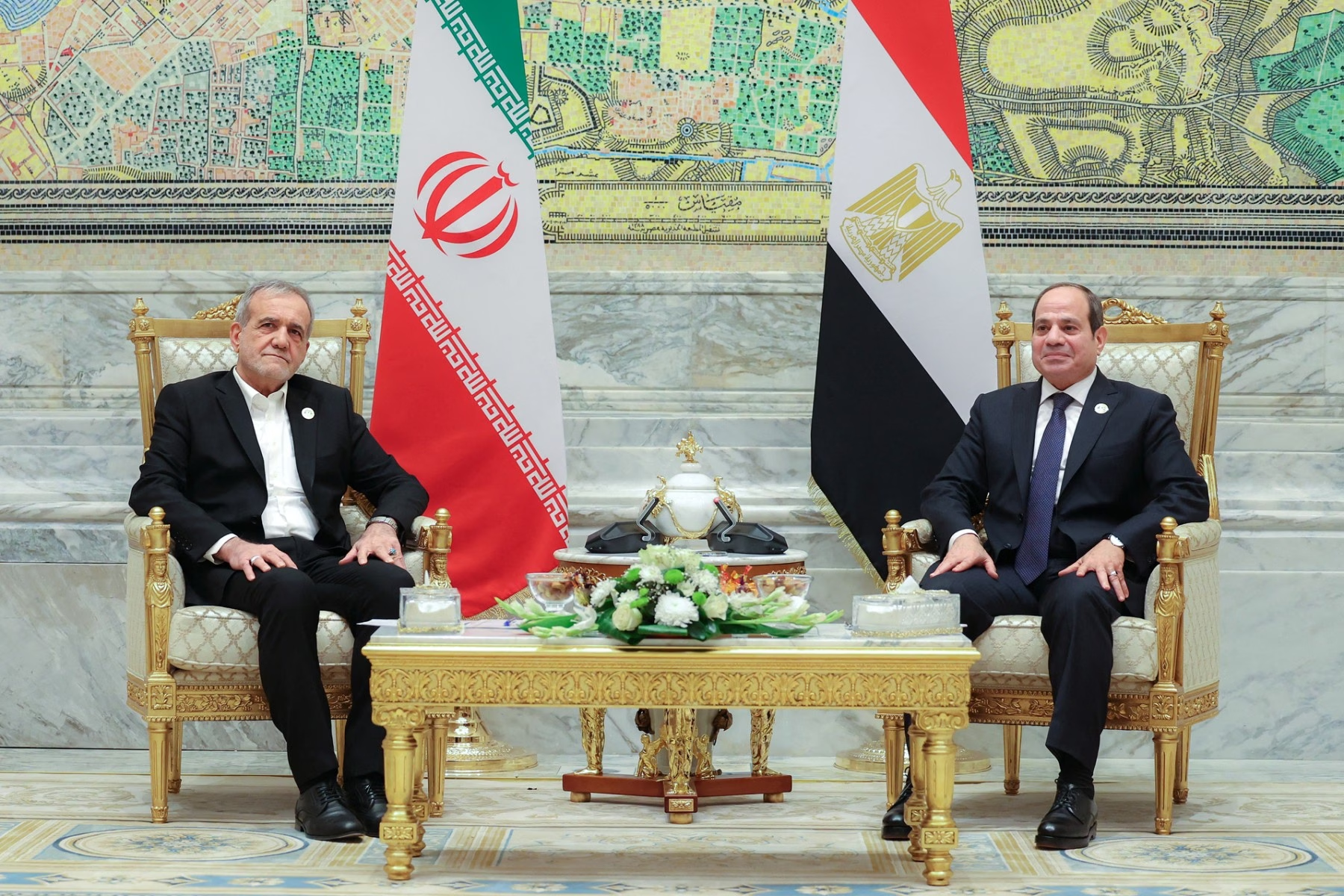
NEW DELHI: Egyptian President Abdel Fattah El-Sisi on Sunday urged Iran to help de-escalate the widening regional conflict and work toward a lasting peaceful settlement.
During talks with his Iranian counterpart Masoud Pezeshkian on the sidelines of the BRICS summit in New Delhi, El-Sisi also called for an end to Iranian attacks on Arab states, stressing the need to respect good relations and regional sovereignty.
The Egyptian president told Pezeshkian that Cairo looked to Iran to exert “all possible efforts” to reduce tensions, reaffirming Egypt’s “unwavering support” for efforts to restore regional stability, according to Ambassador Mohamed El-Shennawy, the presidential spokesperson.
Egypt has intensified diplomatic efforts to contain the conflict and revive stalled negotiations between Tehran and Washington following renewed hostilities in recent weeks.
Separately, Egyptian Foreign Minister Badr Abdelatty on Sunday called for a return to US-Iran negotiations and said diplomatic solutions should be prioritized to prevent the conflict from spreading further.
During a phone call with his French counterpart Jean-Noel Barrot, Abdelatty said conditions should be created for talks to resume, which would help ease tensions and preserve regional security and stability.
Tensions have also centered on the Strait of Hormuz, the key energy shipping route through which about a fifth of global oil supplies passed before the war.
Oman has been mediating efforts to establish an arrangement for navigation through the waterway, with Iran and Gulf states due to hold talks in Muscat on Monday. An Iranian official said on Saturday that no final agreement on the strait was expected to be signed at the meeting.
El-Sisi and Pezeshkian met as the regional conflict dominated discussions at the two-day BRICS summit in the Indian capital.
BRICS leaders adopted a joint declaration on Saturday expressing “deep concern” over the escalating Middle East conflict and calling for “maximum restraint” and the settlement of disputes through dialogue and diplomacy.
The declaration was backed by both Iran and the UAE despite their opposing positions in the conflict, offering a rare point of consensus as BRICS sought to demonstrate its ability to play a diplomatic role in the crisis.
Pezeshkian also held rare face-to-face talks with Abu Dhabi’s Crown Prince Sheikh Khaled bin Mohamed bin Zayed Al-Nahyan on the sidelines of the summit, the highest-level engagement between Iran and the UAE since the conflict began.
The two discussed efforts to ease regional tensions and promote security and stability, with Sheikh Khaled stressing the importance of dialogue and diplomatic solutions to prevent further escalation.
Egypt, Iran and the UAE are among the newer members of the expanded BRICS grouping. Egypt, Ethiopia, Iran and the UAE joined in 2024, followed by Indonesia in 2025, expanding a bloc originally made up of Brazil, Russia, India, China and South Africa.
The group now represents more than 40 percent of the world’s population and around a quarter of global economic output, and has sought to increase the influence of emerging economies in international institutions and promote a more multipolar global order.
The New Delhi summit has placed particular emphasis on the bloc’s potential diplomatic role, with Chinese President Xi Jinping urging BRICS members to help promote a political settlement to the Middle East conflict.
