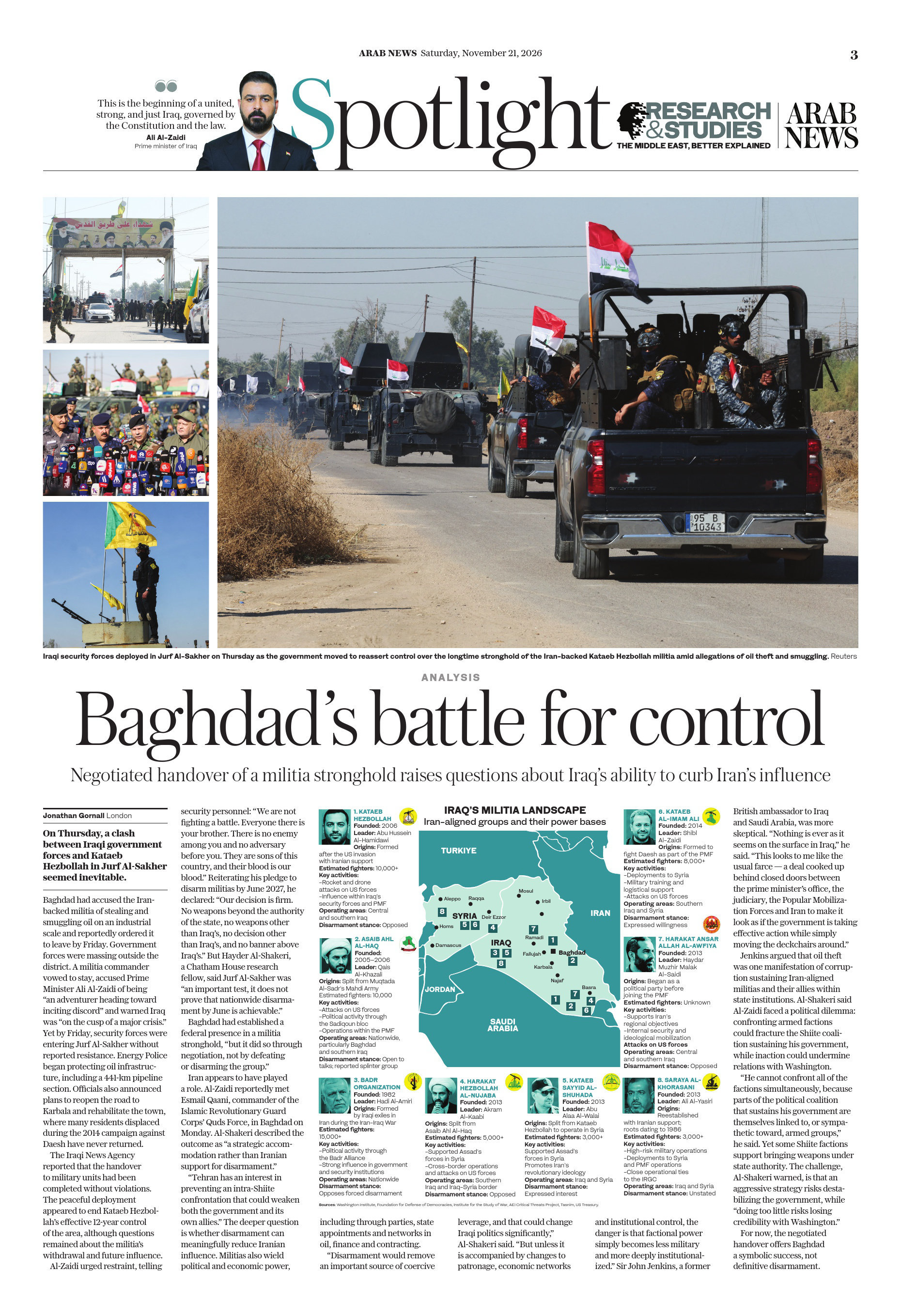
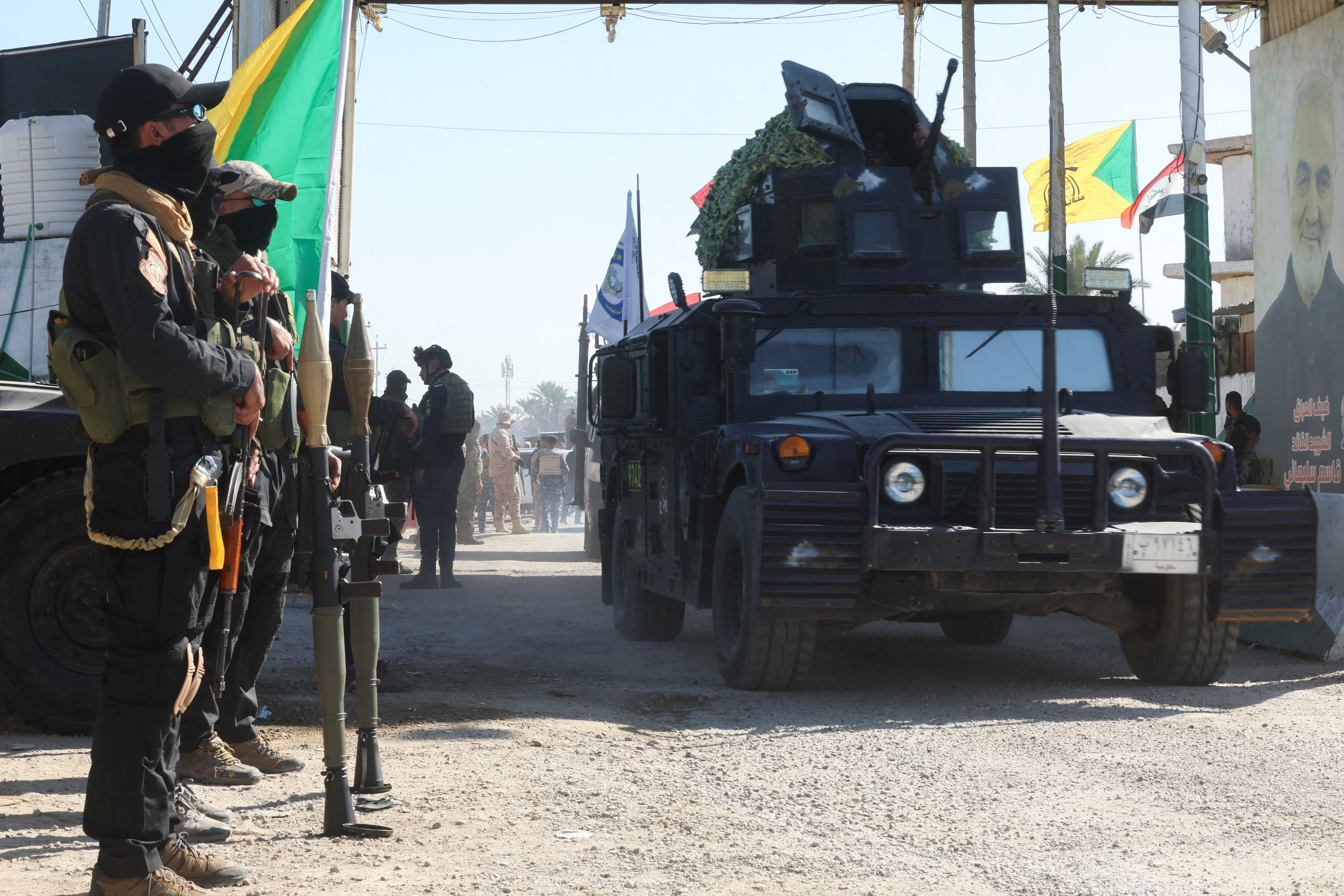
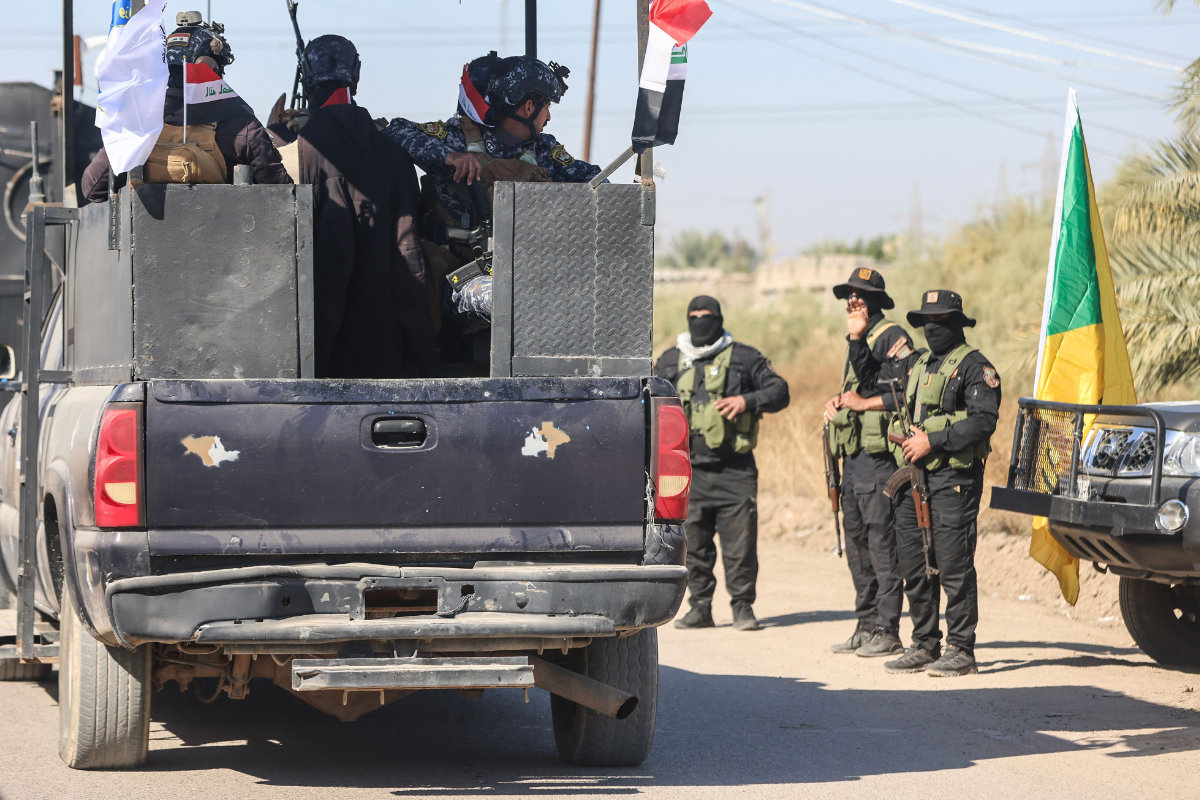
LONDON: On Thursday, a clash between Iraqi government forces and Kataeb Hezbollah in the militia’s stronghold of Jurf Al-Sakher seemed all but inevitable.
Iraq’s government, which had accused the Iran-backed militia of stealing oil and smuggling it out of the country on an industrial scale, had reportedly given it until Friday to leave the area. Government forces were massing outside the district.
Kataeb Hezbollah’s response was seemingly unequivocal. A senior commander vowed the group would be going nowhere, accused Iraqi Prime Minister Ali Al-Zaidi of being “an adventurer heading toward inciting discord” and warned that Iraq was “on the cusp of a major crisis.”
By Friday morning, however, everything had apparently changed.
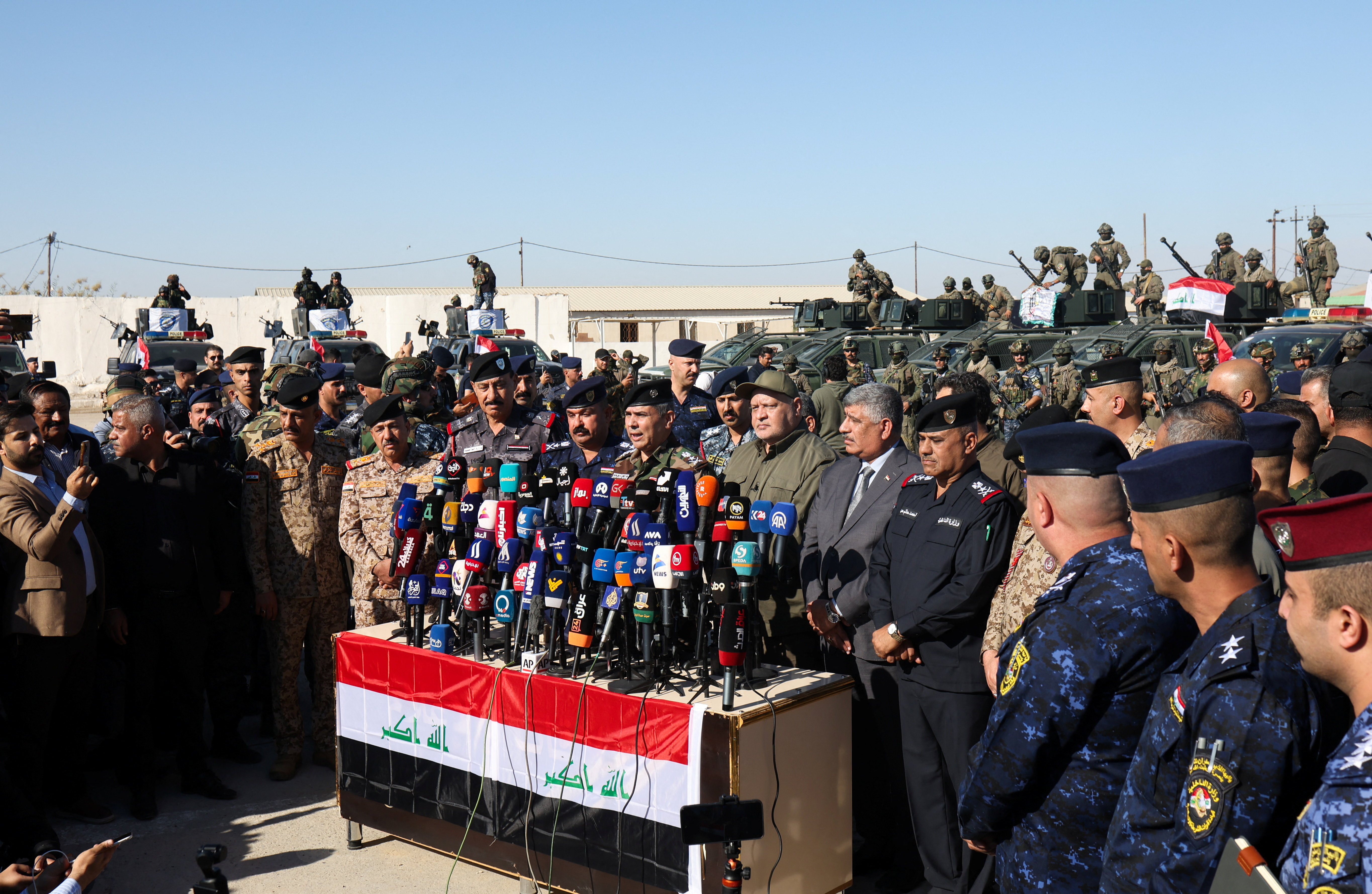
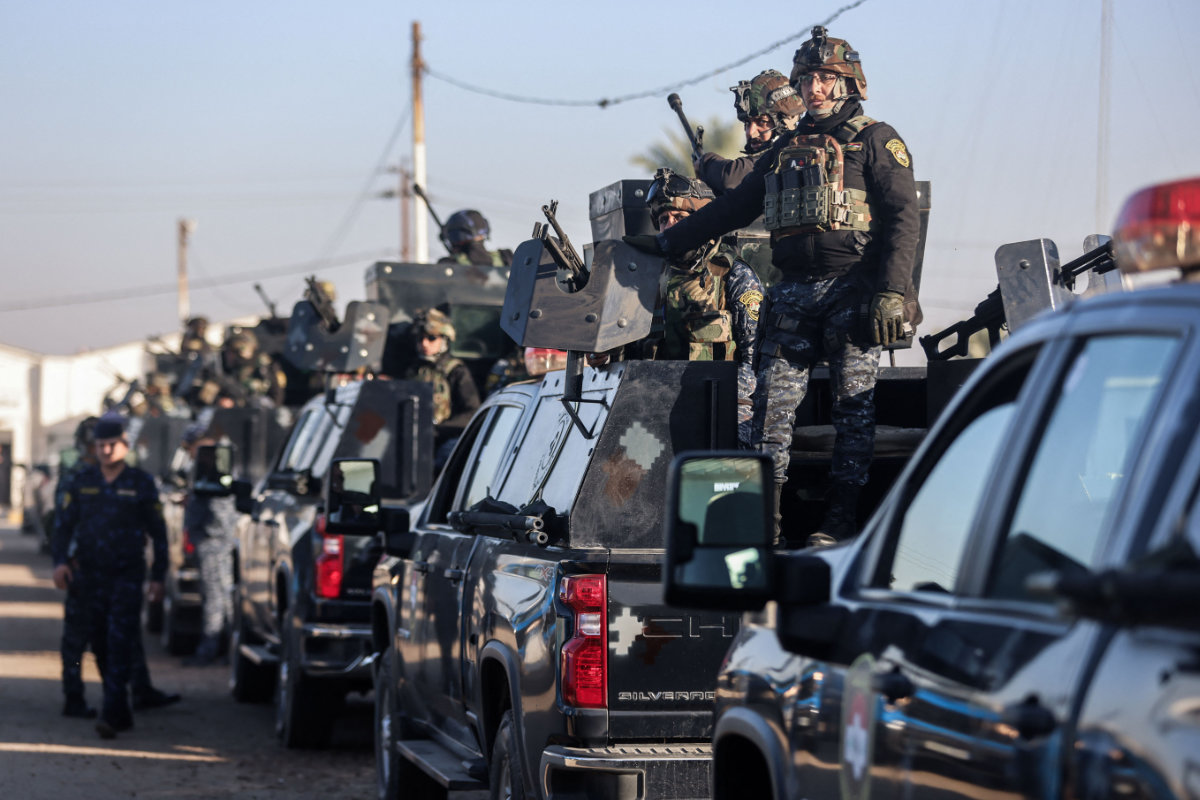
Iraqi security forces announced they had begun assuming responsibility for security in Jurf Al-Sakher, with elements of the state’s paramilitary Energy Police moving in to protect oil and energy infrastructure.
The commander of the Energy Police, Lt. Gen. Hamid Al-Husseini, said his men had begun securing the 441-km section of the country’s 9,000 km of oil pipelines that passes through the area, and were working with military units to set up security checkpoints every 500 meters.
Jurf Al-Sakher, a predominantly Sunni town in Babil province also known as Jurf Al-Nasr, was recaptured from Daesh in 2014 by government troops aided by Shiite militiamen, including Kataeb Hezbollah.
The town was left largely in ruins, and many of its 80,000 inhabitants were displaced and have not been able to return since.
Lt. Gen. Al-Husseini said work would now get underway to restore infrastructure damaged during the war so the residents of Jurf Al-Sakher could return home.
He added that “support teams have begun rehabilitation work on the road connecting Jurf Al-Nasr to the holy city of Karbala, in preparation for its reopening to the public.”
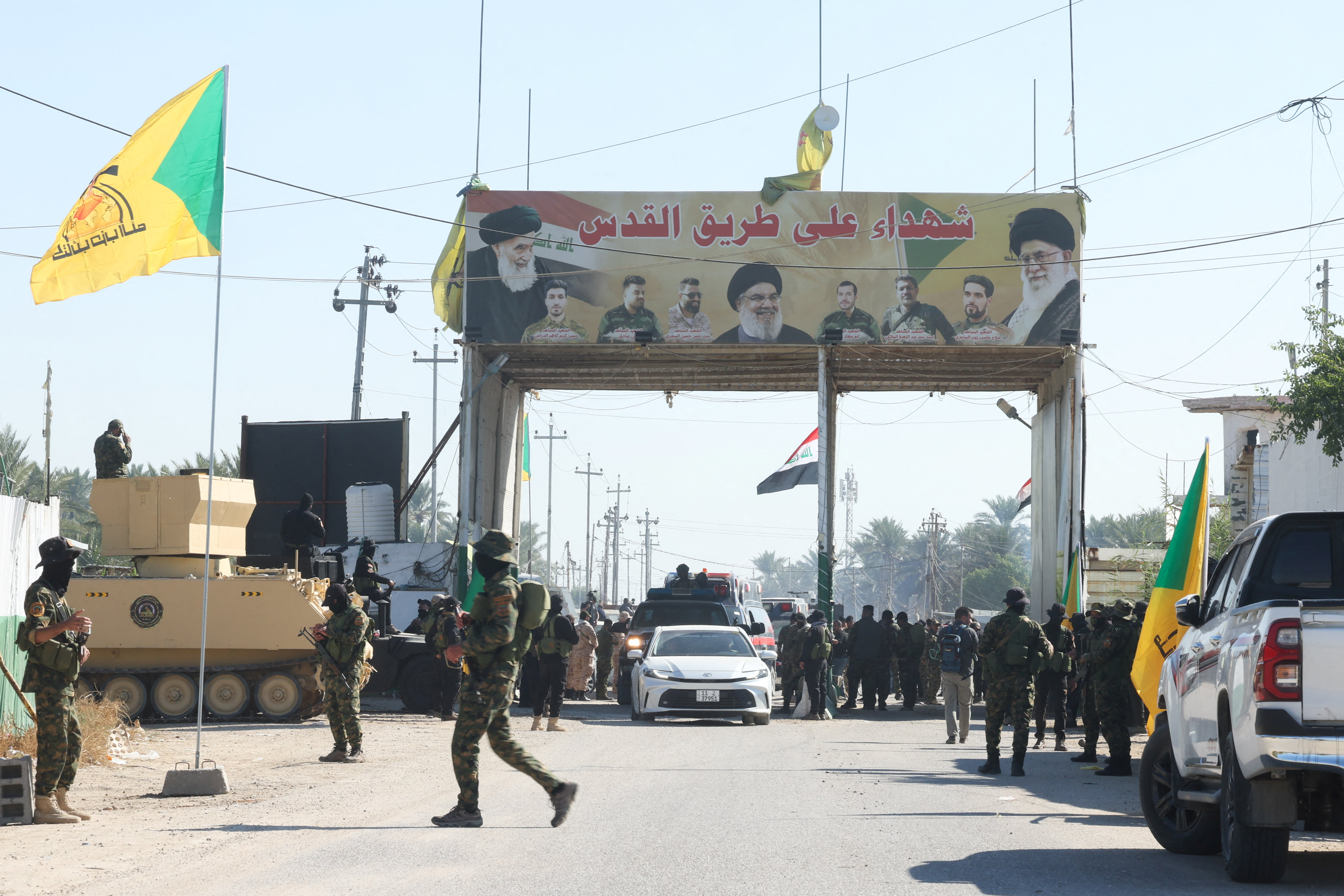
Reopening the 70-km road to Karbala is both a practical measure to restore an important pilgrimage and transport route and a highly symbolic demonstration that Baghdad intends to regain control of territory that Kataeb Hezbollah has effectively controlled for 12 years.
While there was no immediate public response from Kataeb Hezbollah, the operation to take control of the pipeline appeared to have met with no resistance from the group, despite its fighting talk the day before.
At about 2 p.m. Baghdad time on Friday, the Iraqi News Agency reported that “procedures for handing over positions to military units … have been completed,” and “no violations were recorded during the deployment of the units in Jurf Al-Nasr.”
About an hour later, Prime Minister Ali Al-Zaidi released a statement addressed to “all formations in Jurf Al-Nasr.”
“You shape an important chapter in Iraq’s history,” he told “our heroes.”
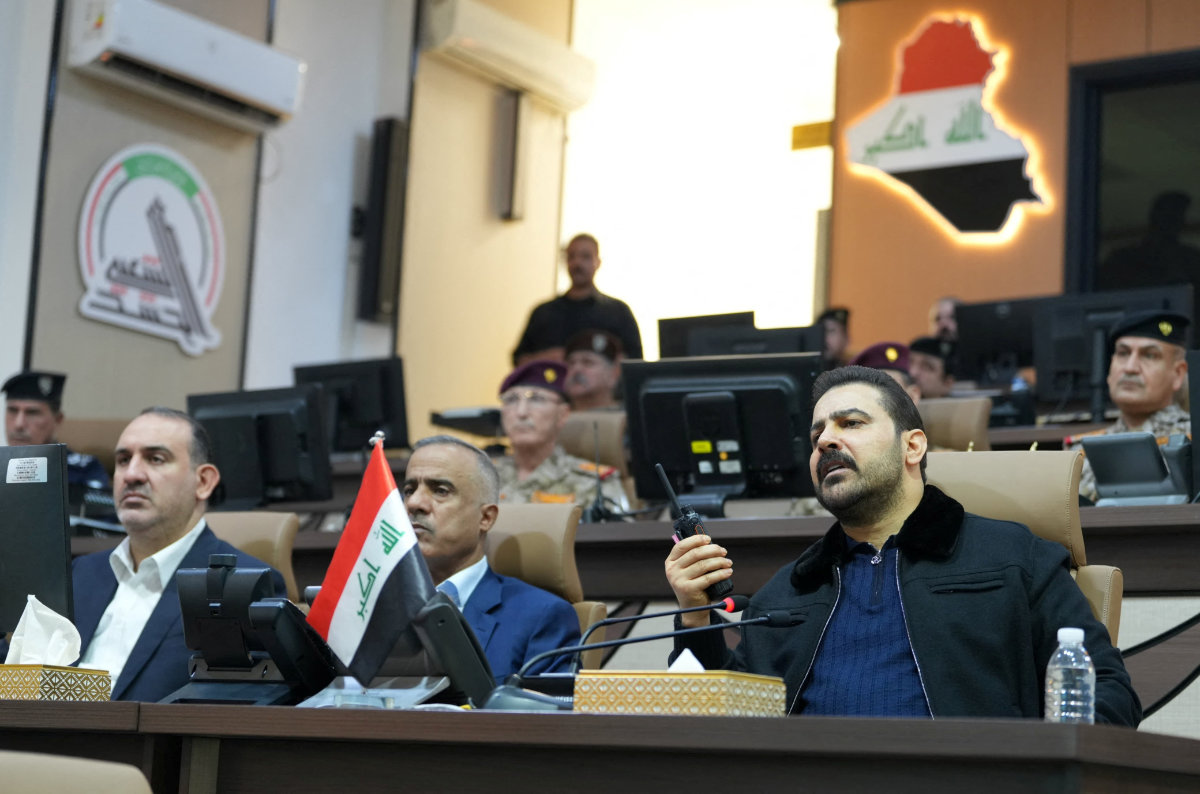
He added: “I have two recommendations for you, worthy of your heroism: restraint and wisdom.
“We are not fighting a battle. Everyone there is your brother. There is no enemy among you and no adversary before you. They are sons of this country, and their blood is our blood.
“This phase calls for inclusion, not exclusion.”
And, in a reference to his pledge that all militia groups would be disarmed by the end of June 2027, he added: “All will serve in the Armed Forces under one banner, one command, and one law.
“Our decision is firm. No weapons beyond the authority of the state, no weapons other than Iraq’s, no decision other than Iraq’s, and no banner above Iraq’s.”
This was, his message concluded, “the beginning of a united, strong, and just Iraq, governed by the Constitution and the law.”
But Hayder Al-Shakeri, a research fellow with the Middle East and North Africa program at Chatham House, told Arab News that while Jurf Al-Sakher is “an important test, it does not prove that nationwide disarmament by June is achievable.”
It was significant that the government had managed to deploy federal forces into an area where Kataeb Hezbollah exercised considerable autonomous control, “but it did so through negotiation, not by defeating or disarming the group.”
It is clear that Iran has had an active hand in the behind-the-scenes negotiations that led to Friday’s developments.
Prime Minister Al-Zaidi was reported to have met on Monday in Baghdad with Esmail Qaani, commander of the Islamic Revolutionary Guard Corps’ extraterritorial Quds Force.
For Iran, said Al-Shakeri, the events in Jurf Al-Sakher represent “a strategic accommodation rather than Iranian support for disarmament.
“Tehran has an interest in preventing an intra-Shiite confrontation that could weaken both the government and its own allies.
“Qaani’s intervention appears to have helped produce a negotiated outcome in which Kataeb Hezbollah avoids a military defeat while Baghdad establishes a greater state presence. That may suit Iran because it preserves the network while reducing the immediate pressure on it.”
The longer-term issue is whether disarming the pro-Iranian militias will reduce Tehran’s influence over Iraq’s economic and political spheres.
“Their power is no longer primarily military,” said Al-Shakeri. “Some have political parties and parliamentary representation, influence over appointments and state institutions, and economic networks extending into oil, finance, contracting and other revenue-generating sectors.
“Disarmament would remove an important source of coercive leverage, and that could change Iraqi politics significantly.
“But unless it is accompanied by changes to patronage, economic networks and institutional control, the danger is that factional power simply becomes less military and more deeply institutionalized.”
Sir John Jenkins, a former British ambassador to Iraq and Saudi Arabia, is doubtful that the events this week in Jurf Al-Sakher are quite what they appear to be.
“Nothing is ever as it seems on the surface in Iraq,” he said.
“This looks to me like the usual farce — a deal cooked up behind closed doors between the prime minister’s office, the judiciary, the Popular Mobilization Forces and Iran to make it look as if the government is taking effective action while simply moving the deckchairs around.”
The theft of oil, the apparent trigger for the events of the past week in Jurf Al-Sakher, “is simply one of a multitude of corrupt activities which underpin a state which proclaims its autonomy but is in reality controlled by Iran-aligned militias, enabled by their allies inside state institutions.”
He added: “Every Iraqi prime minister since Nouri Al-Maliki has vowed to deal with the problem of armed groups independent of the state. None has actually done it.
“Instead, those groups have engineered a reverse take-over of the state. And at the heart of this is corruption, which serves the interests not of Iraq but of Iran.”
Al-Shakeri says Prime Minister Al-Zaidi is walking a narrow tightrope, trying to balance the need to keep Washington happy while also keeping on-side the Shiite factions underpinning his government.
“He cannot confront all of the factions simultaneously, because parts of the political coalition that sustains his government are themselves linked to, or sympathetic toward, armed groups,” said Al-Shakeri.
“We have already seen divisions inside the Coordination Framework over how far he should go against Kataeb Hezbollah, and Al-Zaidi has already threatened to resign a few times.”
At the same time, he added, “it is important to note that the Shiite political field is not united against him either — some factions and political actors have accepted the principle of bringing weapons under state authority.
“So the risk is that an aggressive disarmament strategy fractures the political bargain supporting his government, but at the same time, doing too little risks losing credibility with Washington.”