
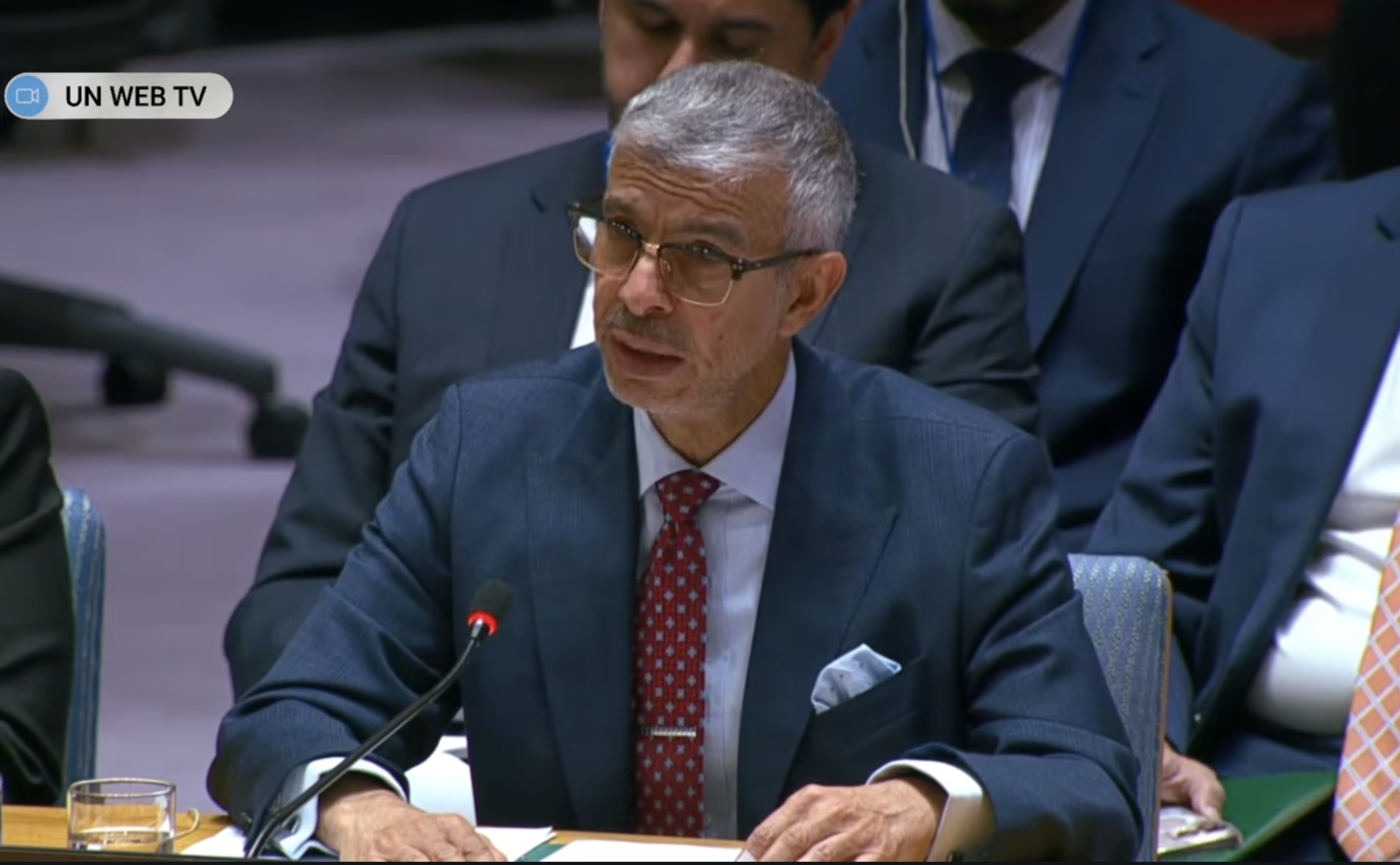
NEW YORK: Saudi Arabia will not allow Yemen to become a launchpad for attacks against the Kingdom or threats to shipping in the Red Sea, the Kingdom’s Permanent Representative to the UN Abdulaziz Alwasil told the UN Security Council on Friday.
Addressing an emergency meeting on the Middle East, Alwasil reiterated that Saudi Arabia would take all necessary measures to protect its sovereignty and citizens as the Iran-backed Houthis intensified attacks on Saudi cities, airports and vital infrastructure.
“The Kingdom affirms that it will not allow Yemen to be turned into a staging ground for threats to its security or to the freedom of navigation in the Red Sea and Bab Al-Mandab Strait,” he told the council.
“Nor can it accept that a terrorist militia impose its will on Yemen and the region by force.”
Alwasil reaffirmed Saudi Arabia’s right to defend its territory and deter further attacks, while stressing that Riyadh remained committed to a political solution to Yemen’s conflict.
“Saudi Arabia has always placed peace above all other options,” he said, accusing the Houthis of rejecting diplomatic initiatives and choosing military escalation “that has obstructed efforts aimed at reaching a comprehensive political solution.”
His remarks came a day after two attacks on King Khalid International Airport in Riyadh killed three Saudi nationals, including Saudia pilot Capt. Hamoud Ali Alkalthami, and injured several others.
The attacks targeted airport facilities and an aircraft belonging to the national carrier, causing damage and disrupting flights.
Alwasil condemned the strikes as a “blatant act of aggression” and warned that the Houthis’ growing attacks on civilian infrastructure posed a direct threat to civilians and aviation security.
He warned that the Houthi militia continued to receive external military and technical support that had strengthened its capabilities and undermined regional stability.
“This contributed to the perpetuation of chaos, the proliferation of weapons outside state control, and the undermining of security and stability in Yemen and the region,” he told the council.
Houthi attacks had intensified across the Kingdom in recent weeks, with missiles and drones targeting Riyadh, Abha, Khamis Mushait, Jazan and Najran.
The ambassador also cited a Sept. 15 attempt to target Makkah and a Sept. 29 attack on the Taiba electricity distribution station in Madinah, describing them as provocations against Muslims worldwide.
Earlier attacks on Abha and Riyadh airports on Oct. 6 and 7 killed three civilians and injured 36 others, according to Saudi aviation authorities.
Alwasil warned that the escalation extended beyond Saudi territory, accusing the Houthis of threatening commercial shipping, energy supplies and international trade through continued attacks in the Red Sea and the strategic Bab Al-Mandab Strait.
He accused the Houthis of forcibly displacing civilians, using starvation as a weapon and recruiting children to fight and warned that continued military escalation would deepen the suffering of Yemenis and undermine efforts to reach a comprehensive political settlement.
The latest violence comes amid renewed fighting in Yemen, where Houthi forces have advanced along parts of the Red Sea coast and Saudi-backed government forces have launched counteroffensives.
The Kingdom called on the Security Council to enforce relevant resolutions, including those concerning the arms embargo on the Houthis and freedom of navigation in the Red Sea.
Alwasil reiterated Saudi Arabia’s support for Yemen’s internationally recognized government and UN-led peace efforts, saying any settlement must preserve the country’s sovereignty, unity and territorial integrity.
He also highlighted Riyadh’s continuing economic assistance to Yemen, including a budget support payment exceeding SR224 million ($59.7 million) on Oct. 4.
The ambassador said Saudi economic and development support to Yemen had exceeded $12.6 billion between 2012 and 2026, in addition to more than $4.5 billion in humanitarian assistance.
He urged the Security Council to act to stop Houthi attacks and prevent further threats to regional security and international navigation.
