
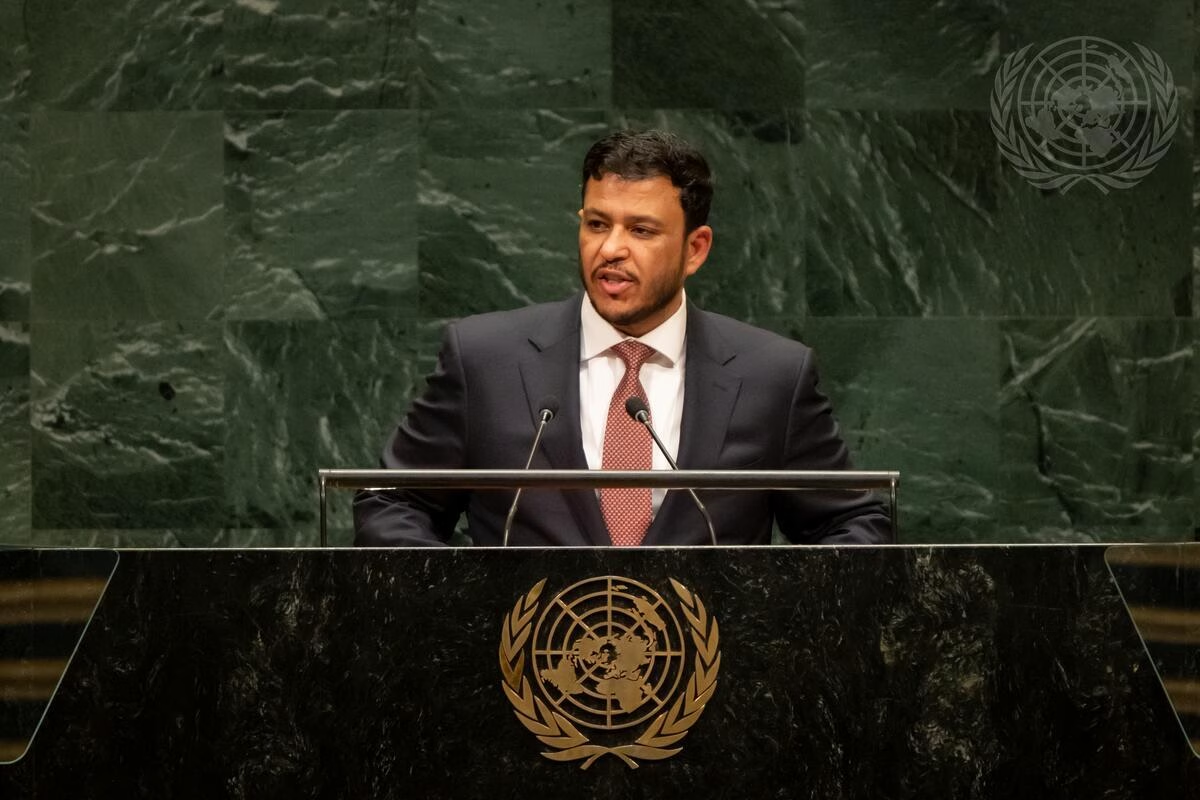
LONDON: Yemen’s vice president on Thursday called for stronger international action to restore the country’s state institutions and counter the Houthi militia, warning that instability in Yemen threatens security and global trade through the strategic Bab Al-Mandab Strait.
Addressing the UN General Assembly, Abdullah Al-Alimi Bawazir said 12 years of conflict have deprived an entire generation of Yemenis of stability and opportunity.
He accused the Houthis of rejecting repeated peace initiatives while escalating their military activities.
“For a Yemeni child, 12 years are his entire childhood,” Bawazir said, describing a generation born amid “war, hunger, fear and weapons.”
He added that the Yemeni government has engaged positively with international and regional peace initiatives and made “significant concessions” to end the conflict, but that the Houthis have responded with “intransigence” and used periods of humanitarian calm to strengthen their military capabilities.
Bawazir said the latest Saudi-Omani roadmap for peace has been accepted by the Yemeni government but rejected by the Houthis, whom he accused of escalating in the Red Sea and Bab Al-Mandab “to serve an Iranian agenda that goes beyond the interests of Yemen and its people.”
He added that the militia has turned one of the world’s most important waterways into “a tool of pressure and bargaining in Iran’s confrontation with the world.”
He welcomed what he described as the firm approach adopted by the US toward the Houthis, saying it has disrupted their calculations.
“The Yemeni government appreciates President (Donald) Trump’s clear understanding of the only language this terrorist group comprehends — the language of resolve,” Bawazir said.
He criticized what he described as an insufficiently decisive international response, saying UN “resolutions alone don’t make peace. International resolution without a political will to implement it doesn’t stop wars.”
He warned that Houthi threats to maritime navigation extend beyond Yemen and “are taking hostage the entire global economy.”
Bawazir said protecting commercial shipping could address the consequences of Houthi attacks but not their underlying cause. “Ensuring security at sea begins with eliminating the source of the threat on land.”
He stressed that Yemen’s internal stability and maritime security are closely connected, saying: “Restoring the Yemeni state and restoring the security of Bab Al-Mandab are inseparable.
“Protecting this strategic waterway is a shared regional and international responsibility which Yemen can’t shoulder alone.”
He said it is also the responsibility of economies dependent on secure supply chains, energy security and freedom of navigation.
The UN has said recent Houthi advances and fighting along Yemen’s western coast have increased concerns over maritime security and international trade.
Bawazir commended Saudi Arabia’s support for Yemen and its initiative to establish a multinational maritime defense coalition, saying collective action is needed to protect navigation, deter threats and combat smuggling.
He called on the international community to stop the flow of weapons and technology to the Houthis, strengthen Yemen’s national institutions and support its economy.
“What we seek from the international community today isn’t a perpetual management of crises, but a strategic partnership that promotes security, stability and development for the benefit of Yemen, the region and international peace and security,” he said, adding that his country remains committed to peace but will not accept the Houthi takeover of state institutions as a permanent reality. “There’s no peace with arms outside state authority.”
He reaffirmed Yemen’s support for the Palestinian people’s right to freedom, dignity and an independent sovereign state, while condemning the continued detention of UN personnel and humanitarian workers by the Houthis.
He concluded by portraying a future Yemen as a potential regional partner and trade bridge linking the Arabian Peninsula, the Horn of Africa and the wider world, saying Bab Al-Mandab should remain “a bridge between peoples, a route for commerce and a gateway to peace.”
