
When the leaders of Scotland, Wales and Northern Ireland gathered in Cardiff this week to declare that “constitutional change is coming,” the implications stretched well beyond Westminster.
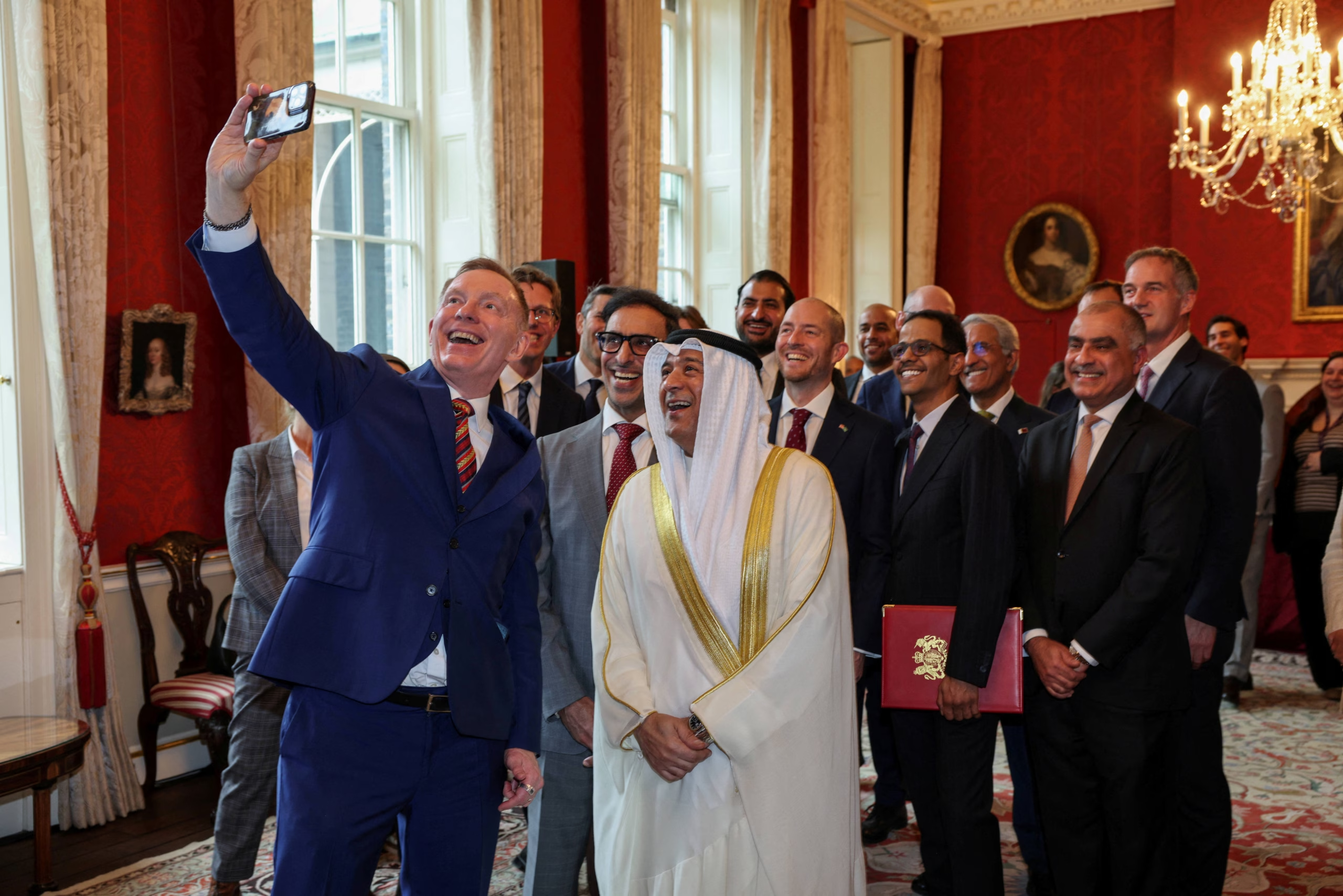
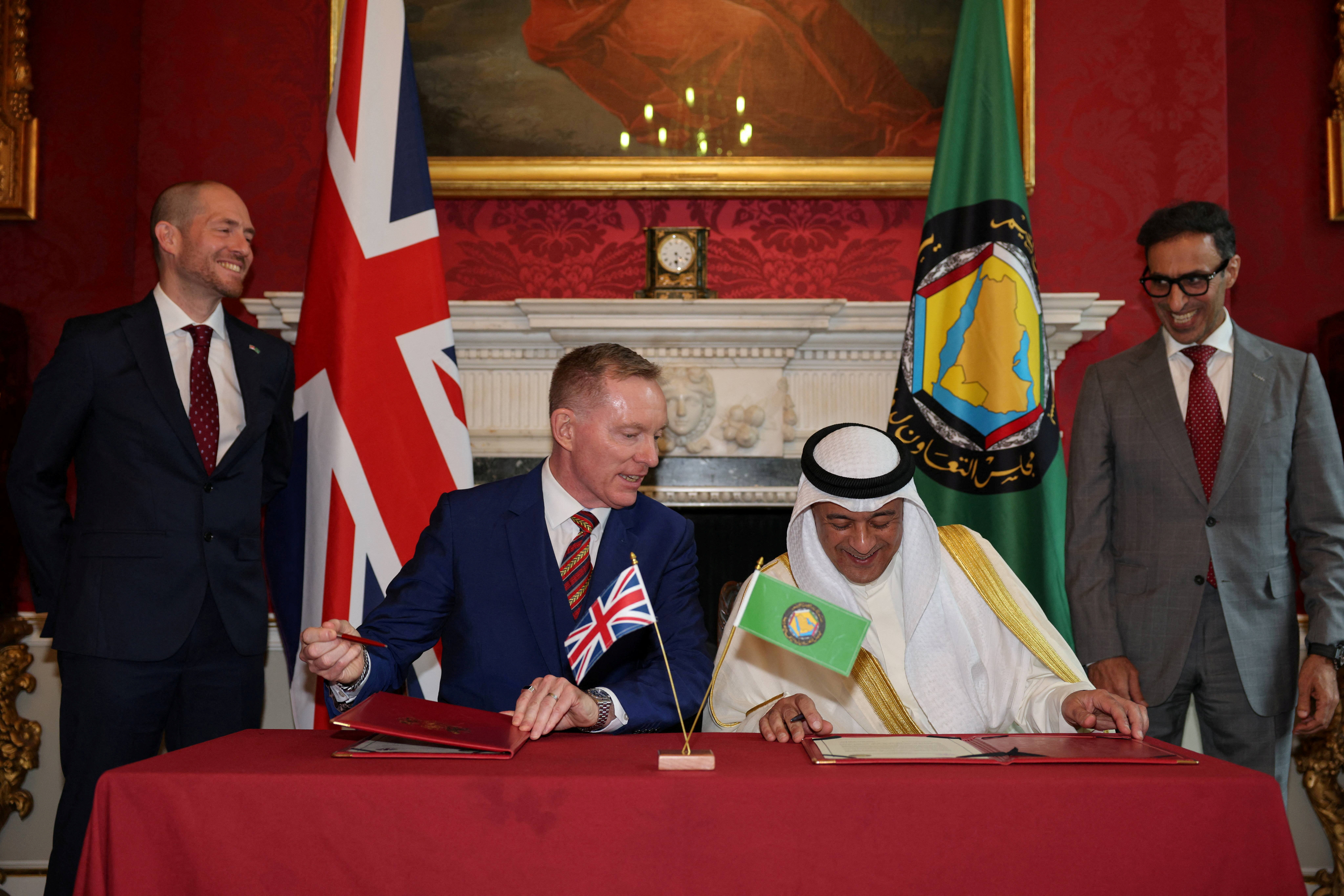
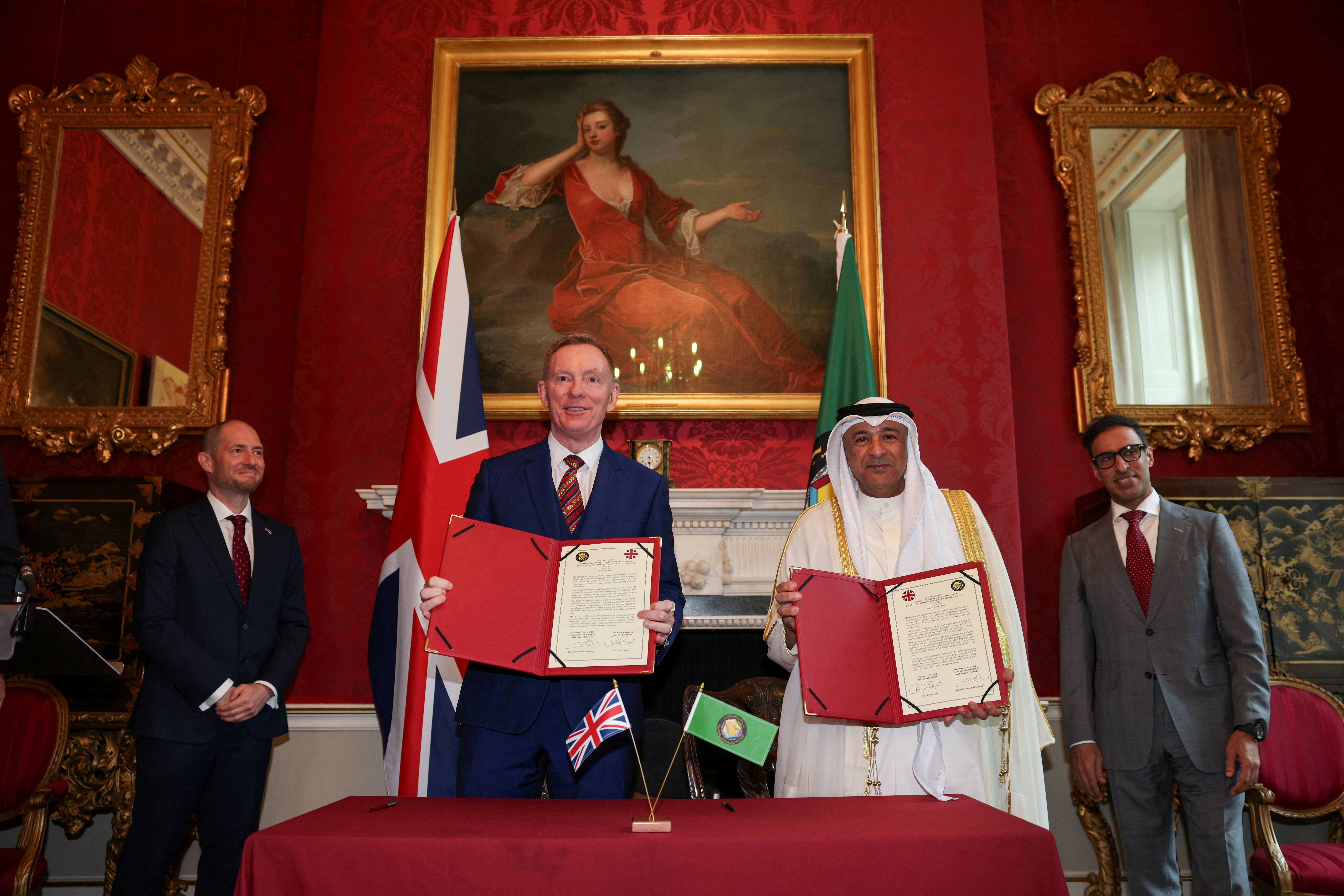
Just four months earlier, the UK and the Gulf Cooperation Council had concluded a landmark free trade agreement expected to add £3.7 billion ($5 billion) annually to the British economy in the long run.
Now, renewed debate over the future of the union raises a question barely contemplated when the deal was negotiated: What would happen to the agreement — and billions of dollars in Gulf investment — if the UK itself changed shape?
At the Cardiff meeting, the first ministers of Wales, Scotland and Northern Ireland, participating as party representatives, signed a memorandum urging the British government to “prepare for, plan and facilitate constitutional change in each jurisdiction.”
Their political objectives differ significantly. Plaid Cymru and the Scottish National Party seek independence for Wales and Scotland, while Sinn Fein advocates Irish unification. Northern Ireland’s devolved government itself remains a power-sharing administration that includes unionist parties.
But the gathering underlined the renewed prominence of constitutional questions across the UK.
For the Gulf, the practical implications could be substantial.
The UK-GCC free trade agreement was concluded in May between Britain and Bahrain, Kuwait, Oman, Qatar, Saudi Arabia and the UAE. It has yet to enter into force, with Britain and all six GCC states still required to complete their domestic ratification procedures.
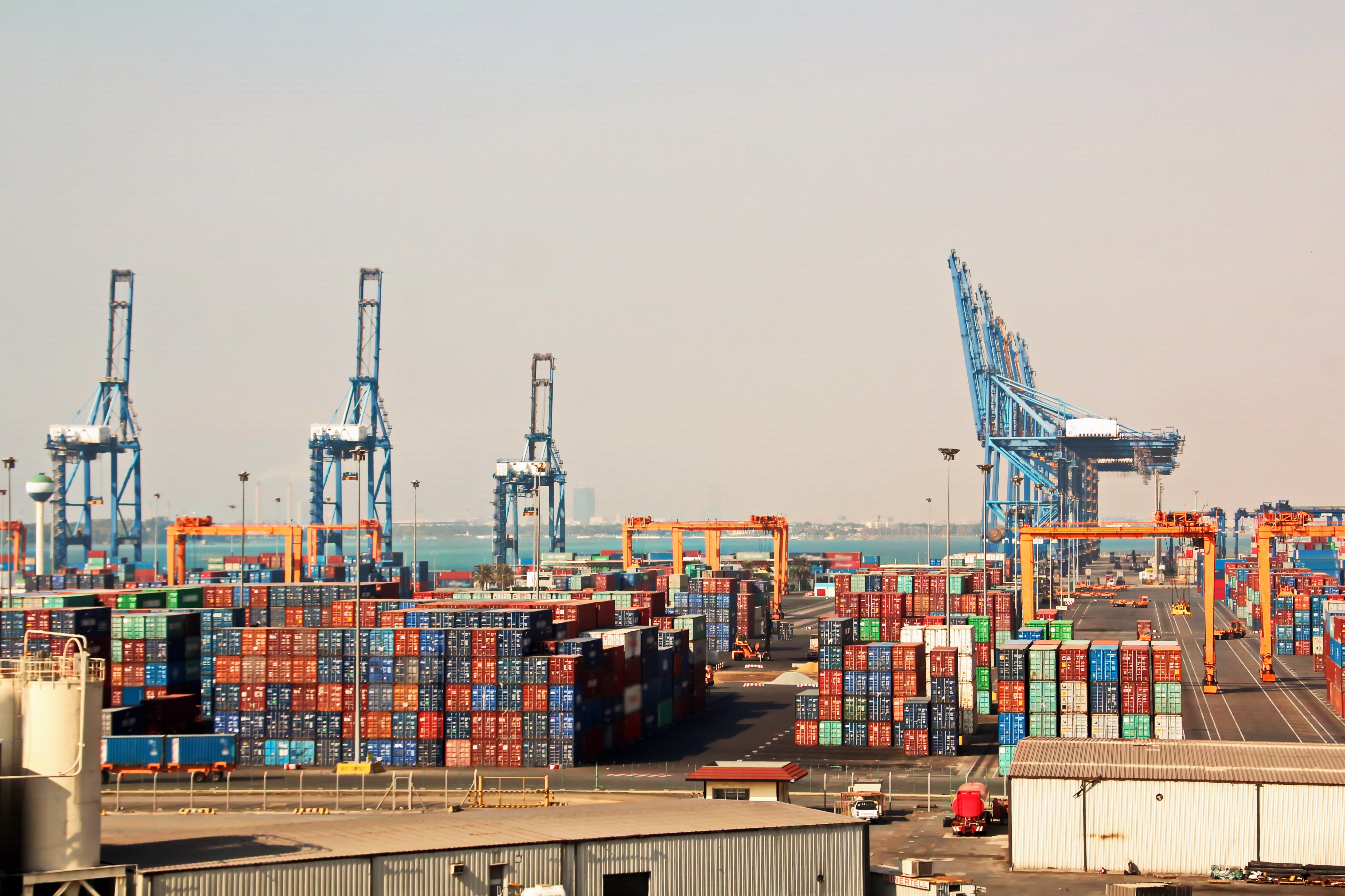
Once fully implemented, GCC tariff reductions will cover around 93 percent of UK goods exports and eliminate an estimated £580 million in annual duties. Most liberalization will take place when the agreement enters into force, although tariffs on some products will be phased out over five or 10 years.
The agreement is designed for the UK as it currently exists.
Scottish or Welsh independence would therefore raise immediate questions over whether a newly sovereign state could retain those terms, whether the remaining UK would continue under the existing agreement unchanged and whether Edinburgh or Cardiff would need to negotiate their own arrangements with the GCC.
Irish unification would present a different scenario because Northern Ireland would become part of an existing sovereign state — and an EU member — rather than forming a new country.
A constitutional expert told Arab News that independence would not necessarily derail Gulf trade, but existing arrangements should not be assumed to transfer automatically.
Any continuation of the current framework would depend on negotiations among a newly independent state, the remainder of the UK and the GCC.
One option for an independent Scotland or Wales could be some form of customs arrangement with the remaining UK, the expert said. That might preserve elements of existing commercial access but could constrain the new country’s ability to pursue an independent trade policy.
Alternatively, a newly independent state could seek its own trade agreement with the GCC.
But there would be no guarantee that it could reproduce the terms negotiated by London — particularly because its economy and consumer market would be considerably smaller.
A separate source familiar with the constitutional issues told Arab News that, depending on how an independence process unfolded, UK authorities could potentially allow negotiations over future trade arrangements to begin before formal separation.
For Scotland in particular, the stakes would be significant.
The Gulf is already an important market for Scottish exporters, with goods exports to GCC states worth about $1 billion last year and including beverages, machinery and salmon.

James Keating of Scottish Development International told Arab News that the UK-GCC deal could become one of the most consequential trade agreements for Scottish exporters in the Middle East.
“It won’t transform trade overnight, but should improve market access, reduce barriers and create greater certainty for Scottish businesses in sectors where Scotland already has strong competitive advantages, including energy transition, food and drink, and science,” he said.
Independence could therefore create a paradox: Scottish businesses might gain substantially from the GCC agreement only to face uncertainty over whether those advantages would continue under a new constitutional settlement.
The same questions would apply to Gulf companies and sovereign investors with assets spread across Britain.
Robert Mogielnicki, founder of Paris-based PoliSphere Advisory and a nonresident fellow at the Arab Gulf States Institute, considers a breakup of the UK unlikely, but said Gulf investors would adapt if it happened.
“Institutional change can and does happen,” he told Arab News.
But such processes “usually unfold very slowly, giving plenty of time for external actors to adjust accordingly.”
That would give Gulf sovereign wealth funds, companies and private investors time to assess how assets, taxation, regulation and investment protections might be affected by new borders or governments.
It could also create opportunities.
“Crises and disruptions always create opportunities,” Mogielnicki said.
“If this low-likelihood scenario occurs, there will absolutely be some form of creative destruction involved, which I suspect Gulf investors will seek to exploit.”
The question would not be limited to tariffs.
Over decades, Gulf states have built extensive relationships with Britain spanning sovereign investment, property, energy, finance, defense, aviation, education and technology.
A constitutional breakup could require some of those relationships to be recalibrated individually with newly sovereign governments.
Diplomatic representation would have to expand. Investment agreements could require reassessment. Defense and security arrangements negotiated with London might no longer cover all the territory of the present UK.
Even relatively mundane questions — such as regulatory standards, rules of origin or where a Gulf company chooses to establish its British headquarters — could become more complicated.
For Gulf investors, however, the most likely response would be to wait for clarity rather than withdraw, Mogielnicki suggested.
And constitutional change remains hypothetical.
The political and legal pathways differ considerably across the three nations. Northern Ireland has a mechanism for a unification referendum under the Good Friday Agreement, while Scotland and Wales have no equivalent unilateral route to independence.
For now, implementation of the GCC agreement remains the more immediate priority.
A British government source told Arab News that the deal was “not behind schedule” and that work was proceeding “as standard” to bring it into effect “as soon as possible.”
But constitutional uncertainty is not the only pressure confronting the new economic partnership.
At the opposite end of the relationship, conflict in the Gulf is testing the assumptions on which expanded trade depends.
Neil Quilliam, an associate fellow with Chatham House’s Middle East and North Africa program, told Arab News that lower tariffs were valuable but “deliver their full benefits only when trade routes are secure.”
That vulnerability has been illustrated by disruption in the Strait of Hormuz.
Preliminary Kpler data cited by Reuters showed that only four commodity vessels crossed the strait on Sept. 17, compared with a 10-day average of 16, as regional conflict continued to disrupt one of the world’s most important energy corridors.
Quilliam said the crisis demonstrated how rapidly disruption to a strategic waterway could affect shipping costs, energy markets, trade flows and investor confidence.
Burcu Ozcelik, a senior research fellow for Middle East security at the Royal United Services Institute, said closer economic ties had also increased Gulf expectations that Britain would remain engaged in regional security.
She argued that the credibility of the broader partnership would depend partly on whether Gulf governments believed Britain took their core security concerns seriously.
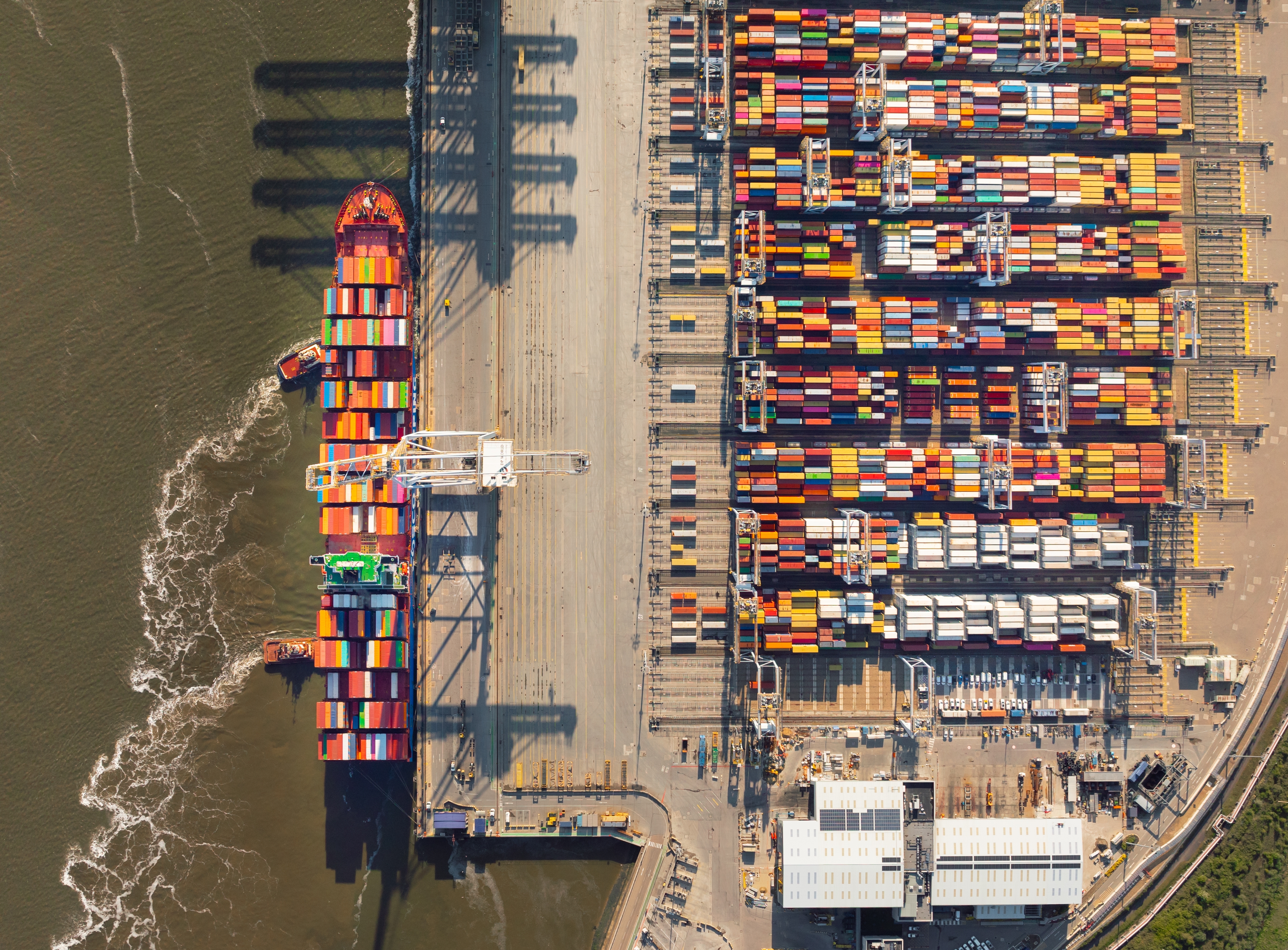
Marco Forgione, director general of the Chartered Institute of Export and International Trade, said instability could also reinforce the logic behind deeper economic ties.
“Instability raises the premium on reliable partners, transparent legal frameworks and diversified relationships, which gives the UK a strategic advantage,” he told Arab News.
He said UK-GCC trade was worth more than $71 billion in 2025, providing a substantial base from which the new agreement could expand commercial ties.
For Britain and the Gulf, then, the FTA is being tested before it has even taken effect.
The immediate challenge lies thousands of kilometers from Britain, where conflict and disruption threaten the shipping routes on which Gulf commerce depends.
The longer-term question is much closer to home.
If the constitutional map of Britain changes, Gulf governments and investors may find themselves negotiating not with one United Kingdom, but with several political and economic partners — each seeking to inherit, replace or renegotiate a relationship that was built with a union that may no longer exist in its present form.
