
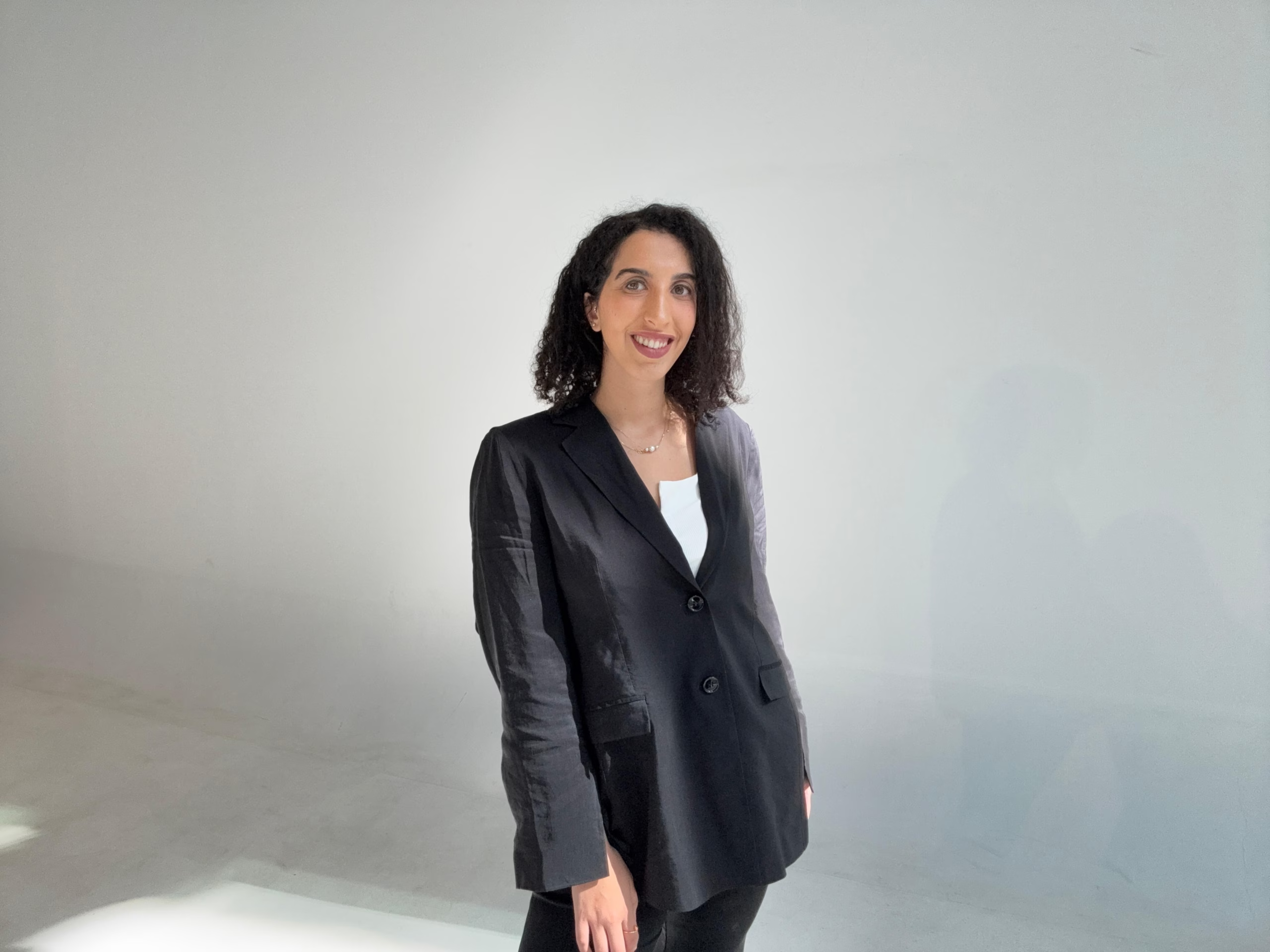
DUBAI: The Attire, a Dubai-based peer-to-peer marketplace for pre-loved fashion, plans to expand into Saudi Arabia, co-founder Salma Cherke told Arab News.
The platform began with Cherke’s own wardrobe. After moving to Dubai from Paris, she accumulated more clothes than she could wear, some of them still unworn, but found that the resale options open to her were built around luxury handbags rather than clothing.
In Paris, she said, reselling had been an ordinary part of buying fashion. She and co-founder Hana Amin built The Attire to carry that habit into the Gulf: a marketplace running from high street to luxury, with pickup, delivery and payment handled on both sides of a sale. Cherke said her background in technology and banking across Europe and Dubai shaped an approach built on trust.
In practice, sellers photograph an item in the app, list its details and condition, and set their own price. The Attire arranges collection and delivery once it sells, then releases the proceeds minus commission: nothing on a seller’s first three completed sales, then 12 percent on items priced below $817 and 20 percent on items at $817 and above.
That upper bracket is also where verification becomes compulsory. The company works with consultants who authenticate luxury items before they reach the buyer, and is introducing an AI tool that scans listing photographs for signs of counterfeiting. “We see it as an additional set of eyes,” Cherke said. “Image-based analysis can help flag concerns for closer examination, alongside our consultants’ expertise.” Buyers with doubts about an item have 48 hours to raise them, against free returns and a 15-day refund window.
The same instinct governs what gets listed to begin with. The founders reject items on condition, presentation, style and relevance, with Cherke saying a designer label alone did not guarantee a place on the app. “A beautiful high-street dress can be just as relevant as a luxury bag,” she said. Bags and dresses have sold fastest so far.
Harder to solve is the hesitation that comes before any of that. Cherke described a cultural barrier for some customers in the Gulf, where secondhand can still carry an assumption of wear and tear, alongside concerns about cleanliness and authenticity. She said shoppers at a company-organized pop-up in Dubai grew noticeably more comfortable once they could handle the pieces and try them on.
Turning that into routine was the part she said was hardest. In a market where buying something new remains the automatic choice, clearing a wardrobe is something people intend to get around to doing.
Saudi Arabia is next. Cherke said she and Amin wanted to understand shopping habits there, and what would give customers the confidence to buy and sell pre-loved, before launching. Those insights would shape the platform’s selection, language, payment and delivery.
“We are focused on the UAE today and plan to expand into Saudi Arabia in 2027,” she said. “We have always had a regional ambition for The Attire, and this is an exciting next chapter.”
The one piece she will not list is her own first vintage Chanel bag. “I bought it in Le Marais in Paris with my first salary, so it reminds me of my first job and the independence that came with it,” she said.
“I love that it already had a story before it became part of mine. That is what makes pre-loved special, although this particular bag will be staying with me,” she added.
