
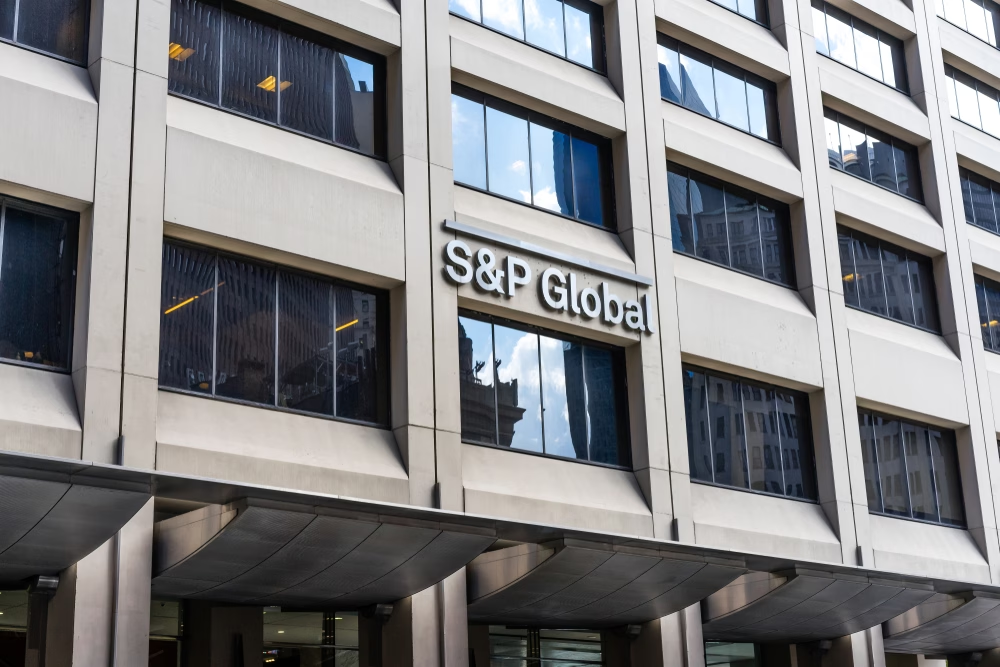
RIYADH: S&P Global Ratings affirmed Saudi Arabia’s long- and short-term sovereign credit ratings at A+/A-1, with a stable outlook, saying the Kingdom’s diversified energy infrastructure and fiscal buffers will help it withstand pressures from the ongoing Middle East conflict.
The stable outlook reflects S&P’s assessment that Saudi Arabia can absorb the impact of regional disruptions while maintaining non-oil growth and fiscal flexibility. The agency highlighted the Kingdom’s ability to redirect crude exports to the Red Sea through the East-West oil pipeline, as well as its substantial oil storage and refining capacity at home and abroad.
S&P expects real gross domestic product to contract 0.9 percent in 2026, before rebounding 8.2 percent in 2027 on higher oil production. Growth is then forecast to average 3.3 percent in 2028 and 2029. The sharp swing reflects the impact of the current disruption on oil activity and the expected increase in production next year.
“The authorities and the country’s sovereign wealth fund are recalibrating the pace of project implementation under Vision 2030, which should help contain fiscal deficits and the pace of general government debt accumulation,” S&P said.
The agency noted that non-oil activities have remained resilient despite regional tensions, supported by continued consumer spending, with the non-oil sector, including government activities, now accounting for around 70 percent of GDP, up from 65 percent in 2018.
The affirmation follows Fitch Ratings’ July decision to maintain Saudi Arabia’s “A+” rating with a stable outlook, citing strong fiscal buffers. The International Monetary Fund also upgraded its 2027 growth forecast for the Kingdom to 5.5 percent from 4.5 percent in April, citing its diversified export infrastructure.
Fiscal picture
S&P forecasts a fiscal deficit of 5.8 percent of GDP in 2026, narrowing to an average of 3.4 percent of GDP in 2027-29. The agency also identified Saudi Arabia’s substantial net general government asset position as a key credit strength and said foreign-exchange reserves had reached their highest level since early 2020.
Daniel Al Banna, financial market analyst and wealth management specialist at Hewar Group, told Arab News the affirmation is a strong recognition of the Kingdom’s economic resilience and strategic strength.
He noted that Saudi Arabia had demonstrated strong strategic thinking, flexibility and the ability to protect the continuity of its economic activity without becoming directly involved in the conflict.
Al Banna said: “The rating reinforces Saudi Arabia’s position as one of the strongest sovereign credit stories in the region,” describing current geopolitical pressures as “primarily short-term factors” that have not altered the Kingdom’s broader economic trajectory.
