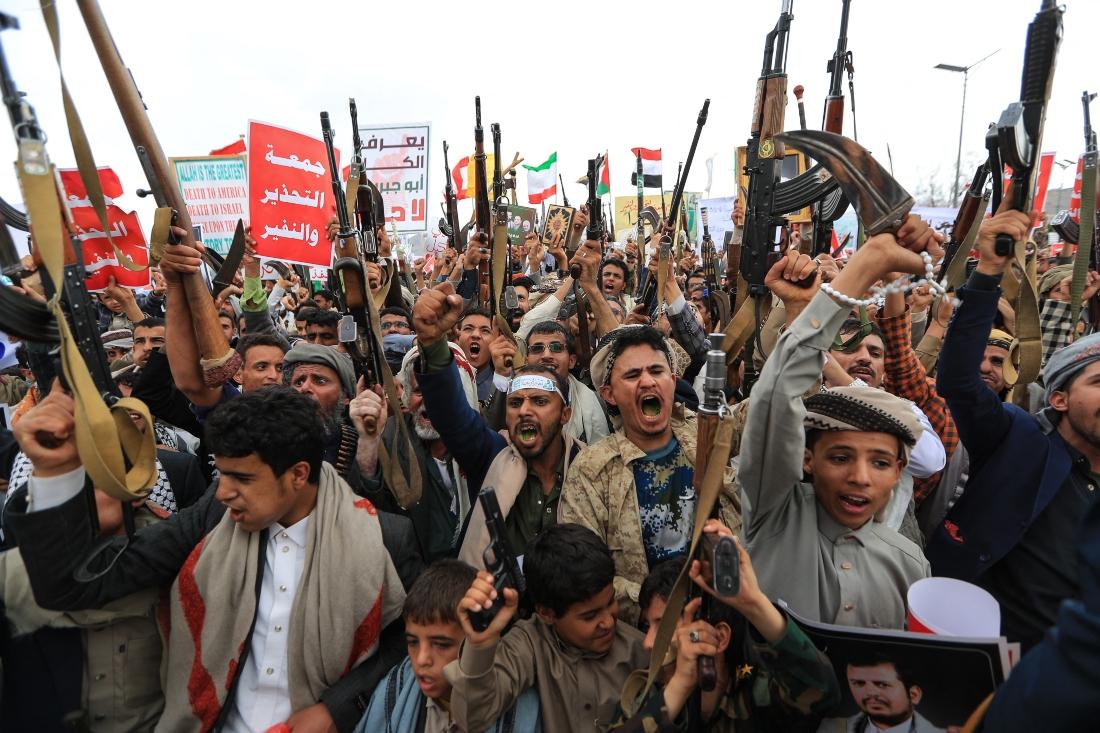
LONDON: After the latest escalation in southern Saudi Arabia on Tuesday, the odds of a new regional front opening in the ongoing war between the US and Iran appear to have dropped sharply.
The Kingdom has made clear that it would not hesitate to defend itself against Iran-backed Houthi missiles and drones, and would use all available means to protect its interests.
“The Houthi militia resorts to violence whenever it finds itself in a difficult situation,” Saudi Foreign Minister Prince Faisal bin Farhan said on Tuesday during a visit to Moscow, adding that the group was “trying to export their domestic problems in Yemen to Saudi Arabia.”
On Wednesday, Saudi officials reassured the public that the situation was fully under control, saying that the threat in Khamis Mushait, Najran, Jazan and Abha had passed, after earlier issuing alerts warning of a potential threat.
The latest incidents are more than just cross-border fire. They occur in a tense regional context, in which Saudi Arabia — and neighboring Gulf countries — have faced months of unprovoked strikes tied to Iran and its so-called axis of resistance, of which the Houthis are part.
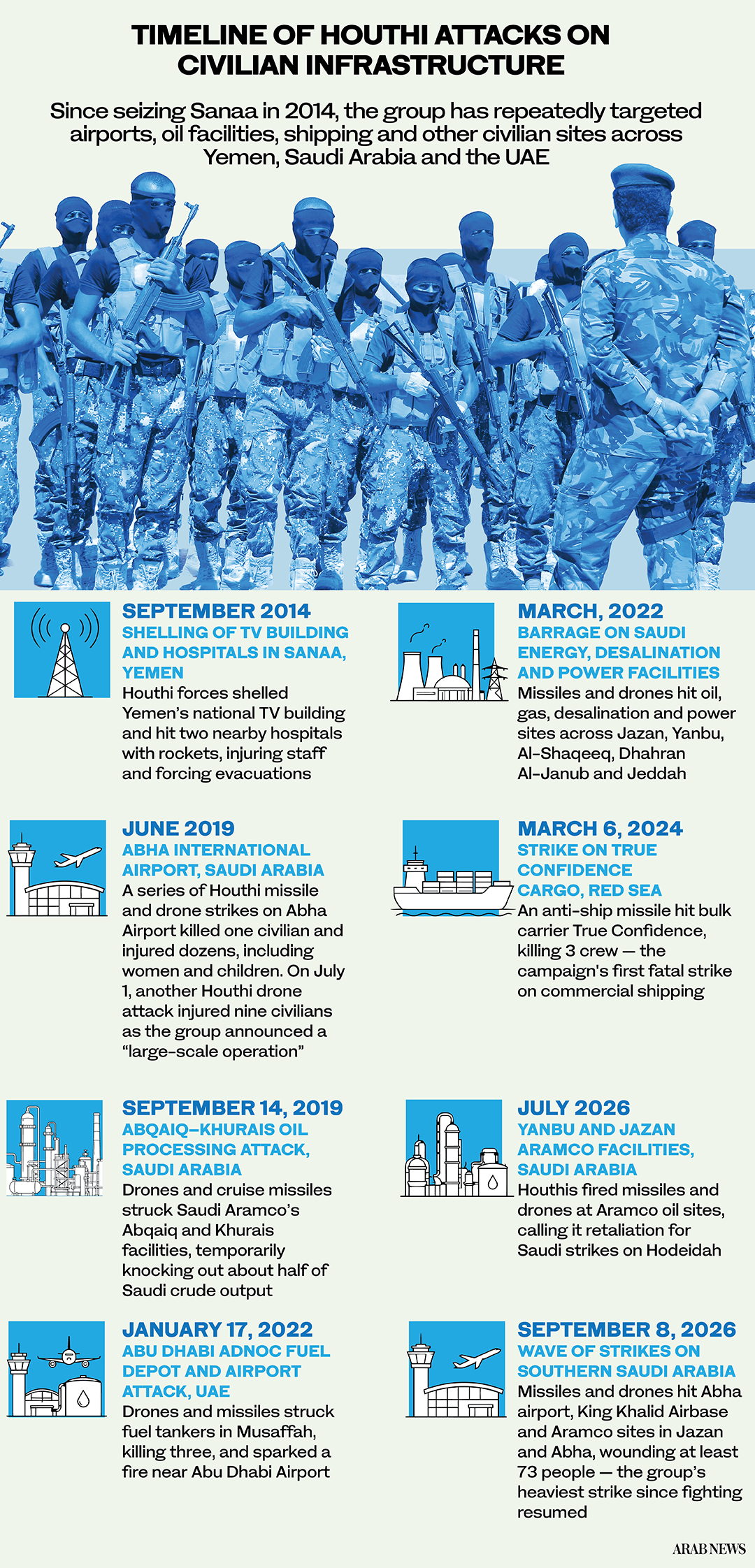
On Tuesday, the Houthis carried out attacks across the border with Saudi Arabia, wounding scores of civilians in the most serious escalation since a UN-brokered truce halted large-scale fighting in 2022.
The Houthis claimed they targeted Saudi Aramco energy facilities in the south, with the group’s military spokesman calling it “a broad operation.”
Strikes hit civilian and energy infrastructure in Abha, Khamis Mushait, Jazan and Najran, causing several fires at oil facilities that led to a temporary halt in some operations, Saudi Arabia’s Energy Ministry said.
According to Saudi officials, the attacks left 73 civilians injured, including women and children.
On Wednesday, the group carried out further attacks targeting Khamis Mushait, Abha and Jazan using ballistic missiles and drones, according to a statement by Maj. Gen. Turki Al-Maliki, the official spokesperson for the Coalition to Support Legitimacy in Yemen.
The attacks by the Iran-backed group on Saudi Arabia unfold even as they battle Yemen’s internationally recognized government, which announced on Monday that it was launching counteroffensives against Houthi-held positions across several provinces.
The escalation also comes as the strategic importance of Yemen’s Bab Al-Mandab strait grows amid Iran’s effective closure of the Strait of Hormuz, a key passageway for global oil and gas supplies.
The Houthis have sought to advance toward Bab Al-Mandab while government forces say their campaign ultimately aims to retake the capital, Sanaa, from the militia’s control.
The Houthi attacks drew condemnation from Egypt, which described them as “a dangerous escalation,” as well as Jordan and the UAE, which said the barrage violated Saudi sovereignty.
Condemning the attacks, the EU called on the Houthis to cease attacks inside and outside Yemen, including on commercial shipping in the Red Sea.
For his part, US Secretary of State Marco Rubio said that “the US has a very strong defensive military relationship with Saudi Arabia, and we’re watching those events very closely.”
“It’s been going on for some time. I think we’ve got some ground operations as well,” he said, noting that “Yemeni forces are taking on the Houthis and pushing back against some of the ground advances that they attempted to make.”
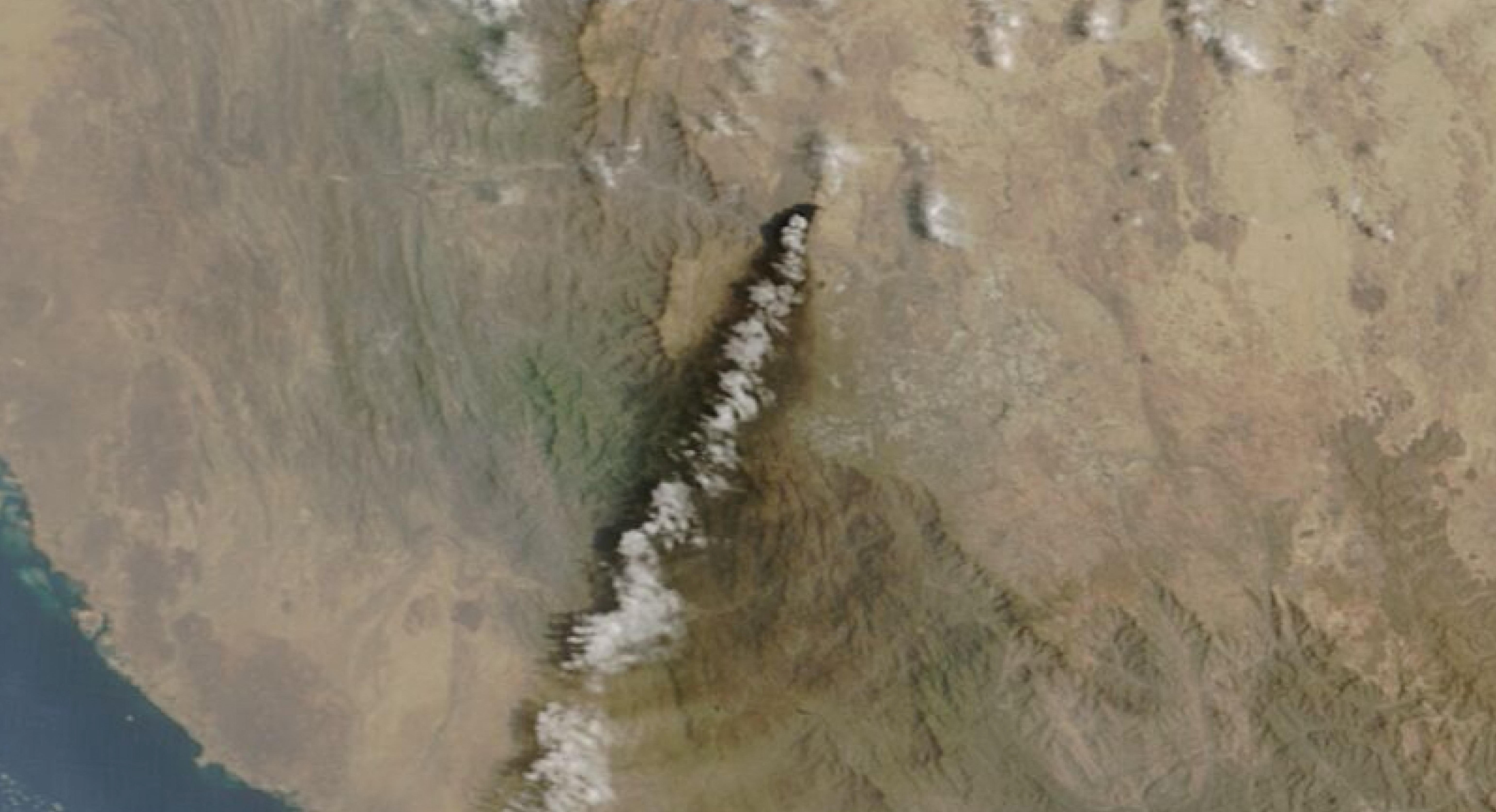
Some analysts see the rise in Houthi military activity as a sign that Iran is seeking to widen the conflict, arguing that it fits a pattern Tehran has pursued — and, some say, long planned — throughout the current war.
Others note that the Houthis have so far played a comparatively limited role while other factions in Iran’s regional axis have engaged US and allied forces more directly, making this week’s escalation a notable shift in the group’s posture.
Tuesday and Wednesday’s attacks, in this context, represented what Gulf security expert Andreas Krieg described to the AFP news agency as an “extremely uncomfortable dilemma.”
Despite being subjected to sporadic attacks on its oil tankers in the Red Sea and other provocations in recent months, Saudi Arabia has largely refrained from a direct response. After Tuesday, the big question seems to be whether that restraint is sustainable any longer.
“We will always support peace and diplomatic solutions, but we will not hesitate to defend ourselves, and we will not hesitate to protect our interests,” Prince Faisal bin Farhan said.
Analysts have long suspected that Saudi Arabia’s patience is wearing thin, with the underlying threat, the regional context and the range of possible outcomes — from renewed escalation to a return to containment — increasingly converging into a single, more urgent calculation.
On Tuesday, Al-Maliki, suggested that retaliation was no longer a matter of whether, but when, adding that the coalition “will take all necessary operational measures to deter” the group’s “hostile and irresponsible” approach.
Earlier in the day Tuesday, Salman Al-Ansari, a prominent Saudi political researcher and commentator, had said on X: “The gloves are off. Saudi Arabia will finish the job against the Iran-backed Houthi militia.”
On Wednesday, Al-Maliki reiterated the warning, saying the “Coalition will deal with these sinful attacks with full responsibility to protect the Kingdom’s sovereignty and national assets, and to protect civilians and civilian objects from these hostile attacks.”
A Houthi spokesman claimed without evidence that the group’s attacks on Tuesday were retaliation for Saudi involvement in air raids and a prison attack in Al-Jawf. That posture had echoes of the “eye for an eye” siege-for-siege logic the group announced in July, when it said its aim was to force recognition of its ability to hurt Saudi Arabia beyond Yemen’s borders.
By pushing toward Bab Al-Mandeb while Iran keeps up the pressure on the Strait of Hormuz, the Houthis appear to be seeking dual leverage, for themselves and Tehran, over global oil and trade flows and thereby turning Yemen’s western coast into a second pressure point on international shipping.
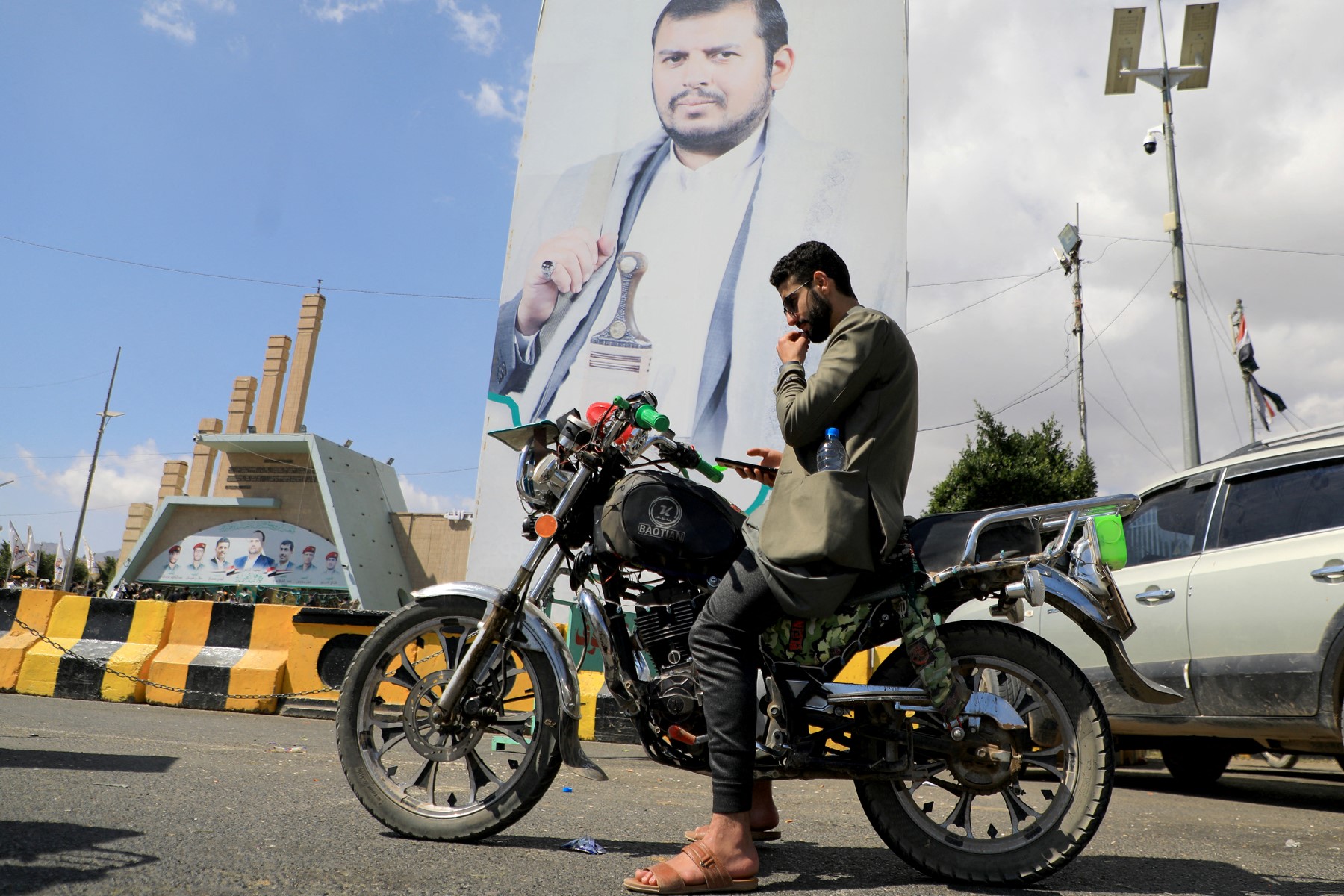
The Houthis have long maintained a degree of operational independence, but the timing of the latest escalation has prompted questions about whether it reflects closer coordination with Tehran — a question that remains contested among Iran watchers.
What is less disputed is the underlying strategic choice facing the Houthis: whether they are primarily seeking bargaining leverage for future talks and possible sanctions relief, or consciously opening a more durable regional front tied to Iran’s confrontation with the US and Israel.
For Saudi Arabia, however, attacks on its energy infrastructure — and, more significantly, what it sees as a flagrant violation of its sovereignty and a direct threat to its citizens’ safety — may represent a red line.
On Tuesday night, Khawaja Asif, Pakistan’s defense minister, warned that the Makkah Defense Alliance between Pakistan, Saudi Arabia and Turkiye could become operational if there was a “spillover” of the conflict in Yemen into Riyadh.
The tripartite pact, signed on Aug. 7, aims to strengthen collective deterrence and empower its signatory states to treat an attack against one of them as an attack against all of them.
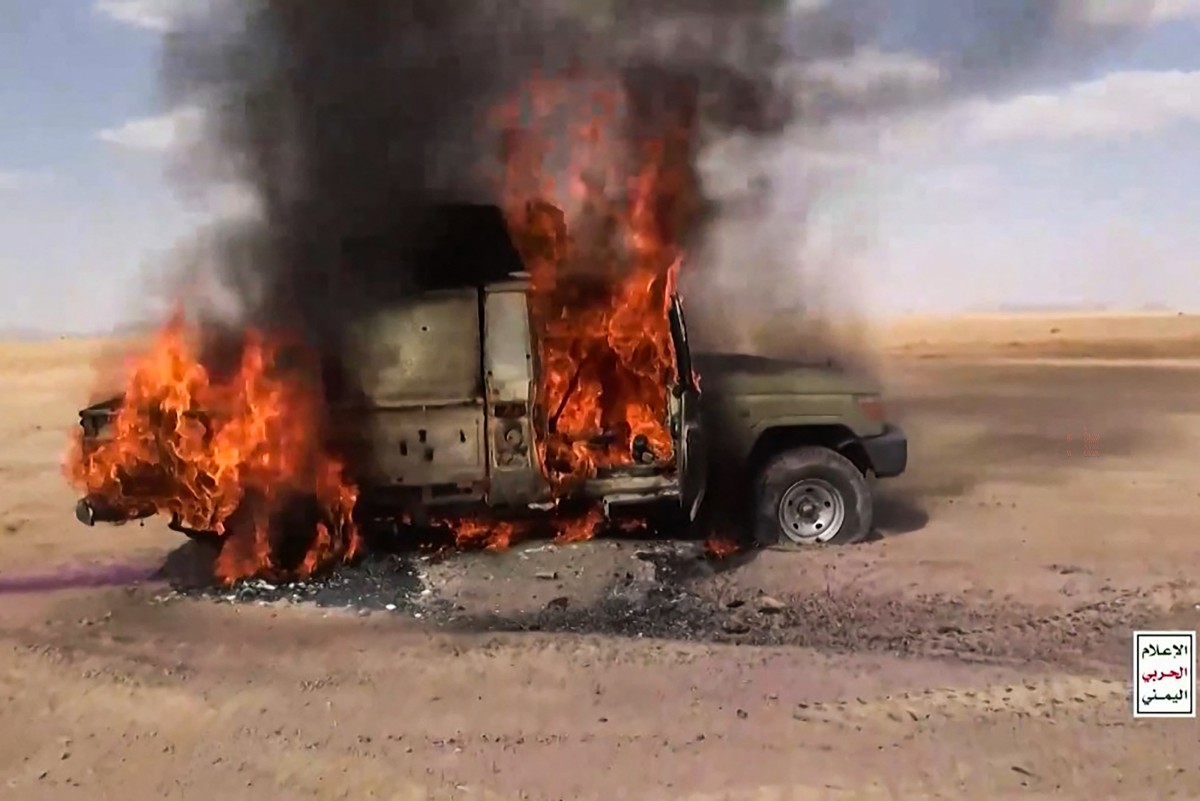
Asked on a Pakistani TV show whether the pact could be activated following the Houthi attacks on Saudi Arabia, he replied in the affirmative, reiterating there was no “ambiguity” as the pact stipulated that aggression against one party was equivalent to aggression against all.
“This is a joint defense pact. And unprovoked aggression or spillover of whatever is happening in Yemen into Saudi Arabia, definitely, the pact will become operational; there should be no doubt in this,” he said. “We are bound by the terms and conditions of this pact and we will honour them in case there is a need.”
According to Yemen analyst Hisham Al-Omeisy, “We are way beyond the concept of (the conflict) being domestic.” The fighting remains short of all-out war, he added, with a negotiated settlement still the most realistic path forward, even if it remains distant for now.
However, Ali Shihabi, a Saudi analyst, is less optimistic about a diplomatic resolution. “Saudi Arabia has realized that the Houthis have not been reasonable and there is very little chance of reaching a political settlement with them,” he told CNN. He added that the Houthis “will need to suffer some losses to come back to the table.”