
It is a busy two months for cricket in the UAE. The Abu Dhabi T10 league opened on Nov. 7 and closed with the final on Nov. 20, all matches played at the Zayed Cricket Stadium.
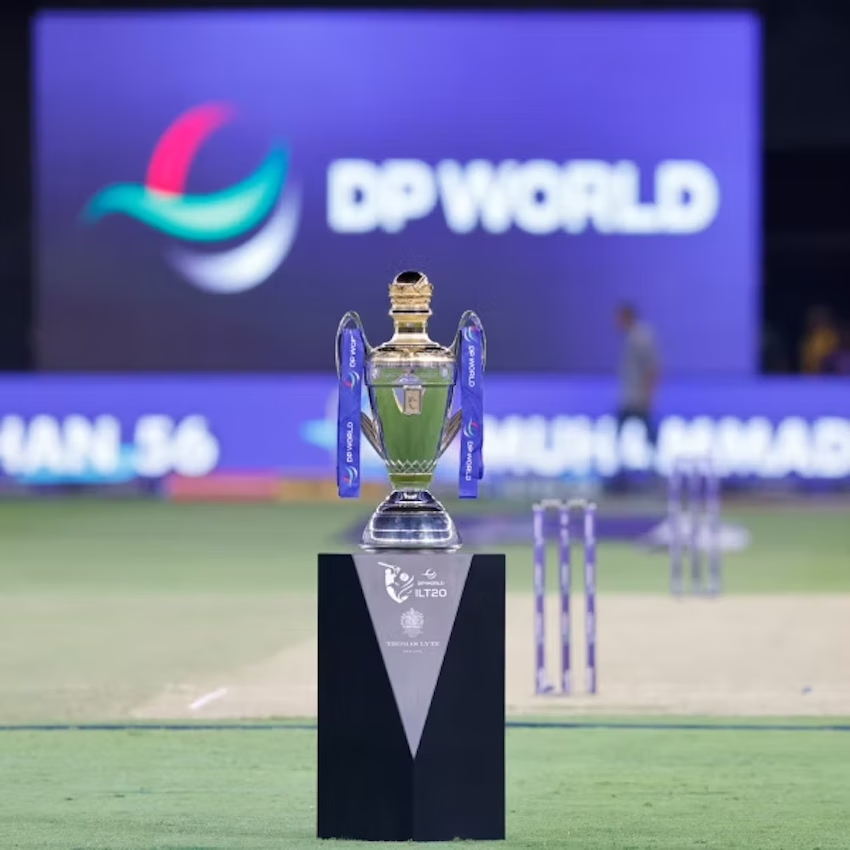
On Nov. 21, the DP World ILT20 league opened at the Dubai International Stadium, which will also host the final on Dec. 20. After that, the Afghanistan Premier League will open on Dec. 27.
The 2026 International Cricket Council Women’s Emerging Nations Trophy, which started on Nov. 12 and ended with the final on Nov. 25, overlapped the T10 league and the ILT20. The matches were played at the Karwan Sports Club and the Seven Districts Sports Club, both in Ajman.
Ten teams competed in the women’s trophy, divided into two groups of five for a round-robin stage from which the top three teams in each group progressed to a Super Six. In Group A, the Sri Lankan team were unbeaten, followed by Scotland and Ireland, with the UAE and Papua New Guinea eliminated.
Group B was topped by Pakistan and the Netherlands, whilst Zimbabwe just pipped Bangladesh into third place, leaving Thailand adrift at the foot of the table after four losses. This was a very disappointing outcome, especially as the team had won the inaugural eight-team edition in Thailand in 2025. The second edition was scheduled to be hosted in Bangkok, but severe floods there forced a switch to the UAE.
The disruption also made it difficult for Thailand to conduct much proper practice before the competition opened. Akshaykumar Yadav, the coach, said: “For three, three-and-a-half weeks, we didn’t get anything, any amount of cricket.”
In two of the four matches, Thailand lost by narrow margins of only three runs and three wickets with three deliveries remaining. Despite the defeats, team captain Naruemol Chaiwai focused on the benefits of playing Full Member teams, gaining experience of how to handle pressure and inspiring the next generation of women cricketers in Thailand.
In the Super Six stage, the top three teams from Group A play the top three from Group B, with results within group matches carried forward. The Sri Lankans continued their impressive form, winning all three matches, although they only narrowly defeated Pakistan by four runs. Ireland also showed impressive form, winning all three Super Six matches. The Netherlands were beaten by 44 runs, Pakistan by nine wickets and Zimbabwe by three wickets.
In the final, Sri Lanka opted to bowl. Sathya Sandeepani, who went on to claim four wickets for 13, struck an early blow, dismissing Gaby Lewis, Ireland’s captain and second leading run scorer in the tournament, in the first over. Ireland never recovered, bowled out for 96. Sri Lanka eased to victory in 12.4 overs, losing four wickets, Imesha Dulani scoring 44.
The final of the Abu Dhabi T10 league was contested by the Yas Lions and last year’s winners, the UAE Bulls. Although the Bulls won their first match, against the Lions, the team lost five of the next six matches, recovering just in time to seal third spot. This led to a place in the qualifier against second-placed Arabian Aces whom they beat by seven wickets.
In the final the Bulls scored 134 for the loss of three wickets, a total which they defended to win by 24 runs. The Bulls’ head coach was the ubiquitous Andy Flower, a Zimbabwean who boasts an impressive international playing career and an equally impressive record as a coach across all formats.
This included a five-year stint as England’s head coach between 2009 and 2014. His assistant at the UAE Bulls was Peter Moores, whom he succeeded as England’s coach. Moores has been Nottinghamshire’s head coach for 10 years and his son, Tom, was in the Yas Lions’ team, scoring 48 in the final.
Last season’s champions of the DP World ILT20, the Desert Vipers, were comfortably beaten in the opening match of season five by the Mumbai Indians (MI Emirates), whom they defeated in the final of the last edition. A better performance by the Vipers in the second match, led by Babar Azam’s 86, saw them chase down 166 against the Sharjah Warriorz.
The Gulf Giants have made a positive start by winning their first two matches. In the second one, they bowled the Mumbai Indians out for 91, their lowest total in the league and the joint-second lowest in the league’s history. By all accounts, the ball swung and seamed to make batting challenging.
Immediately prior to the tournament, the Adani Group, owners of the Giants, announced that, in season five, they will not enter into sponsorships or commercial associations with betting and gambling businesses, including surrogate brands, affiliates and indirectly linked entities.
A statement said that “the policy places fair play and public trust at the heart of the franchise’s commercial decisions, backed by legal, compliance and reputational checks on prospective partners.” This is a message to fans, players and partners that sporting integrity is central to the franchise’s identity and decisions. It is also a stance which seeks to achieve differentiation in what is becoming a crowded marketplace, as well as a timely one.
Last week’s column referred to recommendations aimed at strengthening governance and sporting integrity that were made by the Franchise League Review Group set up by the ICC. These included proposed restrictions on sponsorships involving betting companies and their surrogate brands.
It appears that the Adani Group has reacted quickly. In reality, it seems to fit with its principles, unveiled in 2023. Translated into English, these express: “Undeterred by challenges, we deliver on our commitments.” One of those commitments is that commercial partnerships must be consistent with the values of the sport. Cricket and betting have a three-century long history of coexistence. It is going to be fascinating to observe how attempts to decouple betting sponsorships play out.
Amongst the ILT20 franchises it is the Desert Vipers that have led the way in social and environmental initiatives, positioning themselves, of their own volition, in this space. Their latest initiative is a collaboration with the Sustainable Markets Initiative to advance sustainability in sport.
The SMI brings together world leaders and private sector CEOs to accelerate global sustainable transition. During season five of the DP World ILT20, the SMI logo will feature on the Desert Vipers and Bluewater Group’s innovative LED water refill unit, which helps the franchise to save 14,400 single-use plastic bottles during the season.
Cricket is set on a growth path in terms of global reach for both players and audiences, fueled largely by investment from India. Participation in the 2028 Olympic Games edges closer, whilst China’s untapped market is a target for the ICC.
This expansionist strategy requires appropriate governance structures and environmental-protection measures to be in place. Despite the initiatives exemplified by two ILT20 franchises and the FLRG’s recommendations, which await approval and implementation, governance and environmental matters need greater impetus.
The UAE is not just a host of ICC events and franchise leagues, it also houses cricket’s governing body, which has a rapidly increasing responsibility to ensure that the game’s integrity is protected and enhanced. It needs to show that it is capable of rising to the challenge.
