
As the confrontation between Iran and the United States hovers between renewed hostilities and a settlement that respects both sides’ red lines, the idea that Russia may mediate to end the war has resurfaced. There is no shortage of capable mediators already involved, but Russia’s relationship with Iran, together with President Vladimir Putin’s relationship with President Donald Trump, could let it broker an agreement that allows both sides to save face.
High-level contacts between Moscow and Tehran have continued uninterrupted since the war began. Iranian leaders seem to think that Russia might be able to help, as the American economic blockade of Iranian ports takes its toll. For Moscow, successful mediation could advance its wider geopolitical ambitions.
Maintaining relations with Iran’s current leadership is essential to preserving the delicate balance underpinning the security and economic arrangements Russia has spent years developing in partnership with Tehran across strategically important regions, including the South Caucasus, the Caspian Sea and Central Asia. These considerations also shape Moscow’s approach to the Gulf Arab states and the wider Middle East.
Russia derives certain limited benefits from the continuation of the war, including higher energy prices and the diversion of international attention from its war in Ukraine. A political settlement that leaves neither side defeated, however, would give Moscow an opportunity to join Trump and Chinese President Xi Jinping in negotiations over a new division of global spheres of influence. Such an arrangement would recall the proposed ‘Yalta 2’ formula, much discussed in recent months amid the rapprochement between the Kremlin and the White House.
Russia-Iran relations
Recent years have exposed deep divisions within Iran over how to view Russia, not least how far to rely on Moscow and the importance (or otherwise) of this relationship to Iran’s economic and political future. Russia is a major power seeking to expand its global influence, but its relationship with Iran’s leadership is governed by considerations that sometimes give rise to conflicting objectives, even though the two countries are bound by a 20-year Comprehensive Strategic Partnership Treaty, signed in January 2025 and ratified by both parliaments in October that year.
Iran appeared to intensify its efforts to conclude the treaty after Trump’s re-election. It provides for closer cooperation in several fields, notably trade, nuclear energy, infrastructure, cybersecurity, media and counterterrorism, but there is no explicit provision for mutual defence in the event of war. It simply says that both states undertake not to assist an aggressor against the other, avoid joining sanctions imposed by third parties, and strengthen efforts to counter shared threats. Russian officials regularly invoke these provisions, particularly those relating to defence, to explain Moscow’s refusal to provide military assistance to Iran.
Strategic partner
Another factor is Iran’s place in Russia’s view of a multipolar world. Iran is a strategic partner for Moscow in its approach to the West, and Russia has tried to integrate Tehran into economic and political initiatives that support its plans for a new global system. For instance, Iran became a full member of the Shanghai Cooperation Organisation in the summer of 2023 and joined BRICS as a full member at the beginning of 2024.
Moscow has no desire to see the US-Iran war end with the overthrow of Iran’s current government; the cost to Russia would be enormous. The Kremlin lost Bashar al-Assad as an ally in Syria in December 2024 and Nicolás Maduro as an ally in Venezuela in January 2026. The loss of Iran would be a far more serious setback. As much as anything, a US victory there would deepen doubts among Russia’s allies in the Global South about the reliability and effectiveness of Moscow’s support should they find themselves at odds with the West.
The power balance in Russia’s southern neighbourhood is also important. Moscow does not want Iran to collapse or lose its standing as a regional power in the South Caucasus, Central Asia, Afghanistan, and the Caspian Sea, but Russia is equally wary of Iran becoming too powerful in its near abroad. For years, Russia has seen Iran as a dependable partner that respects its interests in these regions.
Regime change in Iran, or the country’s descent into state failure, would create security risks, including drug trafficking and a terrorist threat moving into Central Asia and, from there, into Russia. Any disruption of existing regional security arrangements could also provide an opportunity for the United States or China to establish new security structures that exclude Moscow.
The regional balance in the Middle East needs to be weighed up, too. Following the collapse of the Assad regime, Russia’s ability to maintain a political role in the region depends on preserving the existing balance of power between Iran and the Gulf Arab states, and between Iran and Israel. Moscow does not want any of these parties to become substantially stronger or weaker. Maintaining this balance allows Russia to preserve its partnerships with competing regional powers and act as a mediator.
Despite their strategic partnership, Russia remains firmly opposed to Iran acquiring nuclear weapons. The history of conflict between the Russian and Persian empires, and the tension between the Soviet Union and Iran, has reinforced Moscow’s opposition to the prospect of a nuclear-armed Iran on its southern borders. Russia also thinks a nuclear Iran would lead others to develop the same capabilities.
Economic considerations
Despite the immediate financial benefits Russia derives from the war, Iran’s collapse or a change of government in Tehran would impose heavy economic losses on Moscow and threaten the big projects on which it places so much hope. The war has already stalled construction of the International North-South Transport Corridor, an important additional route for Russia to transport goods to and from its territory. The corridor will connect rail, road, and maritime routes stretching from Iranian ports on the Arabian Gulf and the Arabian Sea to the Baltic Sea.
Following the suspension of Russian gas exports, Moscow and Tehran agreed last year to establish a joint hub on the Iranian coast for exporting liquefied natural gas (LNG) produced in both countries to international markets. That project has also been disrupted by US strikes on southern Iran. Its completion will now almost certainly require substantial additional investment and several more years’ work.
Although the Kremlin says that cooperation on the construction of new nuclear power plants in Iran is continuing, the outcome of the war could alter both countries’ priorities. In October 2025, Russia and Iran reached a preliminary agreement to build the $25bn Hormoz nuclear power plant. Russia had been building a second unit at the Bushehr nuclear power plant, but its personnel withdrew as the US and Israel began bombing.
Russian direct investment in the Iranian economy has increased in recent years. In June 2025, Iran’s ambassador to Moscow, Kazem Jalali, said Russia had become the largest source of foreign direct investment (FDI) in Iran during the 2024-25 financial year, with investments totalling $4.2bn. He said he expected Russian investment in Iranian gas projects to reach $8bn, “including $5bn in specific commitments, with agreements on the remaining contracts expected soon”.
Yet despite its interest in mediation, Russia stands to gain little from the lifting of Western sanctions on Tehran, a condition set by Iranian negotiators. If sanctions are eased, Iran could gradually increase its oil exports, attract investment, and become a stronger competitor to Russia in the international energy markets. The extent of the impact on Russian exporters would depend on production capacity, investment conditions, and global demand.
A more receptive Trump
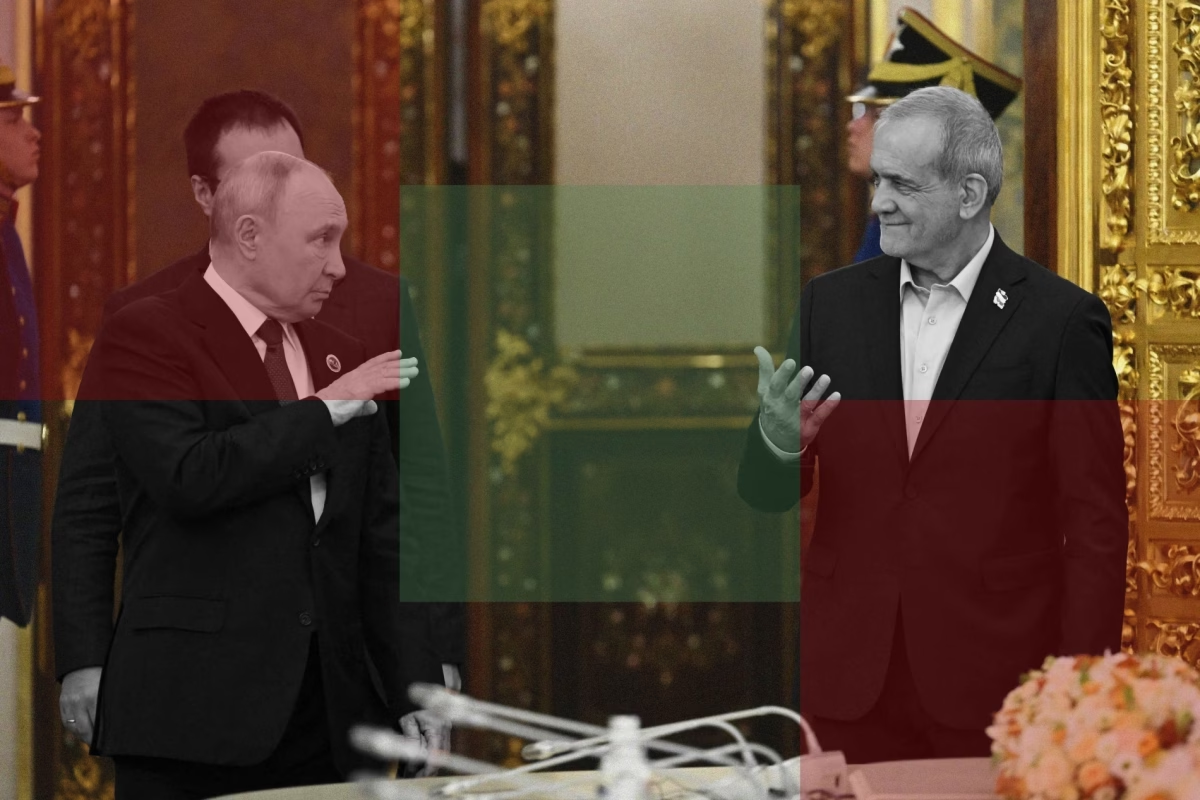
Russia hopes to capitalise on its good relations with both Iran and Trump to secure a prominent role in mediation efforts. Meetings and calls between Russian and Iranian officials have continued, including several encounters in recent months between Putin and his Iranian counterpart, Masoud Pezeshkian. Washington initially rejected Russian mediation offers, with Trump asking Putin instead to end the war in Ukraine. But the US president has since appeared more receptive to Moscow’s involvement.
Russian mediation would not be straightforward. American and Iranian ‘red lines’ remain some considerable distance apart, leaving little room for compromise. Trump recently suggested that America had already won and directed his vice-president, JD Vance, to focus instead on domestic issues. For its part, Iran wants sanctions to be lifted and believes that the US and Israeli election results strengthen its hand.
To succeed, Russia would need sufficient incentives or leverage to persuade both sides to make concessions, but the Kremlin lacks the resources and bargaining power to convince either party that compromise is necessary. Historical experience, divisions among Iranian elites over Russia, and Moscow’s tame response to the war may make Tehran less willing to budge. Despite that, Russia will still hope to play a role, like did it in the negotiations leading to the 2015 Joint Comprehensive Plan of Action, which eased financial pressure on Iran in exchange for international inspections of its nuclear sites. Under that agreement, Iran transferred uranium enriched to 20% to Russia.
The most Moscow may hope to achieve at this stage would be to persuade Iran to abandon its military nuclear programme (which it denies having) and surrender its highly enriched uranium. In return, Russia could help Tehran develop its peaceful nuclear energy programmes while supplying modern aircraft and air defence systems to strengthen Iran’s ability to repel future US-Israeli strikes.
This includes S-400 air defence systems and Sukhoi Su-35 fighter aircraft, yet Russia delayed delivery of Iran’s S-300 air defence systems for many years, so Tehran will be wary of promises. It would also suspect that, should war with the US or Israel resume, Moscow would once again stand aside, as it did earlier this year, and as it did in Syria (2024) and Venezuela (2026).
These concerns are reinforced by the fact that Russia no longer needs Iranian drones, missiles, and munitions to sustain its war in Ukraine, as it did from 2022-24. Russia also lacks meaningful leverage over Trump, who is now in his final two years in power. Indeed, Moscow is careful to avoid antagonising him, given the situation in Ukraine and the support that European governments are giving to Kyiv.
Trump would be more interested in Russian mediation if he felt that Moscow could get concessions out of Iran. If the Kremlin cannot persuade Iran to modify its positions, its value to the White House is limited. Likewise, this is not a priority for Russia, whose diplomatic ambitions far exceed its ability to bridge any US-Iran differences while protecting its own interests. Its main objective is to prevent Iran from suffering a crushing defeat, or from a regime change that would turn Iran into a friend of the West. As ever, partnership in international relations only goes so far.
