
The Association of Southeast Asian Nations has spent more than five years trying to influence the crisis in Myanmar. It has produced a Five-Point Consensus, appointed successive special envoys, coordinated humanitarian assistance and maintained restrictions on Myanmar’s political participation in high-level meetings. Yet one of the weaknesses in its approach has received far less attention: the diplomatic machinery itself keeps changing.
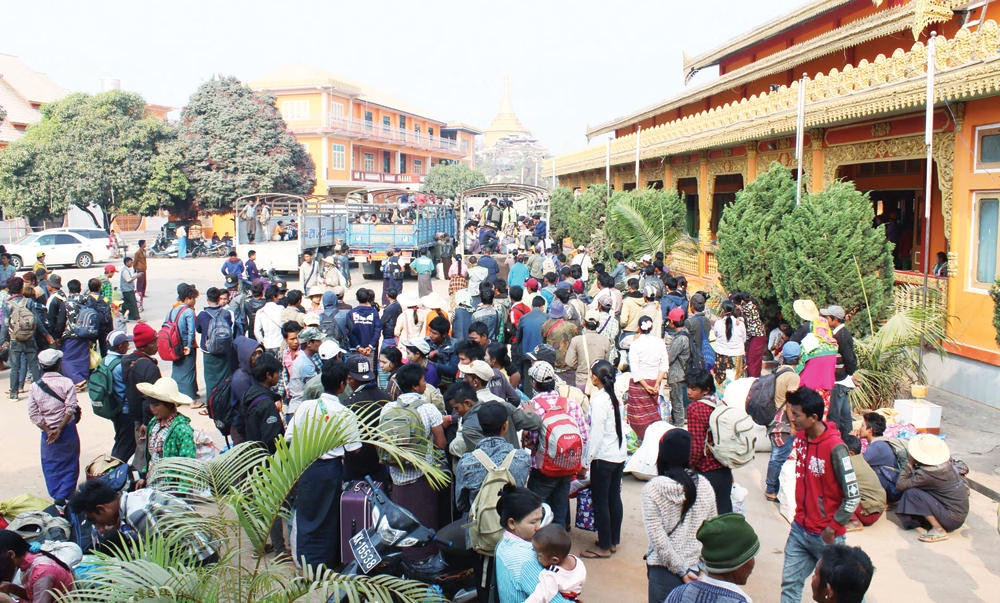
ASEAN’s chairmanship rotates every year and responsibility for the Myanmar file has largely rotated with it. In 2026, Philippine Foreign Secretary Theresa Lazaro serves as the ASEAN chair’s special envoy on Myanmar. She recently led a humanitarian mission into the country, supporting assistance for more than 11,000 households in Kayin and Shan states. But the Philippines will not chair ASEAN indefinitely. Singapore takes over in 2027 and another diplomatic transition will follow.
This creates a fundamental mismatch. Myanmar is experiencing a prolonged civil conflict that has already lasted for years. ASEAN is attempting to address it through a diplomatic system built around 12-month political cycles. A crisis lasting years cannot be managed effectively through diplomacy that effectively resets every year.
The problem is not simply one of personalities. Diplomacy depends on relationships, trust, accumulated knowledge and access. An envoy working on Myanmar must understand not only the authorities in Naypyitaw but also the national unity government, ethnic armed organizations, humanitarian networks and the different interests of neighboring states. China, India, Thailand and Bangladesh all matter. So do the UN and international humanitarian agencies. Building these relationships takes time. Maintaining them requires continuity.
A crisis lasting years cannot be managed effectively through diplomacy that effectively resets every year
Dr. Azeem Ibrahim
An envoy who spends months developing access and understanding the political landscape should not have to hand the entire process to a successor because the ASEAN calendar has changed. Documents can be transferred. Relationships cannot.
ASEAN itself now appears to recognize the problem. In October 2025, the bloc’s leaders formally asked senior officials to consider a longer-term special envoy on Myanmar to ensure continuity. The issue remained on the agenda at the ASEAN Foreign Ministers’ Retreat in January this year. This should now be taken further. ASEAN does not simply need a longer-serving individual. It needs permanent crisis diplomacy.
A multiyear special envoy should be supported by a small permanent team based around the secretariat in Jakarta. That office should maintain institutional contacts with all relevant Myanmar actors, coordinate political and humanitarian work, preserve institutional memory and track progress against clearly defined benchmarks. The objective would be to move Myanmar diplomacy from being driven primarily by the annual chair toward a model in which ASEAN as an institution possesses continuity of its own.
This would not solve the Myanmar crisis. No diplomatic architecture can manufacture compromise when armed actors believe they can achieve more on the battlefield. The bloc’s member states also have different interests and different views about how much pressure or engagement should be used. But institutional continuity would allow ASEAN to use whatever leverage it possesses more effectively.
Myanmar today is significantly more complicated than when the Five-Point Consensus was adopted in 2021. Territorial control has fragmented. Ethnic armed organizations have expanded their influence. Resistance movements have developed their own administrations. Neighboring governments conduct separate diplomatic initiatives. China has repeatedly used its own channels with armed groups and the authorities in Naypyitaw.
Institutional continuity would allow ASEAN to use whatever leverage it possesses more effectively
Dr. Azeem Ibrahim
Each year that passes therefore increases the amount of political knowledge required to conduct serious diplomacy.
In long conflicts, institutional memory becomes a form of power. China does not redesign its Myanmar policy every January. Thailand’s relationship with Myanmar does not start again when ASEAN changes chair. India maintains permanent diplomatic and security institutions dealing with its eastern neighbor. Yet ASEAN, the regional organization claiming the central role in managing Southeast Asian security, repeatedly changes the political leadership responsible for its most serious internal crisis.
There is even a precedent for the bloc recognizing this problem in Myanmar itself. After Cyclone Nargis devastated Myanmar in 2008, killing almost 140,000 people and leaving about 2 million homeless, ASEAN created an unprecedented coordinating role between Myanmar, the UN and regional governments. The mechanism eventually evolved into a sustained presence focused on humanitarian coordination and recovery. When the bloc handed responsibility back to Myanmar in 2010, then-Secretary-General Surin Pitsuwan specifically emphasized the importance of continuity and sustainability.
Natural disasters and civil wars are obviously very different. But the institutional lesson remains relevant. Complex crises require structures capable of surviving political calendars.
A permanent Myanmar office could also reduce another weakness in ASEAN’s current approach. Different chairs inevitably bring different priorities. One government may emphasize humanitarian assistance. Another may prioritize dialogue. Another may favor greater practical engagement with Naypyitaw. That diversity can be useful but it can also make the organization appear inconsistent and allow parties inside Myanmar to wait for a more favorable chair.
A permanent envoy would provide a single continuous point of contact representing the bloc collectively, while the annual chair could still provide political direction. This would strengthen rather than undermine the chairmanship system. The chair would retain leadership but it would inherit an established diplomatic infrastructure rather than having to recreate one.
The wider significance goes beyond Myanmar. ASEAN was built primarily to facilitate cooperation among states. It is increasingly being asked to manage crises that cross borders, last for years and involve actors other than governments. Climate disasters, transnational crime, displacement, maritime disputes and political instability will not align conveniently with annual chairmanships.
Myanmar may therefore be forcing the bloc to confront a larger institutional question: can an entity organized around rotation develop the permanent capacities required for sustained crisis management?
The Five-Point Consensus has often been criticized for failing to produce sufficient progress. That criticism is understandable. But changing the policy alone will not be enough if the institution responsible for implementing it lacks continuity.
ASEAN does not need another annual reset. It needs a diplomatic structure capable of thinking in years rather than months.
A permanent or multiyear Myanmar envoy will not end the conflict. But if ASEAN wants to remain central to the search for a solution, it needs people, relationships and institutional knowledge that remain in place long enough to matter.
Myanmar’s crisis has already outlasted several of the bloc’s chairs. Its diplomacy should be designed to outlast the crisis.
Dr. Azeem Ibrahim is the Director of Special Initiatives at the Newlines Institute for Strategy and Policy in Washington D.C. and author of “The Rohingyas: Inside Myanmar’s Genocide” (Hurst, 2017). Twitter: @AzeemIbrahim
