
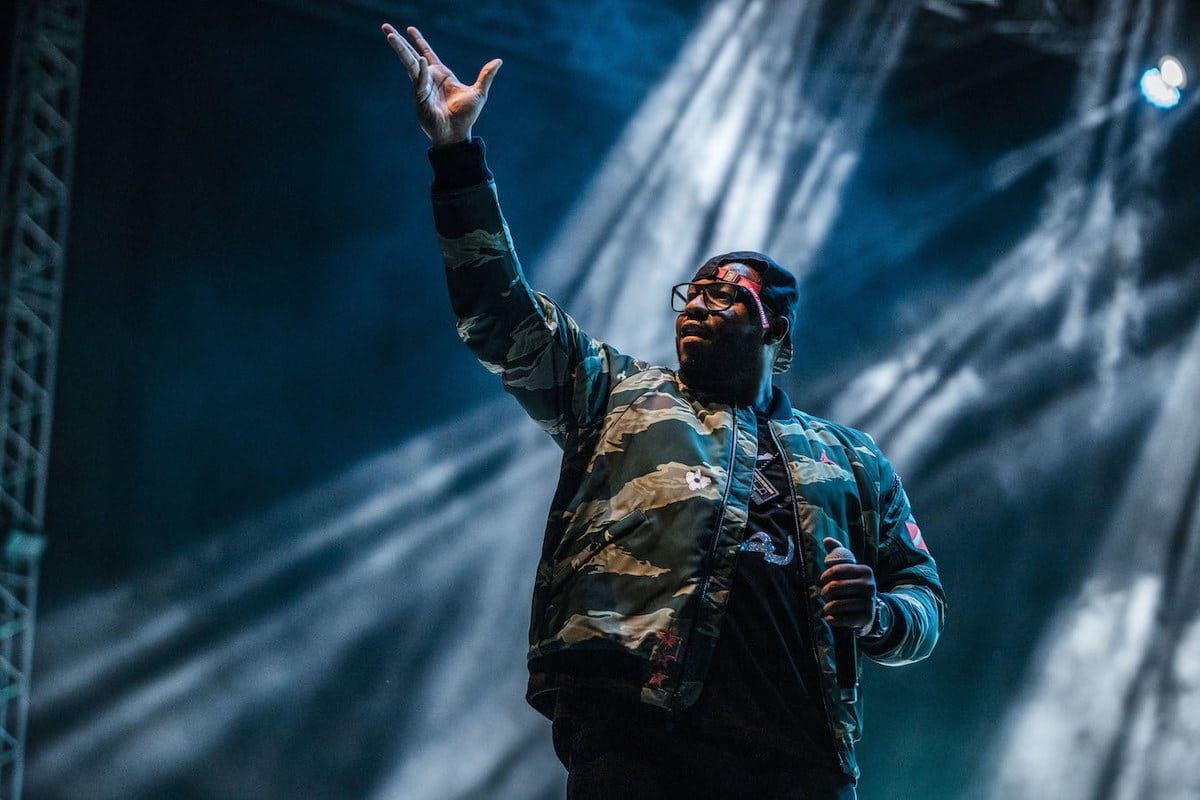
Meet Flipperachi: The Bahraini rapper helping the Khaleeji scene break big outside the region
DUBAI: Hip-hop burst into life in New York 50 years ago and its seeds have sprouted worldwide. In the Gulf, the genre may have taken decades to take root, but in recent years Khaleeji hip hop has finally matured into a dominant force all its own, with a flourishing scene churning out hit after hit. And as it rockets towards the mainstream, veteran Bahraini artist Flipperachi is leading the way, with no intention of passing the torch to the next generation just yet.
“It feels like people are finally aware of what we’ve been creating all this time, and it’s making me do more music. I’m pushing myself, increasing my output and diversifying what I’m creating. I’m writing about new subjects, trying different styles. This year has been all about forcing myself to be less of a perfectionist and seeing how far my impulses can take me,” the 36-year-old Flipperachi (Flipp to his friends and Hussam Aseem to his parents) tells Arab News.
That strategy is paying off. His song “Nayda” with Kuwaiti artist Alaa Alhendi has 7.5 million views on YouTube alone over the past six months, with follow up singles “Akuma Yaw” and “Hayalla Min Yana” each gaining steam, and another set to drop in the coming days.
In the hit Saudi Netflix movie “Head to Head,” currently No. 6 in the global top 10 films, his song “EE LAA,” which itself has 40 million YouTube streams, is centrally featured, with the needle dropping both in a key scene and again when the credits roll, introducing him to new audiences across the world.
“As long as the vibe is good, people will engage with this music, even if they don’t understand a word,” Flipperachi says with a laugh. “Recently I had a guy recognize me on the street and come up to me excitedly. He told me, ‘Look, I’m Filipino, and I don’t get a single thing you’re saying, but I love the music! I love the energy!’ And as long as that’s the case, I’m cool with welcoming people from everywhere into the fold.”
That sense of inclusivity is a key tenant of Khaleeji rap, distinguishing it from its also-trending cousins, Egyptian Mahraganat and Moroccan rap. As in all hip-hop scenes, feuds do emerge between top talent, but Flipp and his crew from Outlaw Productions, including producers, singers and rappers DJ Outlaw, Daffy, Lil Eazy, Fares Dehbi and Sarah Nabil, all aim to operate with a generosity of spirit.

“With our music, we welcome you to our majlis, we get you some Arabic coffee, and treat you like family. There’s something about Khaleeji hip-hop that’s really joyful. We’re doing something new, but we’re doing it by embracing traditional sounds that have defined our region’s music for generations. In our rhymes, we embrace both the fun of life and the struggle, but I think we’re a bit more pointed in our delivery — we don’t beat around the bush.”
Flipperachi, who got his start in 2008 when DJ Outlaw signed him to his label, has always kept a playfulness in his writing, growing up revering American artists such as Busta Rhymes, Eminem, Tupac, Notorious B.I.G. and Bone Thugs and Harmony — all wordsmiths who knew how to drop in a sly joke every now and again.
“I love the sense of humor of a guy like Eminem, but my humor is also distinctly for the people in the region. Take one recent lyric of mine — ‘I’m the fire of the ‘shattaf’ (bidet) in August.’ It’s relatable, but it’s a joke you’ll only really relate to if you’ve experienced it like we have in the region,” says Flipperachi.
While hip-hop is more popular than ever globally, the actual subject matter in the material has gotten a little tired for many, with artists opting for either basic romance or making the same old boasts. One of the things that distinguishes Flipperachi, and keeps his music fresh, is that he continues to diversify his lyrical content, careful never to let himself feel like he’s spinning his wheels.
“I’m not the type of artist who raps about girls or the typical stuff. I want to explore our culture. One of the things I always mine for inspiration is the colloquial language we use amongst ourselves, little turns of phrase that are popular in our society and have taken on their own meaning,” says Flipperachi, whose 2022 hit “Hala Walla” with DJ Bliss, Shaggy and Daffy was a key part of the show “Dubai Bling” and itself incorporates a popular Khaleeji colloquial greeting in the manner he describes.
“When I do that right, I’m able to take something that we’re all saying, break it down to explore all the different ways we use that simple phrase, and recreate it in a way that everyone then wants to sing (along with). That is so much fun for me,” he continues.
Fifteen years into his career, Flipperachi is at a point where he’s able to mentor younger artists. While he is always happy to offer guidance, he’s also yet to find anyone he considers a true protégé. If anything, as the scene develops, there are many emerging talents from the younger generation who believe they have it all figured out too quickly, an assertion he is often quick to dissuade them from.
“It’s wonderful to watch the scene grow, but sometimes you need to tell these kids that they can do better. You’ll make a lot of friends by telling them ‘Oh, this is nice,’ but you’re lying to yourself and you’re lying to them — and doing them no favors. The second you do that, they stop working on themselves because, ‘Khalas, Flipp said we’re good!’
“The rap scene here needs more motivation,” he continues. “I’ve been rejected more than once, and it got me to work harder on myself. It fueled my work and got me to where I am today. If you learn how to take criticism, you grow, and that’s what we need. It may sound harsh, but I’m not going to let someone feature on one of my songs if they’re not at that level yet.”
While he’s excited that the Khaleeji hip-hop community is starting to capture mainstream attention, as he approaches the release of his next album later this year, Flipperachi is not yet thinking with a global audience in mind. While other artists in the region including Egyptian superstar Wegz are about to embark on tours in the West, in his view, the scene here is still nascent, and his only aim for now is to prove to the people of the Gulf that this music is worth embracing.
“Personally, I would love to look back and say I was the first Gulf rapper to really make it big, and I hope I can reach that, but there’s still so much ground to cover here,” he says. “I want every Arab ear to hear me, and then we can conquer the world.”
