
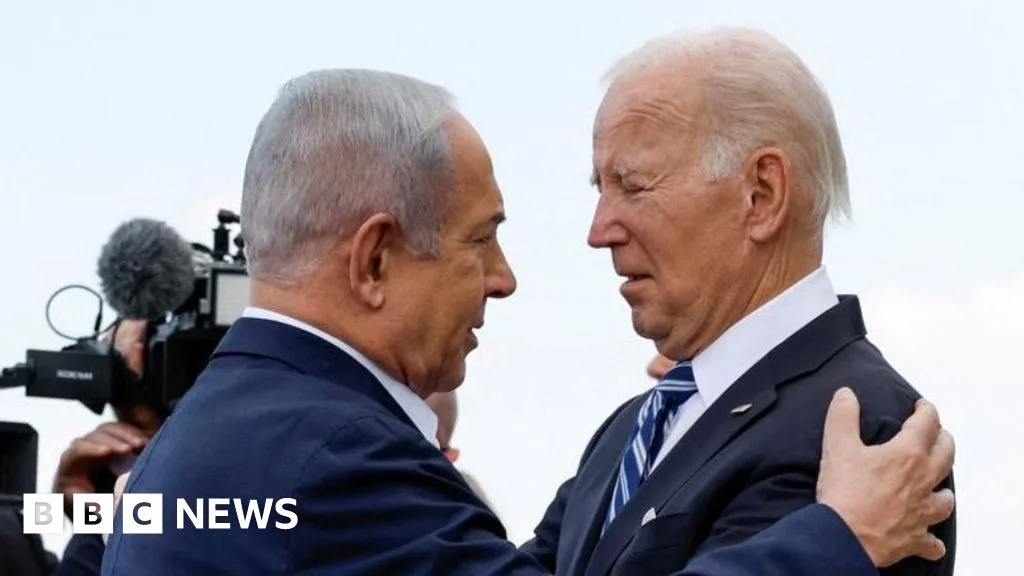
The reality is that Mr Netanyahu’s polices have fractured that bipartisan support. The Republicans are rallying around him, but criticism from Democrats has grown.
The Democratic Senate Majority leader Chuck Schumer caused a small earthquake in Washington recently when he stood up in the chambers and said Mr Netanyahu was one of the obstacles standing in the way of a lasting peace with Palestinians.
“I hope the prime minister understands the anxiety of many members in congress and addresses them,” the former US ambassador to Israel, Thomas Nides, told the BBC at the weekend. He’d been addressing one of the many rallies demanding a hostage release.
That includes “on humanitarian issues and to articulate that this fight isn’t with the Palestinian people, it’s with Hamas.”
It’s a message that Kamala Harris would repeat if she were to become the Democratic nominee. There’d be no change in US policy: a commitment to Israel’s security while pushing for an end to the Gaza conflict and a plan for the Day After embedded in a regional peace with Arab states.
But there might be a difference in tone.
Ms Harris does not share Mr Biden’s long history with and emotional ties to Israel. She’s from a different generation and “could more closely align with the sentiments of younger elements of the Democratic party,” says Mick Mulroy, a former deputy assistant secretary of defence for the Middle East.
“That’s a stance more likely to include restrictions on weapons, on munitions from the United States for use in Gaza,” he said.
