
There was opposition to Hamas long before the war, though much of it remained hidden for fear of reprisals.
The last time Palestinian elections were held, in 2006, in the party list vote Gazans voted for Hamas in 15 out of 24 seats in the territory – in the other nine districts, voters chose a different party.
A year later, Hamas violently ejected Palestinian Authority forces from Gaza causing a bitter rift with the rival Fatah movement, and took over the running of the whole Gaza Strip.
Ameen Abed, a political activist, said he had been arrested many times for speaking out against Hamas before the war, but said – nine months on – dissent was becoming more common there.
“In Gaza, most people criticise what Hamas has done,” he said.
“They see children living in tents, and insulting their leaders has become routine. But it has a lot of support among those outside Gaza’s border, who are sitting under air conditioners in their comfortable homes, who have not lost a child, a home, a future, a leg.”
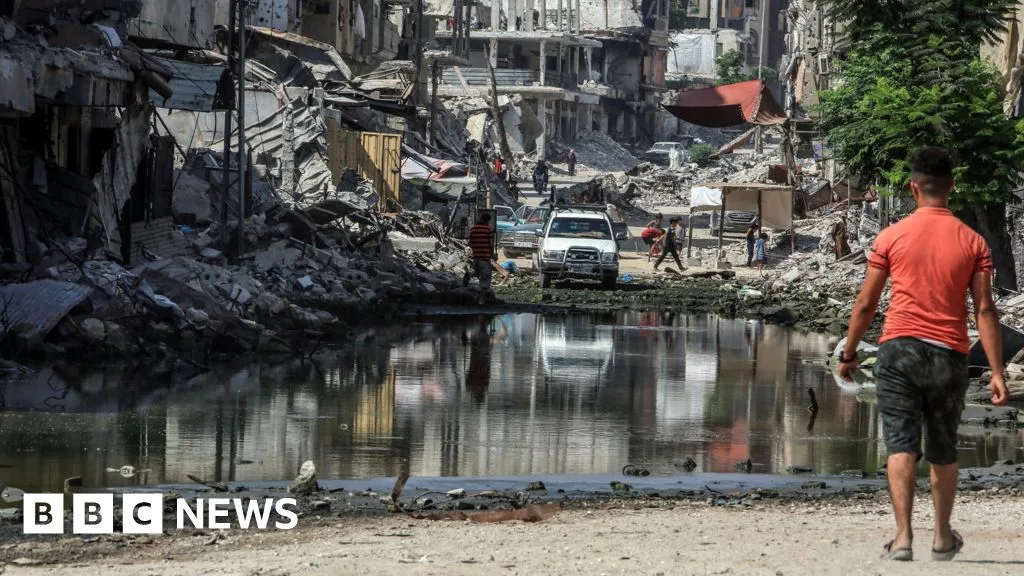
Desperation and war are eroding social structures in Gaza, and Hamas control is not what it was.
Four-fifths of Gaza’s population is displaced, often moving between temporary shelters.
And law and order has broken down in places, partly as a result of Israel’s policy of targeting Gaza’s security forces – not just the official Hamas internal security service, but also the community police responsible for street crime.
As control has waned, criminal gangs have thrived, looting neighbourhoods and aid convoys; and private security companies – some run by powerful local families – have emerged.
