
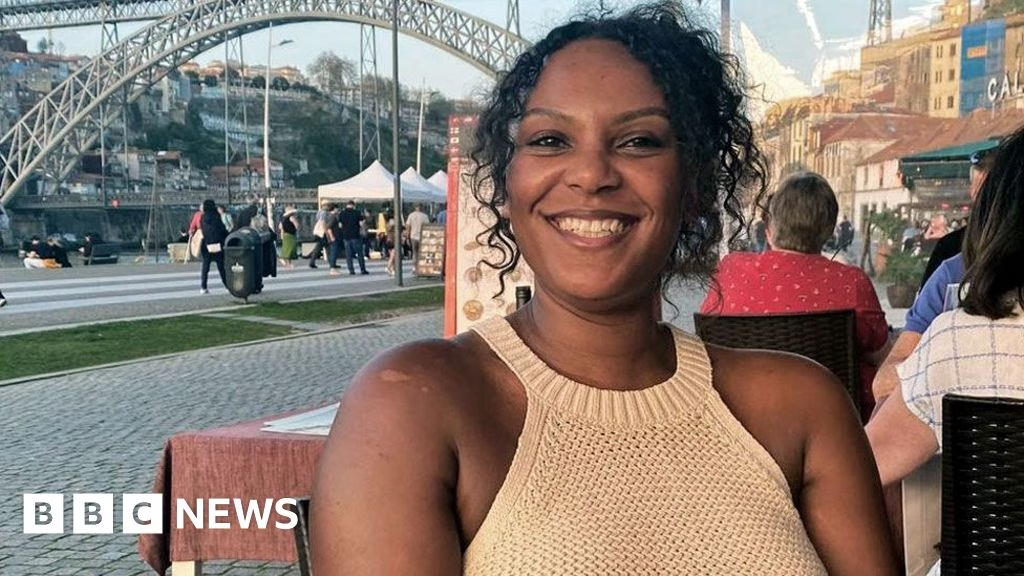
It was in Saschan’s first year of university that the pain in her abdomen began.
Saschan, a consultant in the wellbeing and healthcare industry, noticed she was gaining weight rapidly, leaving her in so much pain that she was missing lectures.
Originally, doctors suspected that she had developed pelvic inflammatory disease as a result of having a contraceptive coil fitted but a further scan revealed a cyst on her ovaries, too.
While the other students were attending social events, Saschan was stuck in halls of residence, unable to move. Her friends would bring her food and sit with her to keep her company.
But she needed extra help with her care and was forced to suspend studying for a year to return to her family home.
While waiting for her appointment, Saschan was in and out of A&E. At her worst she was there three times a week.
Eventually, she decided to pay to see a consultant, who also worked in the NHS, privately.
The consultant referred Saschan for surgery through the NHS and drained five litres from the cyst and removed her ovary and one of her fallopian tubes after fast-tracking her NHS appointment.
“I used my grant from my student finance to pay for that first private consultant appointment,” she says.
Overall, Saschan has spent around £2,000 on private appointments.
“My mum said to me, if we have to remortgage the house to pay for the surgery, then that’s what we have to do because you can’t put a price on your life.”
Four operations later and Saschan has had a further endometriosis diagnosis and has been treated for fibroids and a hiatus hernia exacerbated by the wait for surgery on the NHS.
“I don’t think that the menopause system recognises that even though you can’t see your uterus or your ovaries, when you are in a position where you are having them removed, it brings up a lot of things about how you feel about your identity and what you perceive your own experience around womanhood to be.”
