
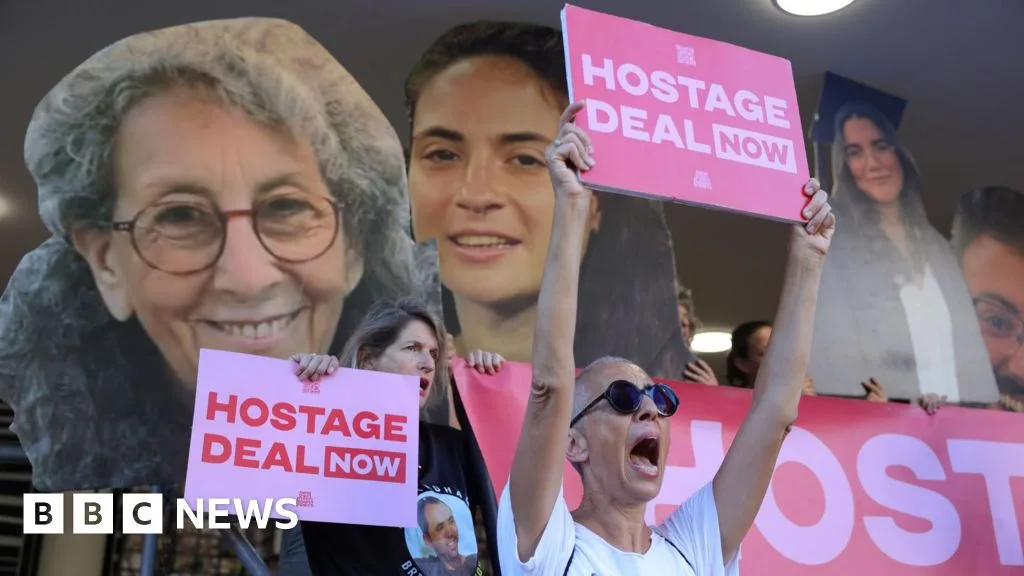
A senior official in Hamas – which is proscribed as a terrorist organisation by Israel, the UK and other countries – told the BBC on Wednesday that it would not attend the meeting, even though its political leadership is almost entirely based in Doha.
Hamas’s position was that it would “not engage in negotiations for the sake of negotiations in order to provide cover for Israel to continue its war”, the official said.
He claimed that Israel had “added new conditions and reneged on its previous agreement”, including demanding that it maintain full control over the Philadelphi corridor, a narrow strip of land running along Gaza’s southern border with Egypt, and that displaced people returning to northern Gaza be screened to ensure they are unarmed civilians.
Israeli Prime Minister Benjamin Netanyahu’s office issued a statement on Tuesday saying the claim that he had added new conditions was “false”, describing them instead as “essential clarifications to help implement” the initial proposal.
In addition to halting a devastating war and freeing hostages, the US and others see a ceasefire deal as a way to deter Iran from retaliating against Israel for the killing of Ismail Haniyeh, who has been succeeded by Hamas leader in Gaza, Yahya Sinwar, one of the masterminds of the 7 October attack.
The Iran-backed Lebanese Hezbollah movement has also vowed to respond to the killing of a senior commander in an Israeli air strike in Beirut. The Israeli military blamed the latter for a rocket attack that killed 12 children in the Israeli-occupied Golan Heights.
Israel has warned Iran that it would “exact a heavy price for any aggression”, while Iran has insisted “a punitive response to an aggressor is a legal right”.
