
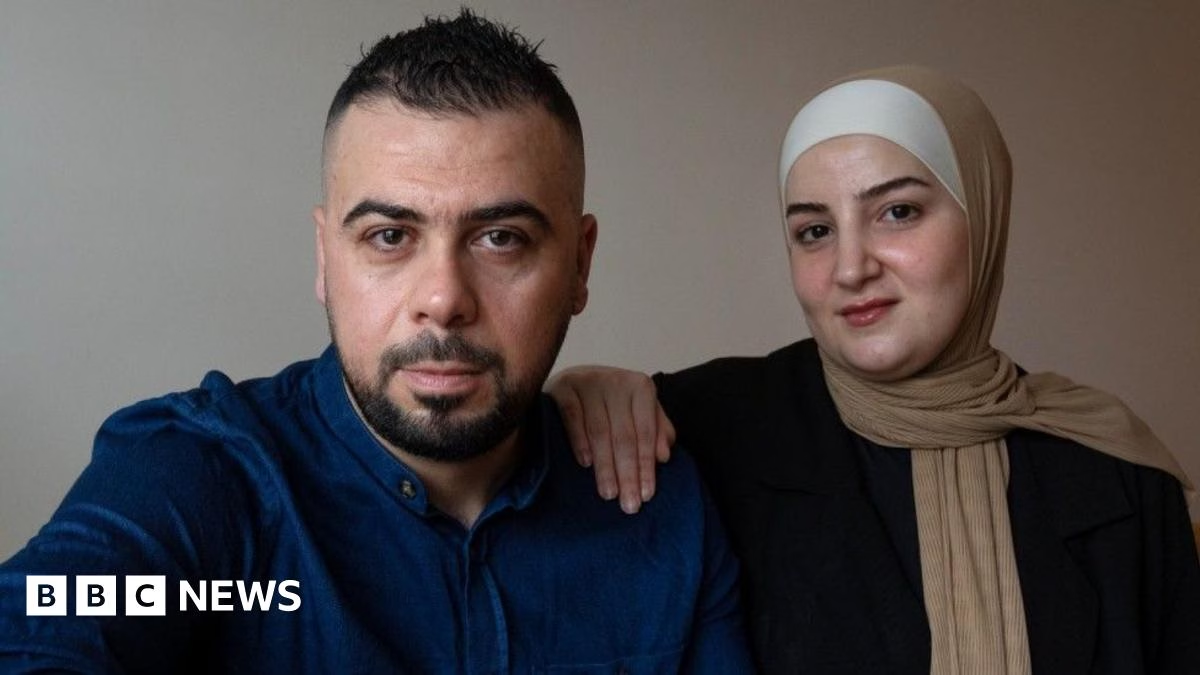
“As long as you say, ‘I didn’t do it’, they will keep torturing you and they will take you to another stage in torturing,” he says.
“Every minute it’s like you’re dying.”
Abdullah says he told officers a false story to avoid further interrogation, and was “lucky” to be released from detention after a month.
A year later, he left Syria and was later granted scholarships in Geneva and the US. He is now settled in London with his wife.
Only now does Abdullah feel able to share the full horror of his experiences with his wife, as the risk and fear he faced is slowly disappearing.
“We finally finish[ed] with the regime, we can say, we are really free right now,” he says.
“You can use our name. You can use our face. We can tell the full story.”
Douna, a human rights activist, sobbed as she heard her husband’s experiences for the first time.
“I was hearing him and I was crying. Every time I feel that this regime [has reached] the maximum of the horrors, of the horrible stories,” she says.
“It surprises me that, no, this is not the maximum. There could be more.”
She adds: “We are privileged that we are able to tell our stories. Lots of people, they died without being heard.”
