
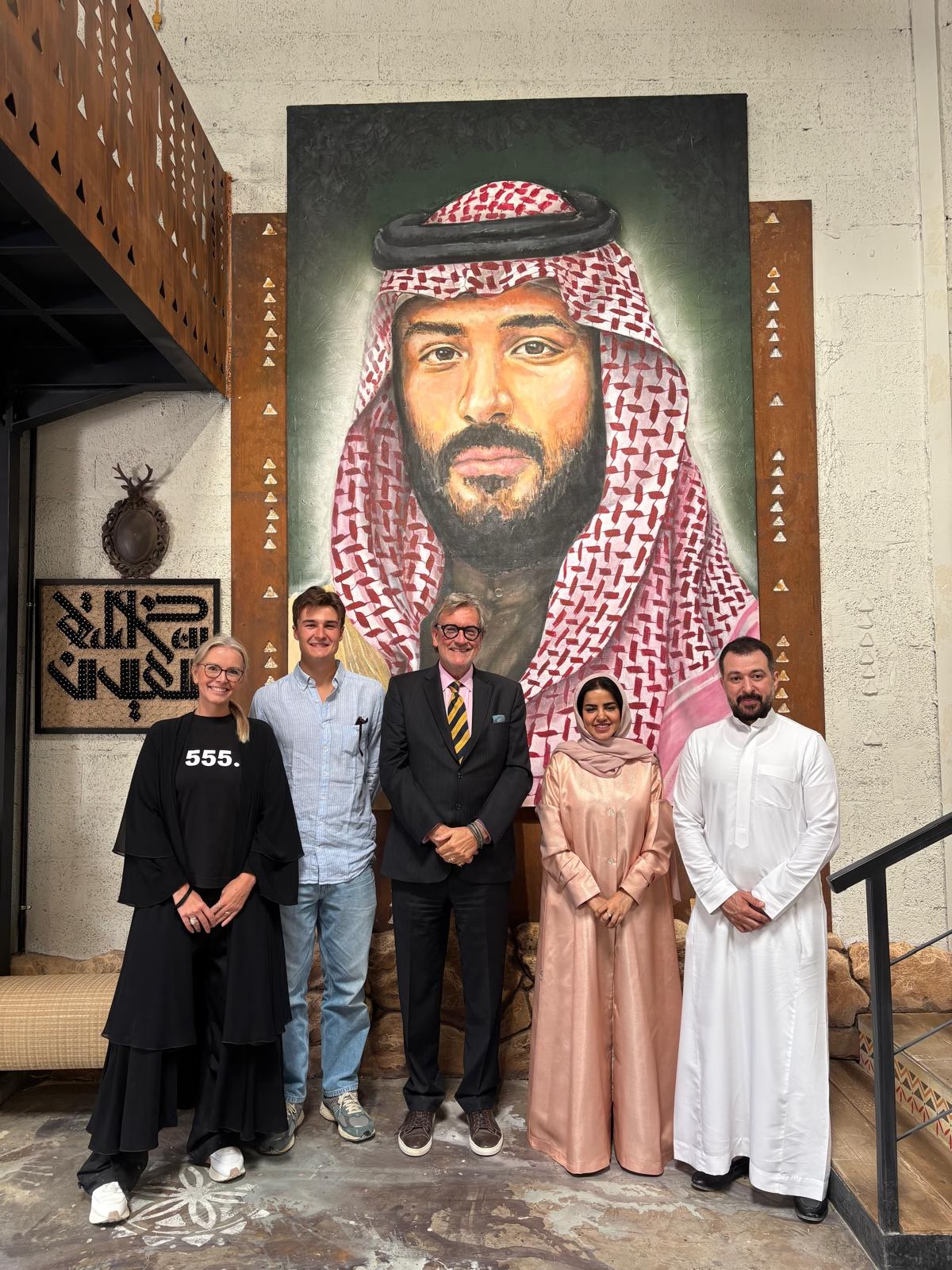
RIYADH: When Belgian happiness manager Cindy Van Pollaert arrived in Saudi Arabia for the first time in 2021, she expected to encounter the country as it was portrayed in much of the Western media.
Instead, a visit to the Formula One race in Jeddah challenged her assumptions and ultimately inspired a storytelling project dedicated to amplifying the voices of women across the Kingdom and the wider Gulf region.
Van Pollaert was struck by the atmosphere among the crowd at the event: women and men gathered together freely, a vibrant public space and a sense of confidence among young Saudi women that contrasted sharply with the image of the country she had previously encountered abroad.
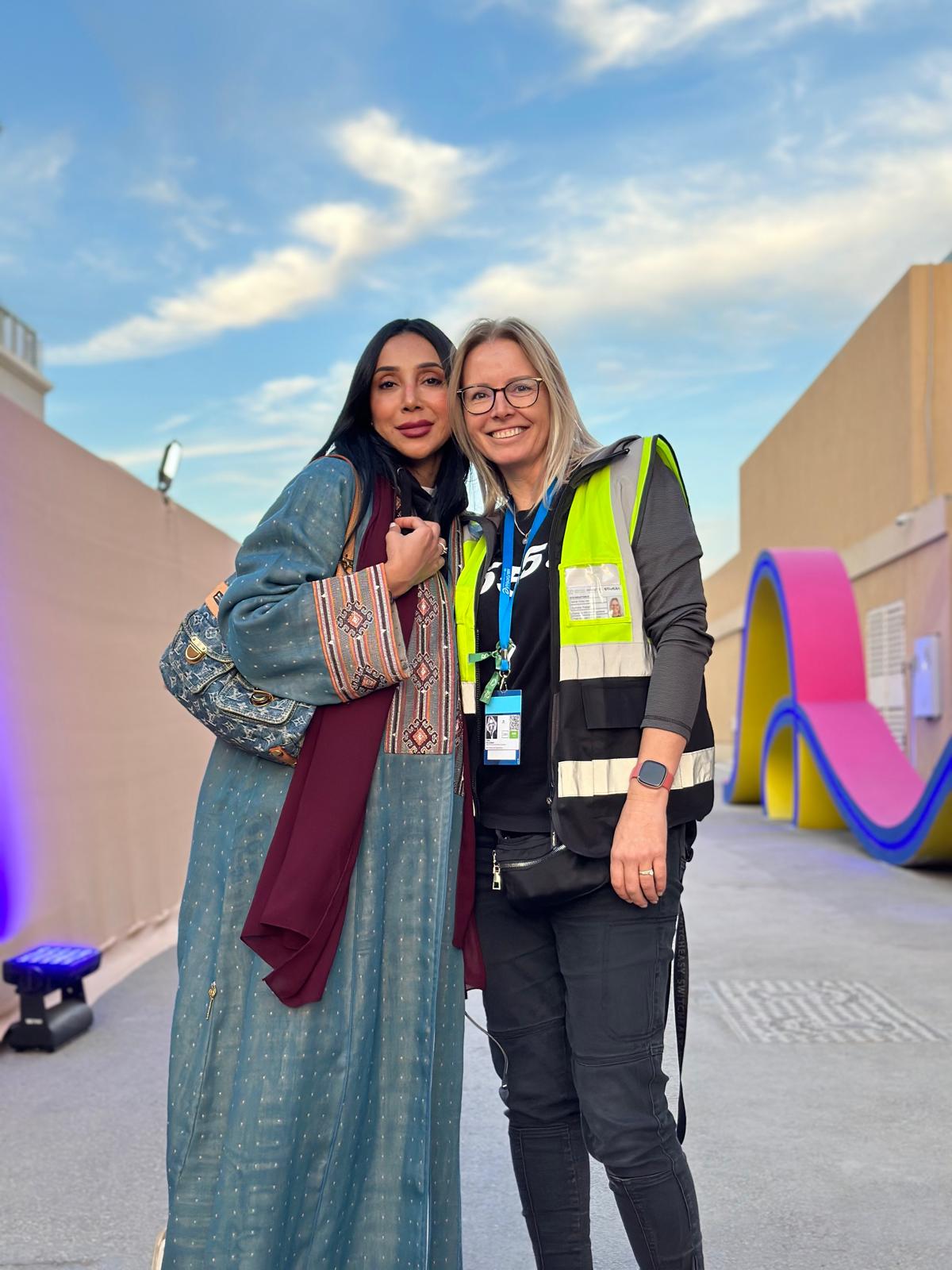
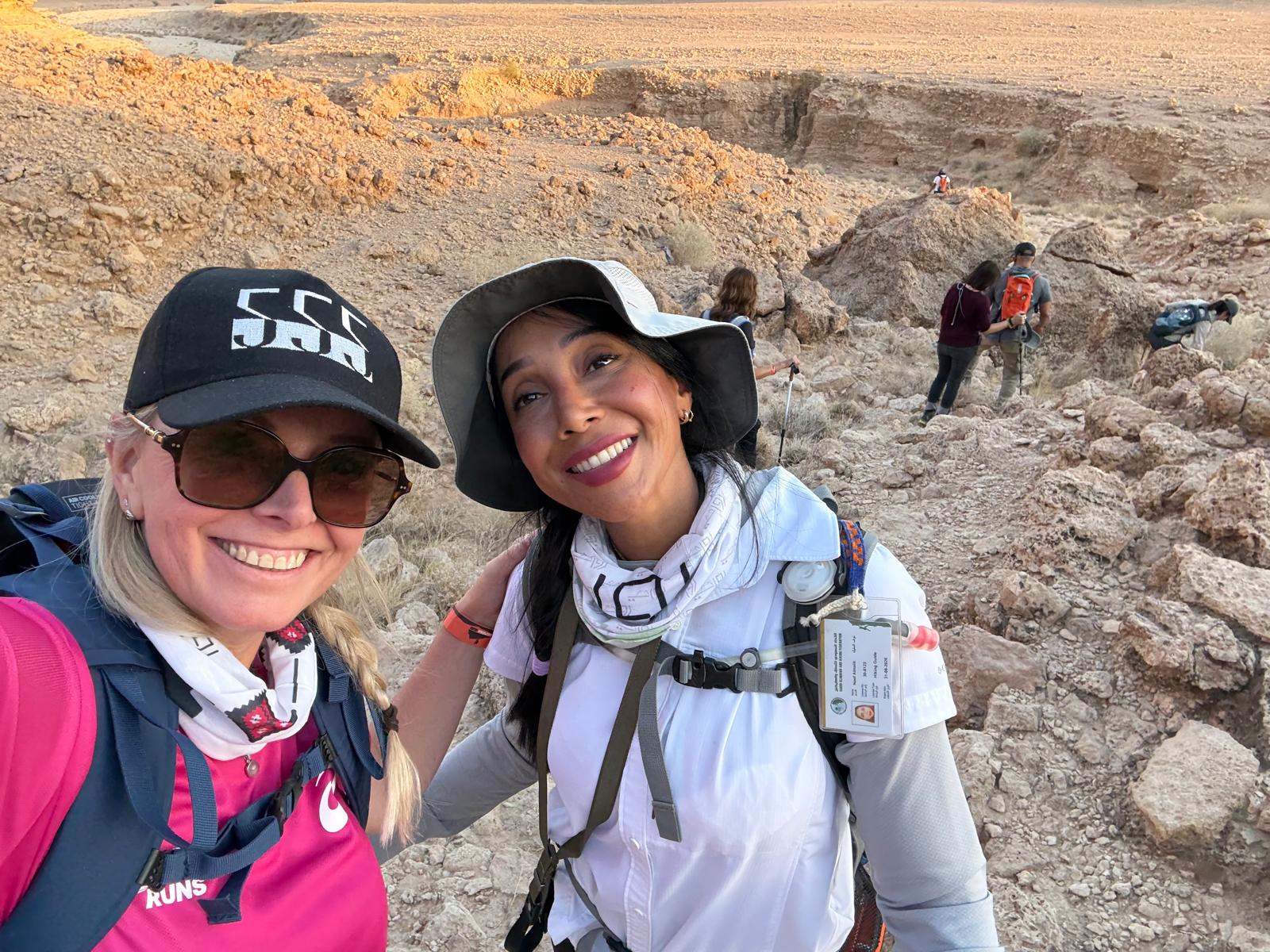
The experience became even more significant when she met Saudi hiker and archer Nouf Almulaik, a chance encounter that would shape the direction of her work.
Almulaik “opened my eyes,” Van Pollaert said, to the determination and fearlessness of Saudi women: “They’re climbing the mountains. They’re doing the Himalayas…These are such ambitious, intelligent women and they’re going to the next level in whatever they do.
“And then I was thinking, ‘OK, I need to find a way to connect with more local women in the Middle East in general.’”
What began as a friendship quickly evolved into a broader mission. Van Pollaert became increasingly determined to challenge misconceptions about women in the Middle East and share stories that reflected the realities she had witnessed.
“I want other people to think differently about the women here in the region,” she told Arab News.
That desire eventually led to the creation of “Min Al Qalb,” meaning “from the heart,” an art and storytelling platform dedicated to celebrating the resilience, individuality and achievements of women across the Middle East and Gulf region.
The project has now come full circle, returning to Saudi Arabia where the idea first took shape through a personal connection that transformed Van Pollaert’s understanding of the region and its people.
Min Al Qalb has so far featured more than 40 inspirational women from 10 countries, including Nada Alrasheed, Saudi Arabia’s first full-time female freediver and a World Championship record holder; Rayyanah Barnawi, the Kingdom’s first female astronaut; and Princess Sarah bint Bandar, executive director of the International Dates Council.
Yet Van Pollaert insists the project is not driven by strategic outreach or large-scale campaigns: “It grows very organically. It’s always one woman who leads me to another.”
The strength of the platform lies in this personal nature, Van Pollaert believes. Many of the stories begin not with formal interviews or carefully arranged meetings, but everyday interactions, conversations and friendships that gradually develop into something deeper.
“I could easily send an email to 1,000 amazing women — you can easily find them — and make a mass production of it,” she said. “But then it would lose its authenticity … I am a person (who) lives from the heart; I don’t know any other way.
“I use my voice to spread positivity because this is how I am in life as well.”
The women featured on the platform are not simply accomplished professionals or record-breakers; they are people with whom Van Pollaert has shared meals, prepared traditional qahwa (coffee) and built genuine friendships.
“These people automatically become like a kind of family,” she said.
For that reason, she added, the initiative was not designed simply to spotlight achievement. Instead, it seeks to capture something more universal: the humanity behind success and the connections that transcend geography and culture.
“The most powerful stories are often not the biggest headlines; they are the human stories behind the achievements,” Van Pollaert said.
“Min Al Qalb does not try to explain Saudi women through one narrative, it creates space for individual stories: what drives them, what they protect, what they build, and what they want the world to understand.”
Another factor that shaped the project was her frustration with the gap between her own experiences and prevailing perceptions in Europe. Whenever she returned to Belgium and shared stories about the women she had met in Saudi Arabia and the wider region, she often found little interest among audiences accustomed to a different narrative.
A major reason for this, she believes, was that in the “Western media, they will only talk about the negative things.”
Reflecting on her own assumptions before visiting Saudi Arabia, she said: “The misconception I had was the one that Western media gave me that women were not allowed to do almost anything.”
Her first visit to Jeddah quickly challenged that perception. Unable to find European publications interested in publishing her experiences, Van Pollaert eventually decided to tell those stories herself.
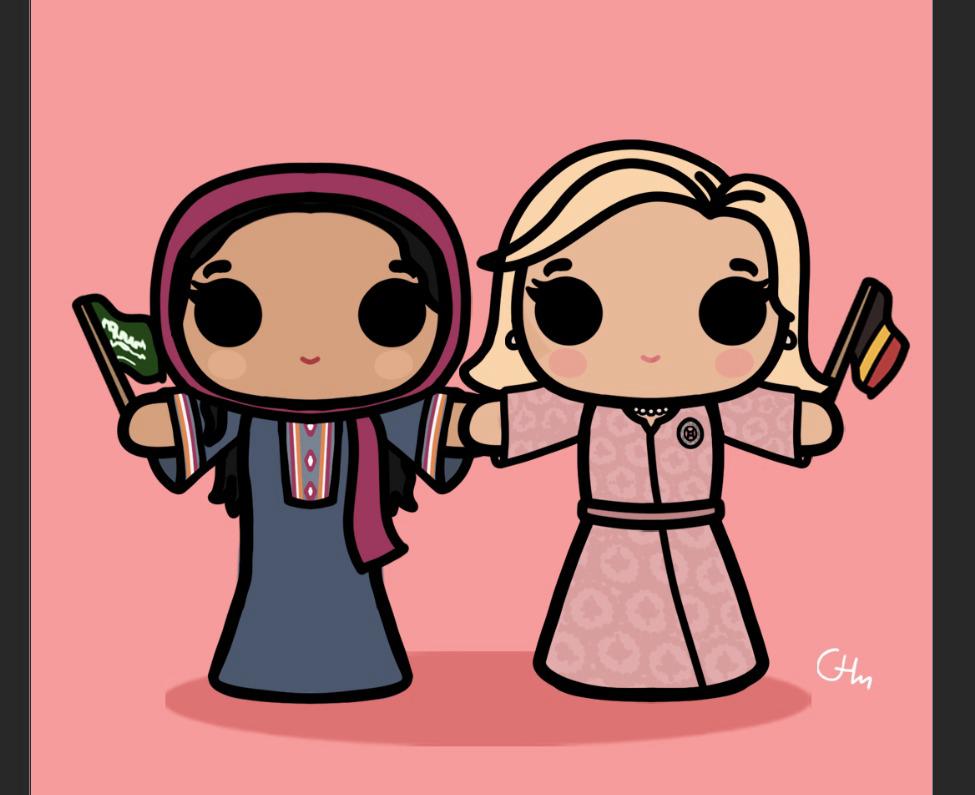
Min Al Qalb reaches audiences primarily through Instagram. Each post combines an illustration with a photograph and a quote from the featured woman, while the accompanying caption tells her story. This artistic approach to storytelling has had an unexpected effect on how audiences engage with the content.
“When I start with the illustration, the first thing people always say is, ‘That’s cute!’ Always,” Van Pollaert said.
“So, psychologically, there is already serotonin, positivity. It’s physiological, biological or whatever you want to refer to it. It was never my intention. It just happened and I noticed that this was something that people were open (to), and they perceived it in a very positive way.”
In other words, for international audiences unfamiliar with the women featured in the project, the illustrations create an emotional entry point before they encounter the story itself.
“I think art has a way of breaking down narratives and misconceptions because of the feeling that comes up with the people who look at it,” she added.
“It’s a big difference if I show, for example in Belgium, a picture of a woman that I got to know and that I got to meet and became friends with, or if I show first the illustrations.”
More than four years after their first meeting, Van Pollaert and Almulaik still make time to meet for coffee whenever they find themselves in Riyadh at the same time, a reflection of the type of enduring friendships that have become central to the project.
Those moments of connection, whether around a coffee table or through a social media post viewed thousands of miles away, remain at the very heart of Min Al Qalb.
“What I do believe is with each story that I share, with each person that I show, with each experience that I talk about, that somewhere, someone out there changes his or her mind,” Van Pollaert said.
