
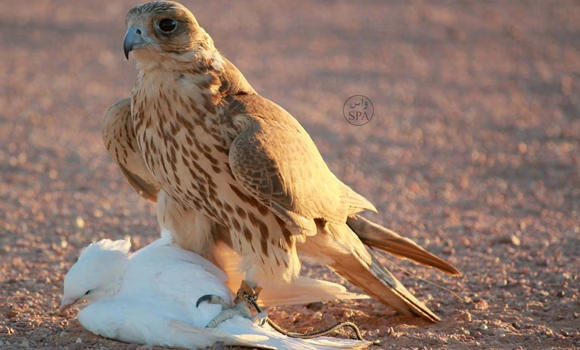
JEDDAH: Wind speed and cliff exposure may be an important factor affecting the breeding success of Barbary falcons in Saudi Arabia, according to a new field study by researchers from the National Center for Falcons and the National Center for Wildlife.
Published in September in the international scientific journal Life, the research is the center’s first peer-reviewed study to appear in a journal ranked in the first quartile by the Journal Citation Reports, the Saudi Press Agency reported.
The study was conducted by Monif Al-Rashidi of the University of Ha’il and the National Centre for Falcons, and Mohammed Shobrak of the National Centre for Wildlife.
The researchers monitored 59 Barbary falcon breeding sites in northwestern and southwestern Saudi Arabia during the 2026 breeding season.
They examined environmental variables and nesting-site characteristics, including wind speed, rainfall, temperature and the orientation of cliff faces in relation to prevailing winds.
The findings showed that the sites produced an average of 1.97 chicks each.
Statistical analysis indicated that a 0.678 metre-per-second increase in average seasonal wind speed was associated with an expected 19.5 percent decline in chick productivity. Greater exposure of cliff faces to prevailing winds was linked to an expected productivity decline of 18.7 percent.
The researchers said the findings could help authorities assess suitable locations for releasing falcons back into the wild and improve conservation programmes.
They recommended continued monitoring over several breeding seasons, as well as more detailed field measurements to strengthen the assessment of release sites, SPA noted.
The research forms part of the center’s efforts to support specialised scientific studies, expand knowledge of falcons and their habitats, and apply research findings to release and conservation programmes.
In May 2026, the National Center for Falcons conducted a field visit to inspect and document Barbary falcon nesting sites in the Asir region, in cooperation with the National Center for Wildlife and the Special Forces for Environmental Security.
The visit formed part of the center’s Hadad initiative, launched in 2021 to protect endangered falcons, restore them to their natural habitats and promote sustainable falconry practices.
Meanwhile, the Saudi International Falcons and Hunting Exhibition will be held from Oct. 1 to 10 in Malham, north of Riyadh.
