
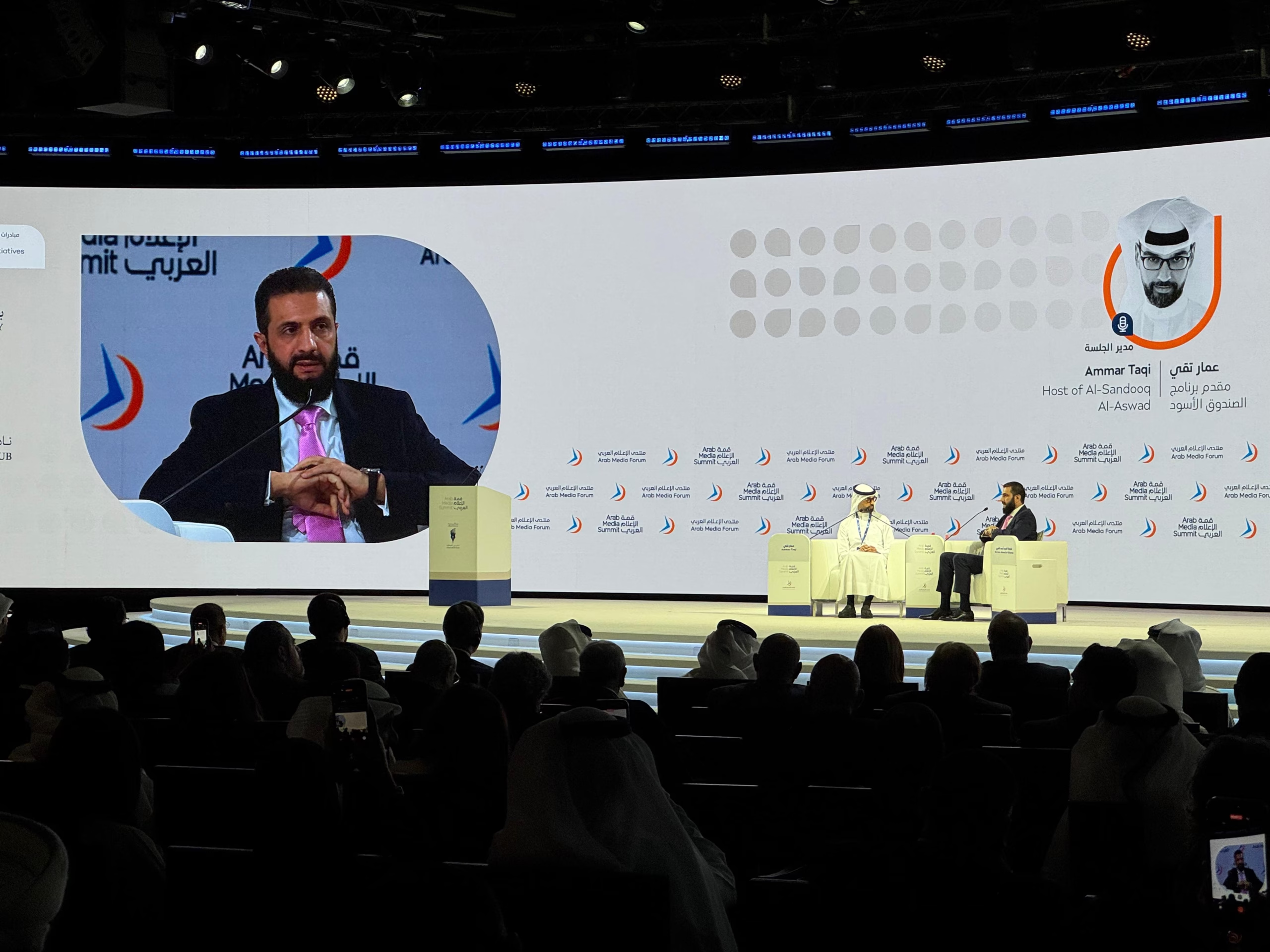
DUBAI: Syria’s Tartus port could be an alternative to the Strait of Hormuz, Syrian President Ahmed Al-Sharaa said on Tuesday.
“Syria has transformed into a geographic location for stability, and a trade pathway and a link between the West and the East,” he said.
“UAE is good at targeting the right opportunities. Like the link between Tartus port and Jabal Ali. We are living through the issues in the strait of Hormuz, this is an opportunity for the Tartus port and the region,” he said.
UAE’s DP World announced earlier this month an $800 million investment program to transform the port.
“Syria has a lot of opportunities. Gulf countries are interested in investing in Syria. European countries are also interested … We have an important strategic location which is the link between the East and the West,” he said.
Al-Sharaa added that Syria is an important asset for food production in the region and called for further investment in its agriculture sector to continue enhancing its capabilities.
“We have 75 million individuals and we have the capabilities to provide food security to them. We have a surplus and we have the facilities to provide for 100 million which can cover the needs of the gulf region,” he said.
Al-Sharaa acknowledged that there will be economic shocks for the people of Syria but urged them to be patient.
“We are moving from a communist system into a democratic one that is supporting free trade,” he said.
Al-Sharaa emphasized the need for regional security in order to help Syria’s economy thrive and prosper.
“We are in a transformational period. We are moving from a communist system into a democratic one that is supporting free trade. The size of our economy in 2014 was 20 billion (US dollars). We are expecting 50 billion in 2026, and in 2027 we can achieve what we had in 2010 which is 60 billion. If things are stable in the region we can achieve that,” he said.
“We hope the region will remain as stable as possible. Strategic peace in the region will help economic growth in Syria. We try to minimize the damage of war along with our Arab neighbors to find solutions,” he added.
“No other country in the world has faced this amount of sanctions since 1979, not even North Korea … after 60 years of administrative cooperation and lack of planning, Syria is at a new beginning. We are rebuilding our institutions and rebuilding our nation,” Al-Sharaa said.
Protests broke out across parts of Syria on Sunday over a government decision to raise fuel prices, with demonstrators blocking roads and demanding that the increase be scrapped as the cost of living continues to bite.
The widespread anger came a day after Mohammed Al-Bashir, Syria’s energy minister, said the country was producing around 102,000 barrels of oil per day, compared with domestic demand of about 325,000 bpd, forcing the government to increase imports to make up for the shortfall and raise petrol and diesel prices by up to 40 percent.
