

LONDON: Maysa Yousef spent 500 shekels ($160) covering the glassless windows of her bomb-damaged home in central Gaza with plastic to keep out the rain. But water came in anyway. Nearby shelling then knocked the frames loose again, leaving her searching for plastic sheeting and tape that had sold out.
“Everything in the house has shifted,” the artist and mother told Arab News. “Walls have moved, some are at risk of collapsing. The windows are out of place.”
Five members of Yousef’s family now share a single room. The living room is uninhabitable, with dislodged windows and collapsed doors exposing it to the elements.
Still, she considers herself fortunate. “I have a few walls. They leak but they are walls.”
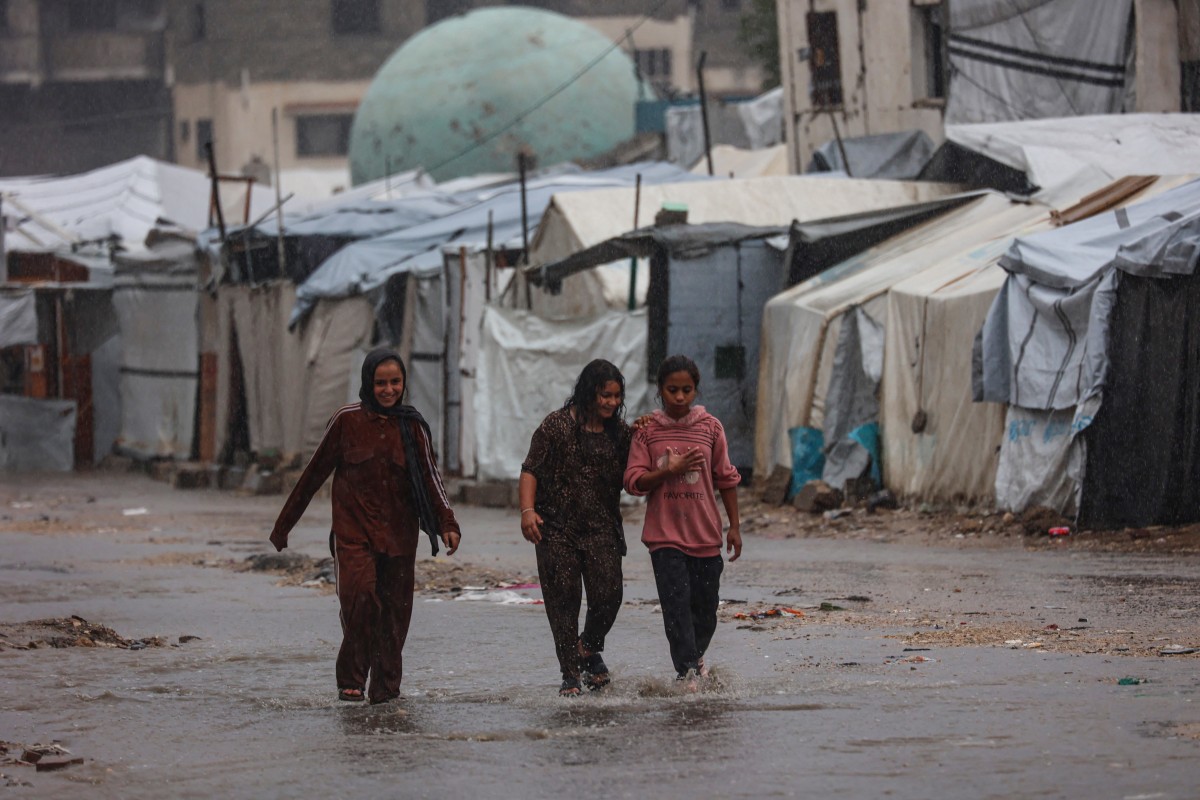
Across Gaza, weekend storms left tens of thousands of Palestinians in flooded or damaged tents, while aid agencies said that about 150,000 new shelters remained outside the territory awaiting Israeli approval to be allowed in.
A woman and at least four children were killed as rain and strong winds battered makeshift shelters. Yousef said that much of the rain had been light, with heavier downpours lasting only about two hours. Floodwater carried sewage into tents, soaking bedding and food.
The storms, which began on Friday, destroyed more than 6,000 family shelters and damaged 17,400 others, according to the UN humanitarian office, OCHA.
“I never imagined that a day of rain could leave all of Gaza flooded like this,” Yousef said.
“We are effectively living in a sardine tin. Houses are packed with people. Makeshift tents are everywhere, on streets, roads and corners,” she said.
“I look at the worn-out tents and wonder how people will get through winter. I look at my own home and wonder how I will get through it. Our windows were dislodged again, as though we had done nothing. We will have to buy plastic sheeting and tape again, if we can find them.”
For those living in tents, the damage was worse, she said. Shelters had blown away, water had risen to knee level and sewage had mixed with floodwater.
“Everything was submerged,” Yousef said. “The food they stored in anticipation of a strike involving Iran, the food they borrowed money to buy and even the World Food Programme parcels they spent so much collecting.”
Amnesty International Secretary-General Agnes Callamard said: “Israel’s destruction of life-sustaining infrastructure since the start of the genocide has left Palestinian families exposed to extreme winter weather, heavy winds and flooding in makeshift shelters.”
The US-created Board of Peace, established under President Donald Trump’s plan to end the Israel-Hamas war, said on Monday that Israeli delays in allowing winter supplies into Gaza had “exacerbated the consequences of a foreseeable humanitarian challenge.”
Israeli Prime Minister Benjamin Netanyahu on Wednesday denied that Israel was responsible for worsening conditions in flooded camps. He blamed Hamas for refusing to disarm — a condition of the deal announced by Trump — and accused the group of diverting humanitarian aid for military use, The Associated Press reported.
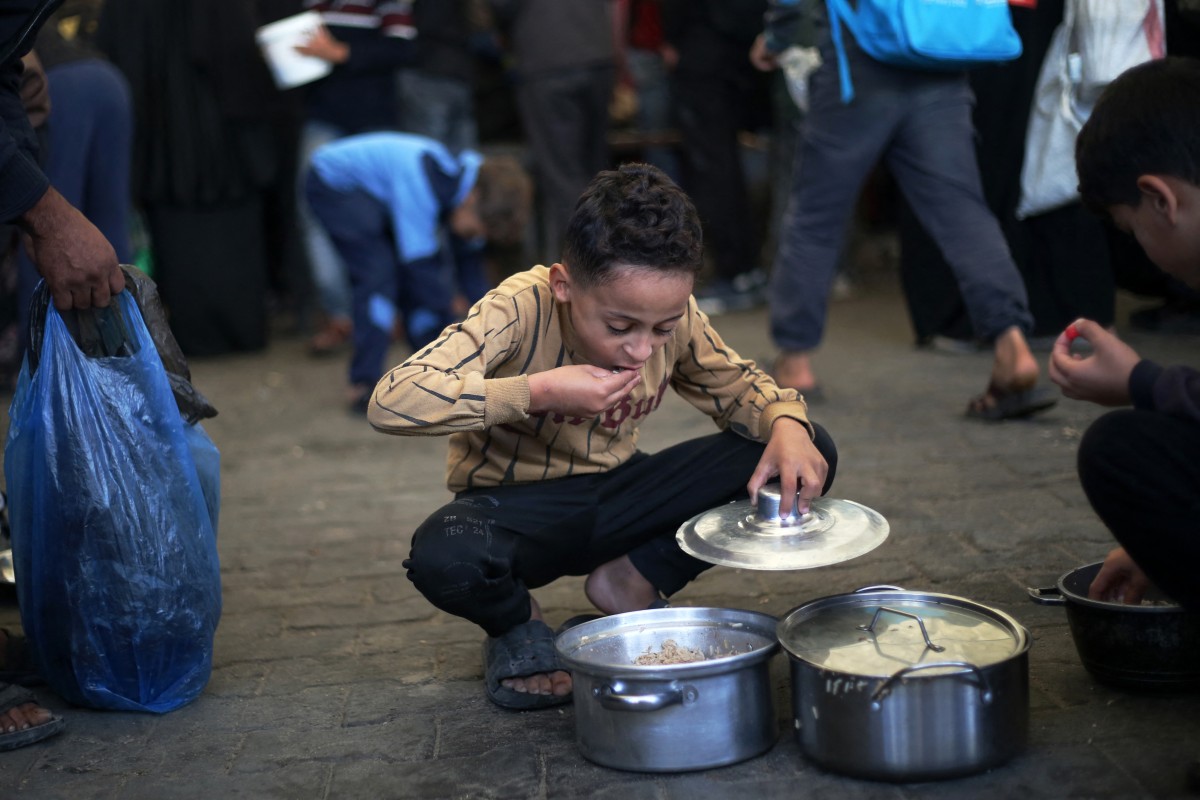
Doctors warned that inadequate shelter, overcrowding and unsafe water were contributing to preventable illnesses.
“The health situation in Gaza is very difficult,” said Dr. Salwa Al-Tibi, MedGlobal’s country representative in Gaza. “Let me call it what it is: a disaster.”
MedGlobal had recorded about 125 respiratory infection cases a day in recent months, alongside 70 to 80 cases of acute diarrhea and other waterborne diseases and about 20 skin diseases and infections, Al-Tibi told Arab News.
“These are largely associated with unsafe water, inadequate sanitation and poor hygiene conditions. Many of the health conditions we treat could be prevented or significantly reduced through adequate shelter, proper drainage systems and reliable access to safe water.
“The lack of dry, adequate shelter significantly delays recovery,” Al-Tibi said, warning that repeated infections could worsen malnutrition, delay wound healing and undermine treatment for people recovering from injuries.
MedGlobal operates 27 nutrition centers, six primary healthcare centers and five hospitals — two specializing in nutrition and three in maternity care. Restrictions on supplies and dwindling funding have limited its response.
“Israeli restrictions on the entry of humanitarian supplies, including fuel, essential equipment, medical supplies and drugs, combined with insecure access, constrain our ability to scale up our response,” Al-Tibi said.
“At the same time, declining humanitarian funding is widening the gap between growing needs and available resources.”
According to the World Health Organization, all 36 hospitals and most primary health centers in Gaza had sustained damage by June 30, 2026. The OCHA said that 94 percent of the territory’s healthcare facilities were fully or partially out of service.
For Yousef’s family, the difficulty of obtaining treatment became clear when her husband’s primary-school-age nephew suffered a compound fracture after another child fell on him in a mosque courtyard.
“He is so slim and fragile, like a biscuit. His arm suffered a compound fracture,” she said.
But hospitals were unable to provide emergency care, she said.
“You go to hospital and nobody looks at you or asks what is wrong while you are in pain. They say: ‘I have nothing to offer you.’”
Hospital staff instructed the boy’s father to pull the arm from either side to align the bones before wrapping it. “His father said: ‘How can I pull his arm when he is in pain?’”
The family eventually took him to the Belgian field hospital, where staff said that the compound fracture required immediate surgery and discussed using metal hardware in his arm, Yousef said
“Imagine your child breaking his arm, the bone healing incorrectly and him remaining in pain while you have no painkillers, no splint, nothing.”
Even surgery did not guarantee recovery, she said, when patients lived in shelters that offered little protection from the elements.
She said that she had seen operations fail after patients had returned to shelters that were exposed to the summer heat.
“Gaza’s conditions are miserable. We cannot cope with winter.”
