
MANAMA: Saudi Arabia’s Ambassador to the US Princess Reema bint Bandar has called on the international community to designate Yemen’s Houthis as a terrorist organization, warning that the Iran-backed militia poses a growing threat to regional security, global trade and energy markets.
Writing in The New York Times on Oct. 27, Princess Reema argued that the Houthis must be confronted with the same international resolve that helped defeat other terrorist organizations, accusing the movement of repeatedly breaking peace agreements, exploiting truces to rearm and building an extensive network of financing and weapons smuggling.
She warned that the threat extends far beyond Yemen, pointing to Houthi missile and drone attacks on Saudi Arabia and threats to close the Bab Al-Mandab Strait, through which about 10 percent of global trade passes.
Calling for an internationally backed campaign led by Yemenis, she urged governments to cut off Houthi financing, disrupt weapons smuggling and provide Yemen’s internationally recognized government with the support needed to defeat the militia and pave the way for a political settlement.
However, despite growing international pressure, there remains no consensus on formally designating the Houthis as a terrorist organization.
The US, Canada and Australia have formally designated the group, but the EU has yet to add it to its bloc-wide terrorist list. Although the European Parliament adopted a resolution on Oct. 22 urging the European Council to designate the movement, including its political and military wings, a decision remains outstanding.
The UK has also stopped short of proscribing the Houthis, despite calls for a tougher approach.
For Mustafa Noman, vice minister of foreign affairs of the Republic of Yemen, the European delay reflects a combination of political reluctance and fears that a terrorist designation could undermine diplomatic engagement.
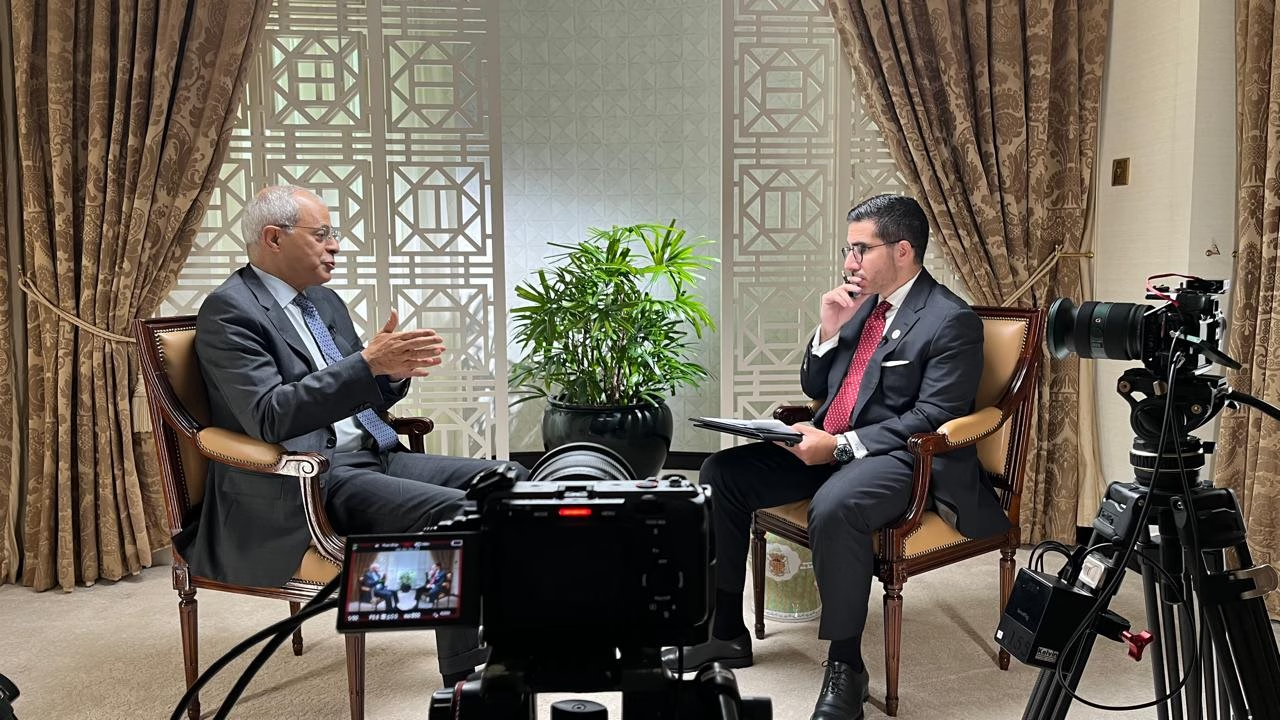
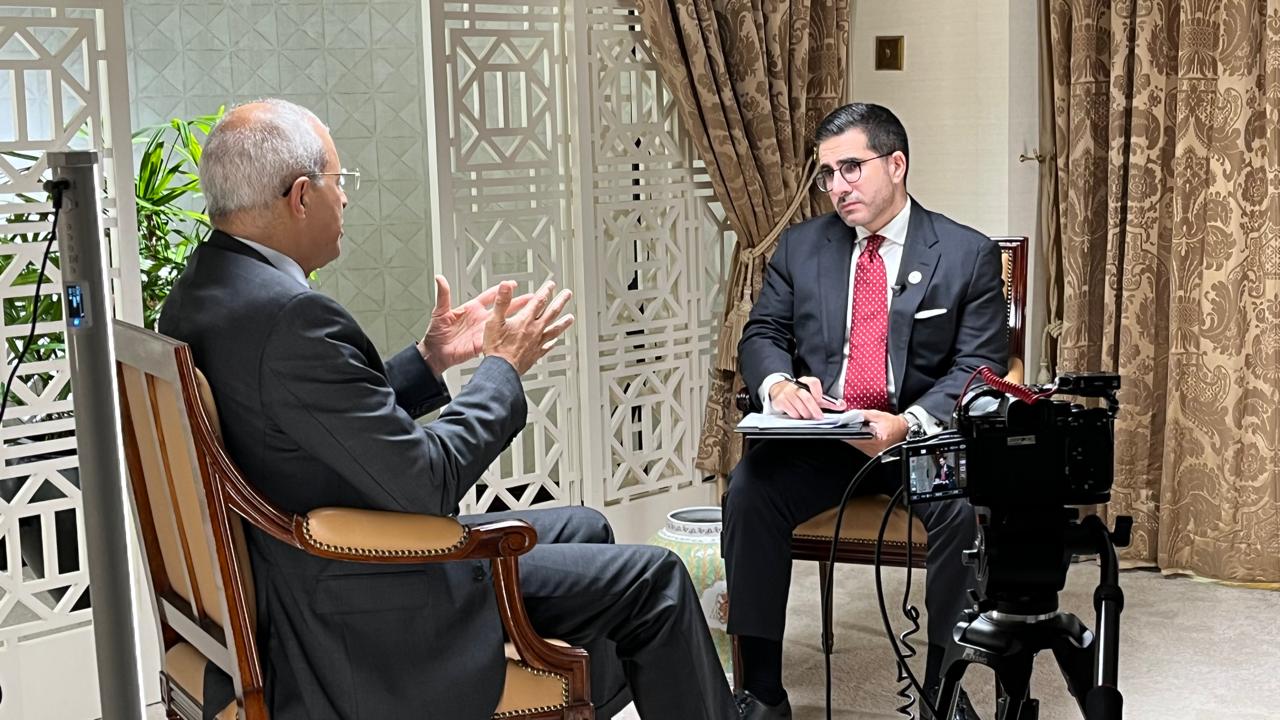
Speaking with Editor-in-Chief and host of the “Arab Views” podcast Faisal J. Abbas on the sidelines of the 22nd IISS Manama Dialogue in Bahrain, Noman said some European politicians remain unconvinced of the need for designation.
“Definitely, I would say there are some members that are not convinced, or some of them are giving the logic that if they designate the Houthis as a terrorist group, then nobody can talk to them,” he said.
“And they claim that they want this door open and that it should not be closed. So this is their argument.”
Nevertheless, Noman believes international perceptions of the Houthis are beginning to change as governments become increasingly aware of the movement’s conduct in Yemen and its wider regional activities.
He said the Houthis had initially succeeded in presenting themselves to Western audiences as a persecuted minority fighting against a more powerful adversary.
“The Houthis, we have to admit, were successful in putting their story, their narrative, in a way that made them look like a minority that is being targeted by the majority,” he said.
But he argued that this characterization had obscured the fundamental nature of the conflict.
“Now this narrative is changing. We are seeing now in the EU parliament, in the different national parliaments in Europe, there is a big change and more understanding about what’s really happening in Yemen and that the story is not a story of minority or majority.”
He added: “It’s between rebels who are trying to take the country into their hands and a government that is fighting them to regain authority.”
Although encouraged by this shift, Noman said greater understanding must now translate into concrete action.
“Now the action that we are waiting for is to label the Houthis as a terrorist group,” he said, explaining that his government was focusing its lobbying efforts on national parliaments across Europe.
“There is a change. It’s a very positive change, but it needs more work, more effort from the government of Yemen, too.”
The diplomatic debate comes as Yemen’s internationally recognized government presses ahead with Operation Dawn of Yemen, a military campaign intended to reclaim territory from the Houthis.
President Rashad Al-Alimi has pledged to continue the operation until the full liberation of Yemeni territory, although Noman acknowledged that achieving this objective would take time.
“It’s a strategy. I cannot say that it can be done now, but it is going,” he said.
The agenda of the Yemeni government is to weaken the Houthis so that when they come … to a negotiating table, they should not be coming with their full force.
Asked whether there was a realistic timeline for military success, he replied: “I cannot put a timeline there, but I know that the government and the president himself are eager and they are insisting that this is the moment to start a real fight against the Houthis.”
He added: “It’s not a war of a week or a month. It might be longer than that.”
The government’s immediate objective, he explained, “is to weaken the Houthis so that when they come, if they ever come and agree to come to a negotiating table, they should not be coming there with their full force.”
The Houthis could be incorporated into Yemen’s political system if they surrendered their weapons and formed a political organization, he argued. However, he said meaningful negotiations were unlikely while the movement retained its military strength.
“So they have to be weakened, either by sanctions or by being defeated in different battles within the north. But other than that, I don’t think there will be any room for negotiations now.”
Central to the government’s immediate military strategy is the besieged city of Taiz, where Noman is originally from and where the Houthis have maintained pressure on government-aligned forces and civilians.
He warned that the capture of Taiz would give the Houthis control of about 95 percent of northern Yemen, while strengthening their position near Aden and overlooking the Red Sea.
Since coming under siege, the city’s population has endured severe shortages of water, electricity, food, fuel and medicine. Noman placed responsibility for the humanitarian catastrophe squarely on the Houthis.
“They came to Taiz. Taiz was a very peaceful city. We had Yemenis from all over the place living in Taiz, families or individuals working,” he said.
“So the Houthis initiated this war in Taiz. It’s not the government. The government was not willing to start a war and put the city under siege.”
The humanitarian situation has drawn renewed attention following reports of a suspected chemical attack in Taiz, prompting calls for an independent international investigation.
Noman supported those calls, warning that the alleged use of poisonous substances could reflect growing desperation among Houthi forces attempting to force the city into submission.
“We know that the Houthis are using all kinds of illegal weapons to accelerate their push toward the battered city of Taiz,” he said in separate comments to “Arab Views.”
“The local authorities and the government both call for an end to the siege and an independent international investigation team to put a report on the use of poisonous materials used by the militias.”
He added: “I personally don’t discard the matter and it’s a clear sign of their desperation to force the city to surrender.”
Beyond the fighting in Taiz, Noman highlighted the Houthis’ recruitment of children and ideological indoctrination as among the most damaging consequences of the conflict.
He estimated that the movement has a hardcore of between 30,000 and 40,000 ideologically committed fighters, supplemented by tribal alliances and forced recruitment.
The Houthis, he said, have also established summer camps in which children as young as 6 undergo prolonged ideological instruction.
“In these summer camps they take the young children from the age of 6 to the age of 12, for 90 days or more, for ideological studies, for teaching them about what the ideology of the Houthi is,” he said.
“And that’s a real brainwash, and this is the most dangerous outcome of this war, because now we have a generation who doesn’t know anything but about Hussein Al-Houthi and their ideology.”
Noman also described the forced recruitment of teenagers and tribal fighters, practices that raise serious concerns under international humanitarian law.
He compared the movement’s control over northern tribes to organized crime.
“I would describe them like a mafia structure, where you have a leader, the godfather, then you have the soldiers and the captains,” he said.
That structure, he argued, has enabled the Houthis to compel tribal communities to provide fighters, even when they are reluctant to participate in the conflict.
The Houthis’ military strength is sustained in part by their longstanding relationship with Iran, which Noman said extends back to the late 1990s and early 2000s.
He described how Houthi members traveled through Beirut to Iran for ideological instruction and military training, before Tehran became more directly involved in the Yemen conflict after 2015.
However, he drew a distinction between the Houthis’ domestic agenda and their operations beyond Yemen.
“So I cannot say they are lackeys domestically, but definitely they are lackeys in their fight and their battle in the Red Sea,” he said.
This distinction, he argued, is particularly important as Iran seeks to exploit the Houthis’ position along one of the world’s most strategically important maritime corridors.
“The problem in this specific period is that the Houthis are totally linked to the Iranian strategy in the region,” he said.
“So you cannot separate what’s happening in Yemen, and specifically in the Red Sea and Bab Al-Mandab, from what’s happening in the Strait of Hormuz.”
With the Strait of Hormuz effectively closed and the Red Sea serving as an alternative route for maritime trade and energy supplies, Noman warned that the Houthis could inflict serious economic damage if they succeeded in controlling Yemen’s Red Sea coastline.
The rebels are supported by Iran … To think about Iran being a mediator, for me it could be a farce.
“If the Houthis at one point were able to stop the full maritime traffic in the Red Sea, that will mean that we’ll have a real economic disaster in this region,” he said.
He argued that Iran viewed the threat to shipping as a potential bargaining chip in future negotiations.
Against this background, Noman dismissed the suggestion that Tehran could serve as an impartial mediator in Yemen.
“The rebels are supported by Iran, are materialized by Iran, are financed by Iran, are ideologically motivated by Iran,” he said.
“But to think about Iran being a mediator, for me it could be a farce. I can’t believe that even the Iranians believe in that.”
Noman also acknowledged the challenges facing the internationally recognized government’s own military forces.
He estimated that the National Army numbers around 150,000 personnel, while other formations, including the Giants Brigades, the Nation’s Shield and tribal forces, could bring the combined strength of government-aligned forces to about 400,000.
However, these forces remain divided among different leadership structures, complicating efforts to coordinate military operations.
“What the president is trying to do, and the PLC (Presidential Leadership Council) is trying to do, is to get them into at least one operations room to work together against the enemy,” he said.
Among those formations are southern forces whose longer-term political ambitions include independence from northern Yemen.
Noman said the government did not categorically reject the possibility of southern secession, but insisted that the issue could only be resolved through negotiations after the conflict with the Houthis had ended.
“Nobody has ever said, and the government has not said that independence is not an option,” he said. “What the government is saying is that this is not the right moment to discuss this matter.”
Any separation, he argued, would require agreement rather than military force, and could take years to negotiate once stability returned.
The interview also addressed reports of foreign involvement in Yemen, including the presence of Iran’s Islamic Revolutionary Guard Corps and Hezbollah.
Noman said he was certain that foreign experts were operating in the country, although he could not establish their numbers.
“Maybe hundreds, maybe more, maybe less,” he said.
Asked about missile components originating in China and seized while allegedly bound for Houthi-controlled territory, Noman said Beijing had denied any government involvement.
He stressed that Yemen had not established whether the shipments were linked to Chinese state-supported companies or independent smugglers.
“We have to get to the bottom of the story,” he said. “So I cannot claim that we have the full truth there.”
He also confirmed that Yemeni nationals had been recruited to fight in Russia’s war against Ukraine, alleging that the Houthis were profiting from the recruitment network.
“We know, definitely, that there are Yemeni recruits in Russia. This is a fact, and the government is working on trying to bring them back,” he said.
“Some of them have been killed, and we are even trying to get their bodies.”
Despite the government’s military ambitions and what he sees as changing international attitudes toward the Houthis, Noman offered little reassurance that peace could be achieved in the immediate future.
Asked whether he believed he would live to see a peaceful, stable and prosperous Yemen, he expressed hope but cautioned against confusing political aspirations with the realities on the ground.
“Although I always say that in politics we should not be optimistic or pessimistic, politics talks about facts,” he said.
“So at this moment, even though I want peace to happen today, or an hour ago, I don’t see it feasible with the Houthis still inclining towards using arms.”
Watch full episode here.
