
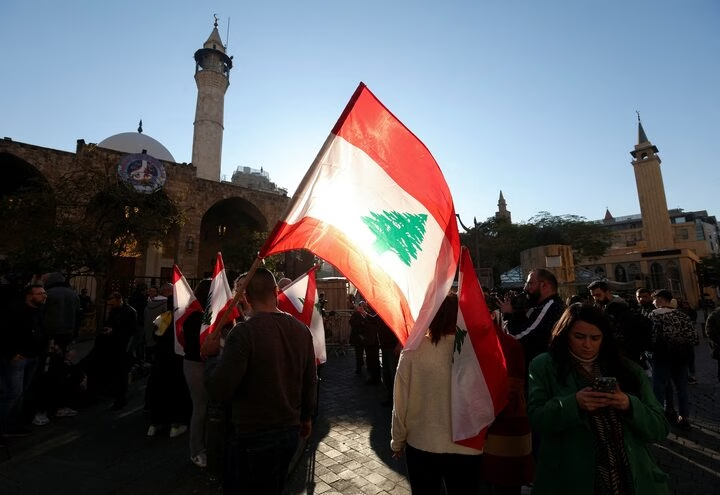
Lebanese social media users are growing increasingly impatient with President Joseph Aoun and Prime Minister Nawaf Salam. The two rallying points are the lack of solutions in the wake of the banking crisis of 2019 and the plan to disarm Hezbollah, which was decided last year. In both cases, the pause button has been hit. If the problems with electricity, security and a deteriorating economy are added, many Lebanese feel that this government is more of the old, wrapped in new packaging.
In the case of the banking crisis, the first point is that, besides Riad Salameh, the former central bank governor, no other responsible party has been questioned. It must be remembered that the initial restrictions on depositors accessing their funds were unilaterally imposed by commercial banks, not by the central bank or through any formal government-imposed capital controls law. The banks took these measures to avoid bankruptcy and the collapse of the financial system. Here, too, the sovereign institution enabled the system that led to people’s complete loss. This is why it is time for the central bank and the current government to take on their responsibilities in the broader crisis.
It is ironic that, after allowing the banks to make their own decisions when the crisis started, the government and lawmakers are now in a maze of legal back-and-forth between state institutions. When it comes to bureaucracy, it is the only place where the Lebanese state is omnipresent. The Constitutional Council last week annulled a key article of the bank restructuring law, leaving important questions about the central bank’s powers unresolved.
There are other issues to be decided as well. Yet, this is the key point: there is no political decision-making. The current government, despite its early promises, is incapable of breaking through the interests of all the stakeholders. Hence, like their predecessors, they are playing a balancing act to please the various minority leaders and their entourages instead of looking for a way to solve the situation.
There has been no real progress toward disarmament. The opposite might even be true, as it is business as usual for Hezbollah.
Khaled Abou Zahr
The reality is that when it comes to the banks, there are not many ways forward and we can look at the Greek crisis as an example. The government needs to clean up the system. This means that each bank’s losses must be assessed independently and the state must hold shareholders and those responsible accountable. There is also the need to restructure and liquidate banks that are, in fact, insolvent. And, like in Greece, they should establish a transparent deposit recovery plan that respects the hierarchy of claims, with shareholders bearing losses before depositors. It is the only way to restore confidence through enforceable decisions and a real timetable. It should not be another promise without implementation.
Credibility has also been lost on international debt markets, where Lebanon is still in sovereign default after suspending eurobond payments in 2020. Unfortunately, the numbers are much worse than Greece’s. Public debt was estimated at 176.5 percent of gross domestic product in 2024 by the World Bank. And here, too, because it is favoring the interests of the minority leaders, the government is unable to negotiate with creditors, as Athens did, and regain access to financial markets.
Lebanon must negotiate substantial debt relief and establish a fiscal plan. But more importantly, it needs to distribute losses transparently and fairly. And this is clearly something it is unable or unwilling to do. Until now, there is no clarity regarding the debts owed by the state and the central bank to the banking system. We can hence not separate resolving the sovereign debt from restructuring the banks.
This slap to sovereignty is complemented by another when it comes to the plan to disarm Hezbollah. The Lebanese are increasingly disappointed and vocal on social media regarding the government’s failure to disarm the militant group. Most Lebanese want to see the state restore its monopoly on weapons. Yet, what we are noticing on the ground is that there has been no real progress toward disarmament. The opposite might even be true, as it is business as usual for Hezbollah.
The Lebanese security forces this month seized a vehicle carrying 780 kg of explosives. And the reaction of Hezbollah MP Hassan Fadlallah said it all. He acknowledged ownership and demanded the explosives’ return. This is not the declaration of a group complying with a government plan.
Another example highlighting the wrong direction being taken by Lebanon’s current leadership involves Mihrac Ural, a former pro-Assad militia leader accused of involvement in a 2013 massacre in Syria, who was abducted and transferred to Syria. This should raise questions about the networks that enabled him to remain in Lebanon. Rather than focusing solely on investigating how he was abducted, the Lebanese government should establish how he was able to remain protected in the country, who provided that protection and whether Hezbollah-linked networks helped him evade justice. This is another example of the group being a state within a state and still carrying on with business as usual. This level of impunity will never allow the state to be rebuilt and to thrive.
Both problems, and the inability of Aoun and Salam to solve them, are a clear indication that there have always been two states in Lebanon and that nothing will change that. The minority leaders, along with Hezbollah, have carved out their own territories and there are no rules that apply to them. Yet, for many citizens, Lebanon regaining its sovereignty is not simply a question of security or economic recovery but a matter of daily survival.
Khaled Abou Zahr is the founder of SpaceQuest Ventures, a space-focused investment platform. He is CEO of EurabiaMedia and editor of Al-Watan Al-Arabi.
