
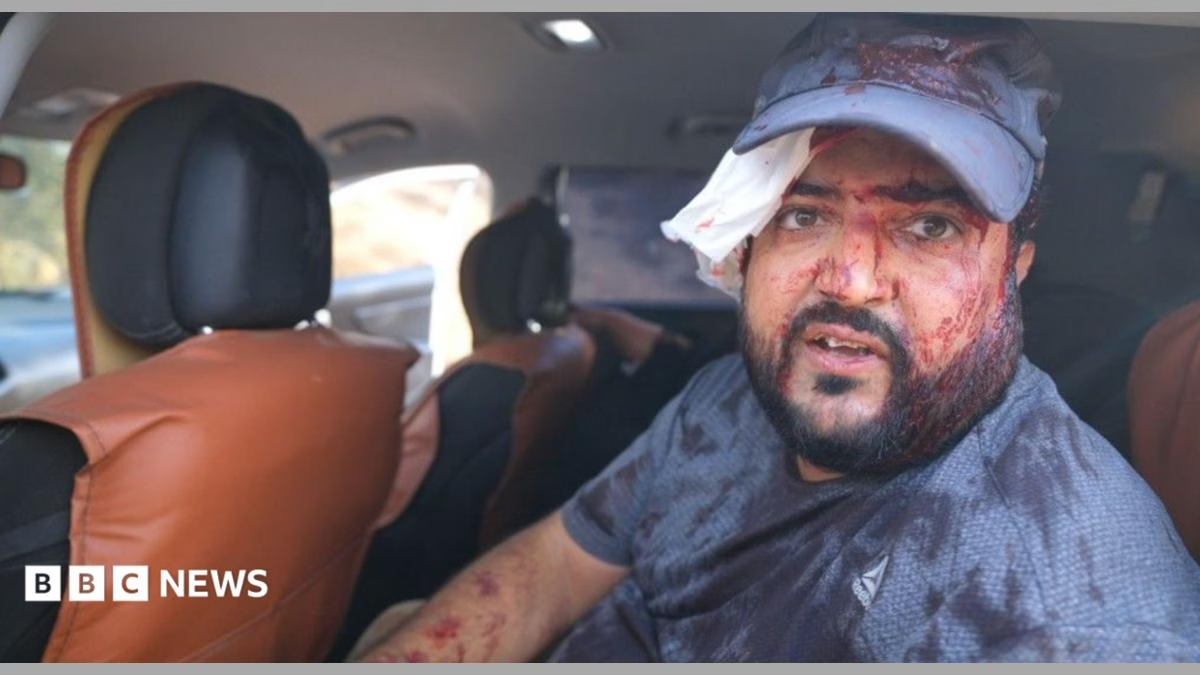
American journalist Heidi Levine of the Washington Post was injured in the attack. She described how dozens of settlers ambushed her as she was reporting at the scene.
“I got jumped,” she said. “I was on the ground and they were kicking me and I was trying to hold onto my camera and my bag. I had my helmet and flak jacket on which protected me. They made me stand up and they kicked me again, and this went on for at least 10 minutes.”
In a statement, Washington Post executive editor Matt Murray said Levine had been clearly identifiable as a journalist.
“We are outraged by this unwarranted attack on a journalist doing her job and urge a thorough investigation and follow-through from authorities,” he said.
The Israel Defense Forces (IDF) said personnel had been despatched to the area “following a report of a violent confrontation”. It said a female journalist had been injured during the confrontation. And that “all circumstances” surrounding the incident would be examined.
As the farmers retreated, the sound of live ammunition cracked across the fields. It was unclear if settlers or Israeli forces were firing.
Minutes later, Israeli forces began firing tear gas into the Palestinian fields to end the confrontation – a well-worn Israeli pattern of managing these conflicts.
The UN says settler attacks on the olive harvest this year have so far killed one Palestinian and injured more than 120 others across the West Bank.
Illegal Jewish outposts have mushroomed here over the past few years, clustering in closer around Palestinian olive groves.
What we witnessed was part of a pattern being repeated day after day, as settler outposts here increase.
The yearly olive harvest has become a litmus test of how the policies of Israel’s fiercely pro-settlement government are affecting Palestinians here, by presiding over growing violence by extremist settlers, and fuelling Jewish claims to the land.
