
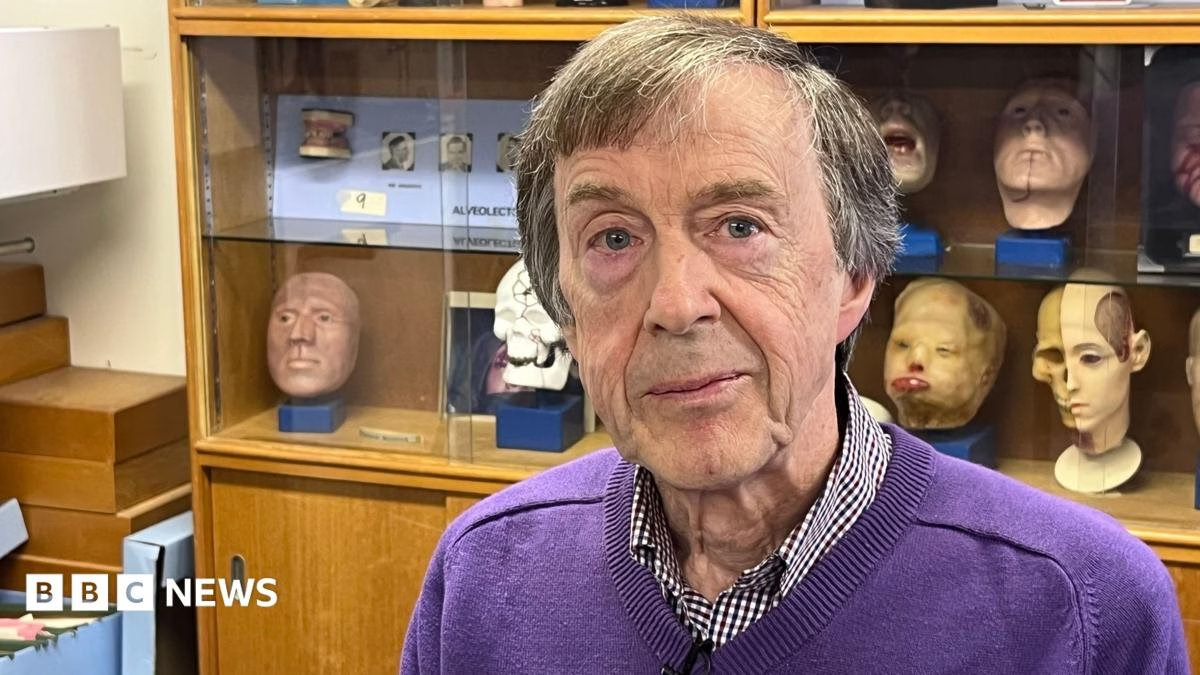
While many prostheses are designed to restore appearance, some also serve a practical purpose.
Artificial fingers and thumbs, for example, can help patients feel more confident in social settings while addressing some of the challenges associated with missing digits.
Bigmore said he has seen an increase in patients coming to him with head and neck cancer, with patients having their whole nose removed or their eye taken out.
He said these patients “are literally afraid to look in the mirror anymore”.
“They just see something different than was there before,” he said.
“Not only are they dealing with that cancer and the prognosis of the cancer, the long-term outlook, but they’re also dealing with the fact that they’re now different and relationships are different.
“They don’t want to face the world anymore, they just want to hide.
“In fact, a lot of my patients would say that they would rather be dead than actually look the way they now look.
“And for me, that’s a big moment because I try my best to make sure that they want to live, they want to keep going.”
He said after the prosthetic is fitted he hopes they regain their confidence.
“Life’s never going to be the same, but it doesn’t have to be over,” he said.
