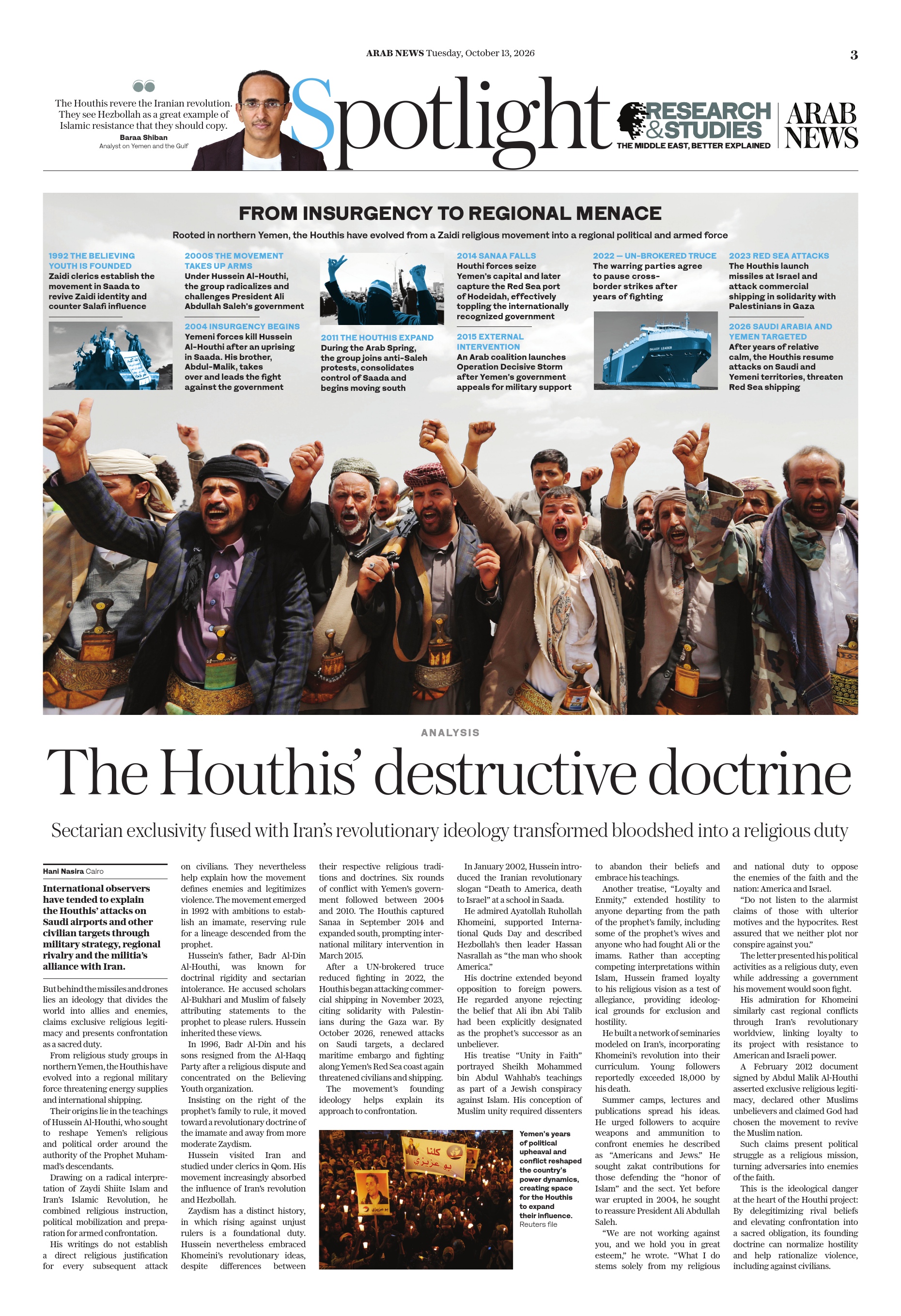
CAIRO: International observers have tended to explain the Houthis’ attacks on Saudi airports and other civilian targets in recent days through the prism of military strategy, regional rivalry and the militia’s alliance with Iran.
But behind the missiles and drones lies an ideology that divides the world into allies and enemies, claims exclusive religious legitimacy and presents confrontation as a sacred duty.
From a network of religious study groups in northern Yemen, the Houthis, also known as Ansar Allah, have evolved into a regional military force capable of threatening global energy supplies and disrupting one of the world’s busiest shipping routes.
Their origins lie in the teachings of Hussein Al-Houthi, who sought to reshape Yemen’s religious and political order around the authority of the Prophet Muhammad’s descendants.
Drawing on a radical interpretation of Zaydi Shiite Islam and inspired by Iran’s Islamic Revolution, he built a movement that combined religious instruction, political mobilization and preparation for armed confrontation.
His writings reveal a worldview in which religious disagreement could become grounds for exclusion and hostility, while resistance to the US and Israel was elevated into a defining obligation.
Although the writings do not establish a direct religious justification for every subsequent attack on civilians, they help explain the ideological framework through which the movement defines its enemies and legitimizes violence.
The movement emerged in 1992 against the backdrop of Iran’s efforts to export its revolution and regional upheavals including the Iran-Iraq War. Its ambition was to establish an imamate — a system of rule reserved for a particular lineage descended from the prophet.
Hussein’s father, Badr Al-Din Al-Houthi, who died in November 2010, was known for doctrinal rigidity and sectarian intolerance. He refused to invoke the customary blessing, “May God be pleased with them,” for the first two caliphs, Abu Bakr and Omar.
Hussein followed suit, also withholding the blessing from Aisha, the prophet’s wife and daughter of Abu Bakr.
The elder Al-Houthi attacked the Sahih and Sunan collections of hadith, accusing scholars Al-Bukhari and Muslim of falsely attributing statements to the prophet to please rulers. His son inherited these views.
In 1996, Badr Al-Din and his sons resigned from the Al-Haqq Party after a dispute with religious authority Majd Al-Din Al-Muayyadi. They concentrated instead on the Believing Youth organization, which spread across Saada, Dhamar, Amran and other parts of Yemen.
Insisting on the right of the prophet’s family to rule, the organization moved toward a revolutionary doctrine of the imamate and away from more moderate Zaydism, the branch of Shiite Islam historically rooted in Yemen.
Hussein visited Iran and studied under clerics in Qom. The movement increasingly adopted the influence of Iran’s Islamic Revolution and Hezbollah, shifting from religious outreach toward political mobilization and armed confrontation.
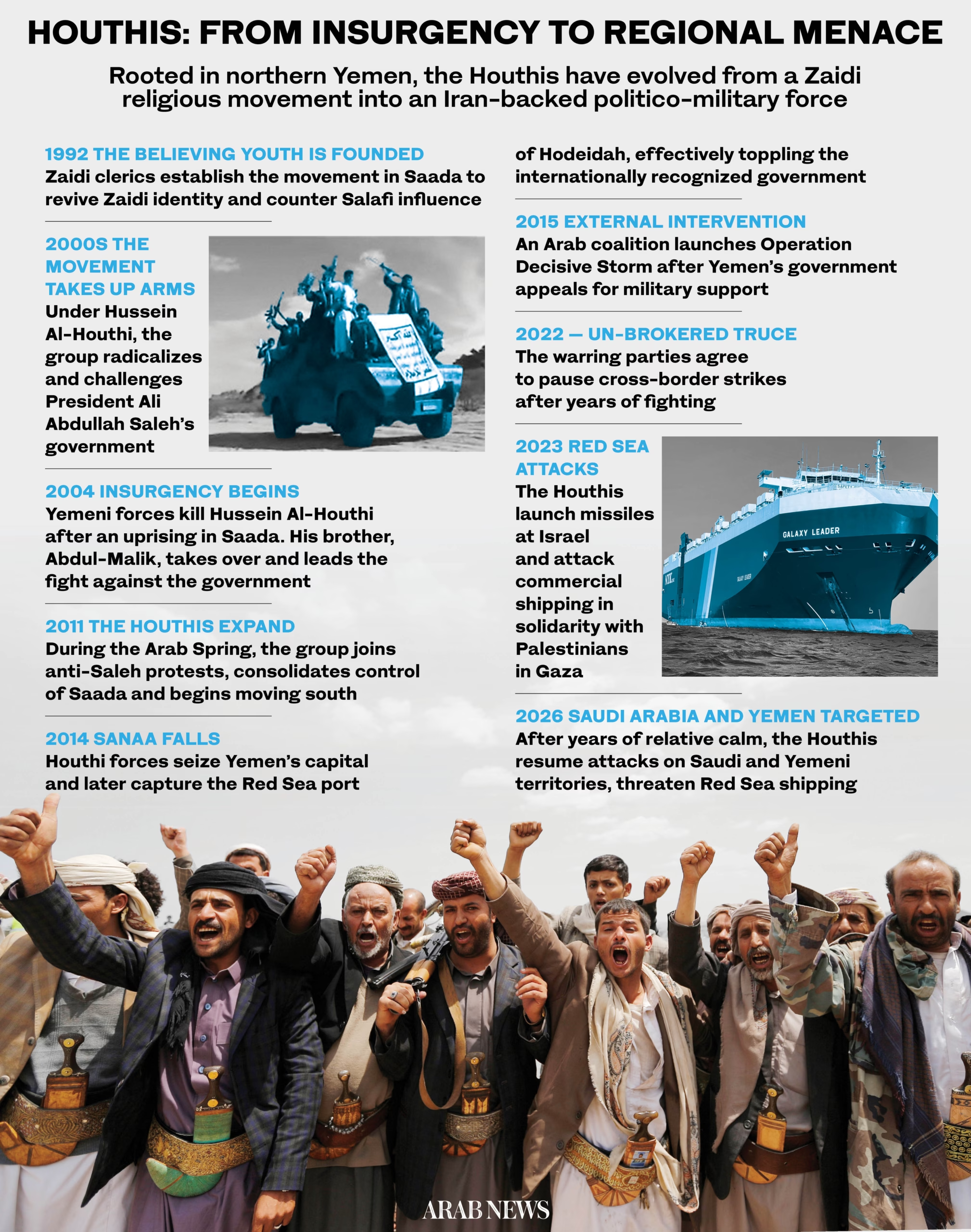
In 2004, the Houthis began fighting the Yemeni government. Six rounds of conflict followed between 2004 and 2010, with hostilities spreading from Saada to several governorates and reaching the Saudi border.
Some reports put the number of Houthi fighters involved in the final round at about 10,000.

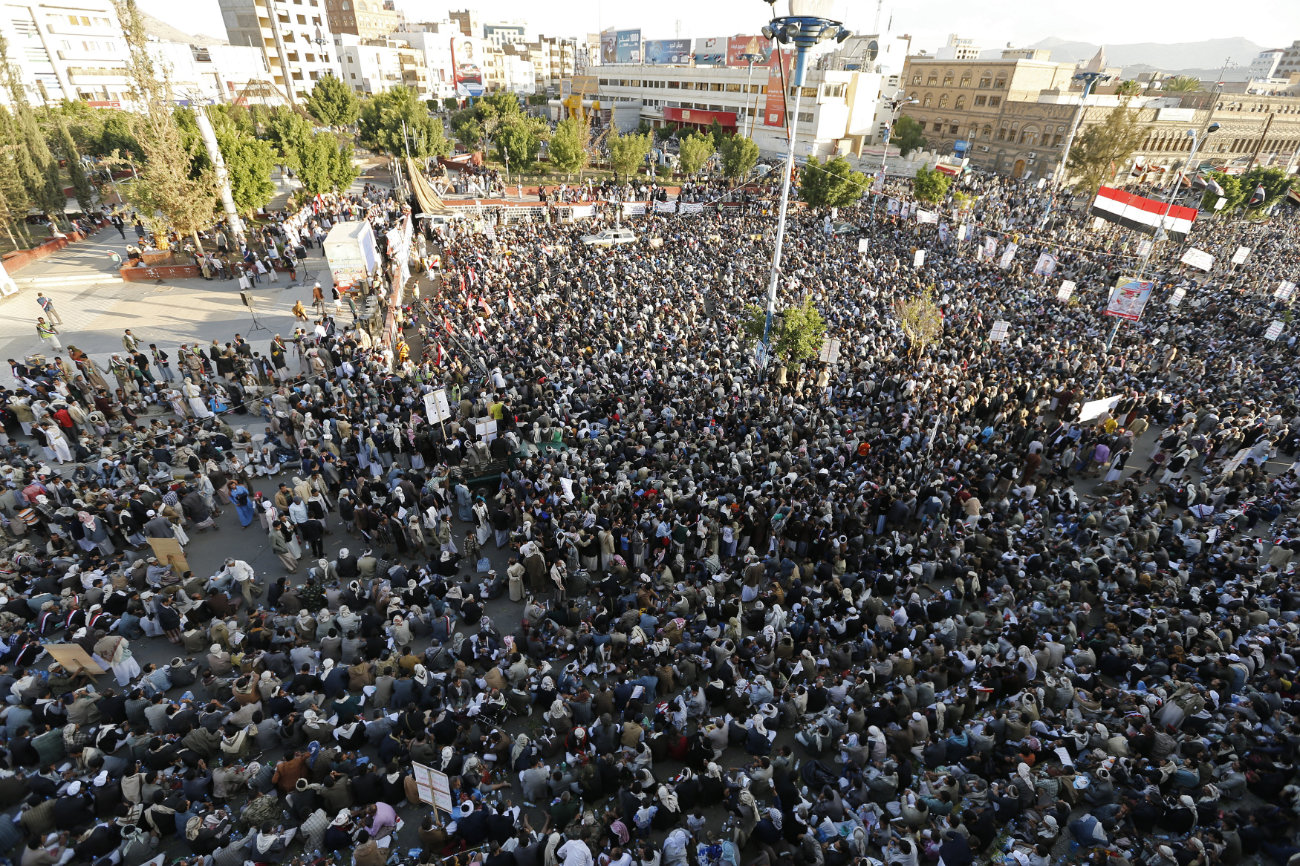
The movement joined protests against President Ali Abdullah Saleh in 2011 but rejected the Gulf initiative that transferred power to his deputy, Abed Rabbo Mansour Hadi.
In September 2014 the Houthis captured Sanaa and expanded south, eventually prompting an international coalition to enter the war in March 2015.
The war developed into a regional confrontation. Houthi missiles and drones struck Saudi border areas, airports, including Abha, and oil facilities. A 2019 attack on major Saudi oil-processing facilities demonstrated the reach of the movement’s arsenal.
After a UN-brokered truce reduced fighting in 2022, the Houthis began attacking commercial shipping in and around the Red Sea and Gulf of Aden in November 2023, saying they were acting in support of Palestinians during the Gaza war.
The attacks prompted shipping companies to divert vessels around Africa and led to US and British strikes on Houthi targets.
By October 2026, renewed attacks on Saudi targets, a declared maritime embargo and fighting along Yemen’s Red Sea coast had again threatened civilians and international shipping.
The question is how the movement’s founding ideology helps explain its approach to confrontation — and the way it defines those against whom violence is directed.
On Jan. 17, 2002, Hussein Al-Houthi introduced the Iranian revolutionary slogan “Death to America, death to Israel” at the Imam Al-Hadi School in Marran, Saada, asking those present to repeat it.
He regarded Iran’s revolutionary leader, Ayatollah Ruhollah Khomeini, as an inspirational figure who understood loyalty and enmity.
He embraced Khomeini’s call for “disavowal of America, disavowal of the polytheists, disavowal of Israel,” supported International Quds Day and described Hezbollah’s then leader Hassan Nasrallah as “the man who shook America.”
But Al-Houthi’s doctrine extended beyond opposition to foreign powers. He regarded anyone who rejected the belief that Ali ibn Abi Talib had been explicitly designated as the prophet’s successor during the prophet’s lifetime as an unbeliever.
In the first lesson of his commentary on Surah Al-Maidah, he attributed the killings of descendants of Abu Talib to the wrongdoing of Omar and Abu Bakr, describing Abu Bakr’s leadership as an evil whose consequences Muslims continued to suffer.
His treatise “Unity in Faith” portrayed the teachings of Sheikh Mohammed bin Abdul Wahhab as part of a Jewish conspiracy against Islam, placing them alongside the Qadiani and Baha’i movements.
His conception of Muslim unity allowed for only one doctrinal path. Those who disagreed were expected to abandon their beliefs and embrace his teachings.
Another treatise, “Loyalty and Enmity,” extended hostility to anyone departing from the path of the prophet’s family. This included some of the prophet’s wives and anyone who had fought Ali or any of the imams.
The significance of these teachings lies in their conception of religious disagreement.
Rather than treating competing interpretations as legitimate differences within Islam, Al-Houthi portrayed some opponents as unbelievers and framed loyalty to his own religious vision as a defining test of allegiance.
Such a worldview can provide ideological grounds for exclusion and hostility — a framework within which enemies are categorized and confrontation presented as a duty.
Al-Houthi built an extensive network to turn his ideas into a mass movement. He recruited young followers, whose numbers reportedly exceeded 18,000 by the time of his death, and established religious seminaries modeled on those in Iran, incorporating Khomeini’s revolution into their curriculum.
He opened more than 60 institutions across Yemen — 24 in Saada, six in Amran, five in Al-Mahwit, 12 in Hajjah, five in the capital municipality, seven in Dhamar, one each in Ibb and Taiz, and four in Sanaa Governorate.
Drawing on Hezbollah and other political Islamist movements, he organized summer camps, seminars, lectures and lessons, publishing booklets and books promoting his ideas.
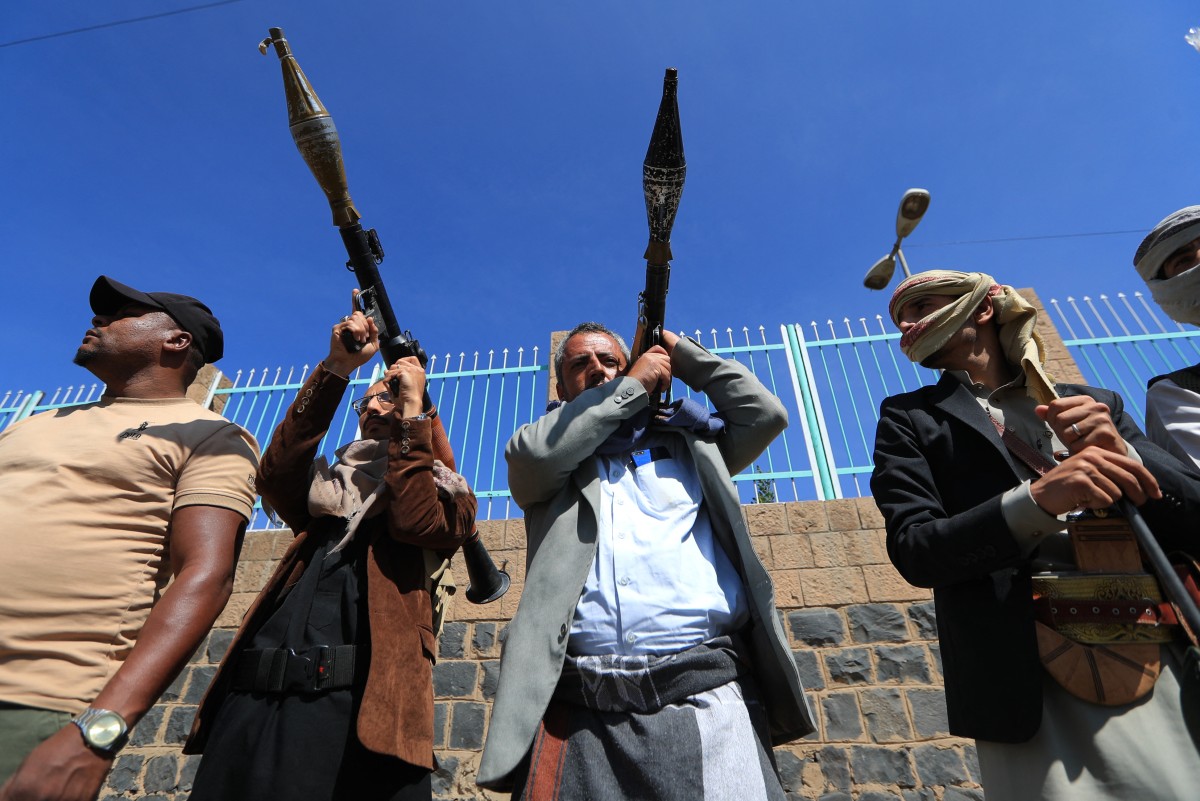
He also urged Zaydi followers to acquire weapons and ammunition in preparation for confronting enemies he described as “Americans and Jews.” He called for part of the obligatory alms known as zakat to be allocated to those defending the “honor of Islam” and the sect.
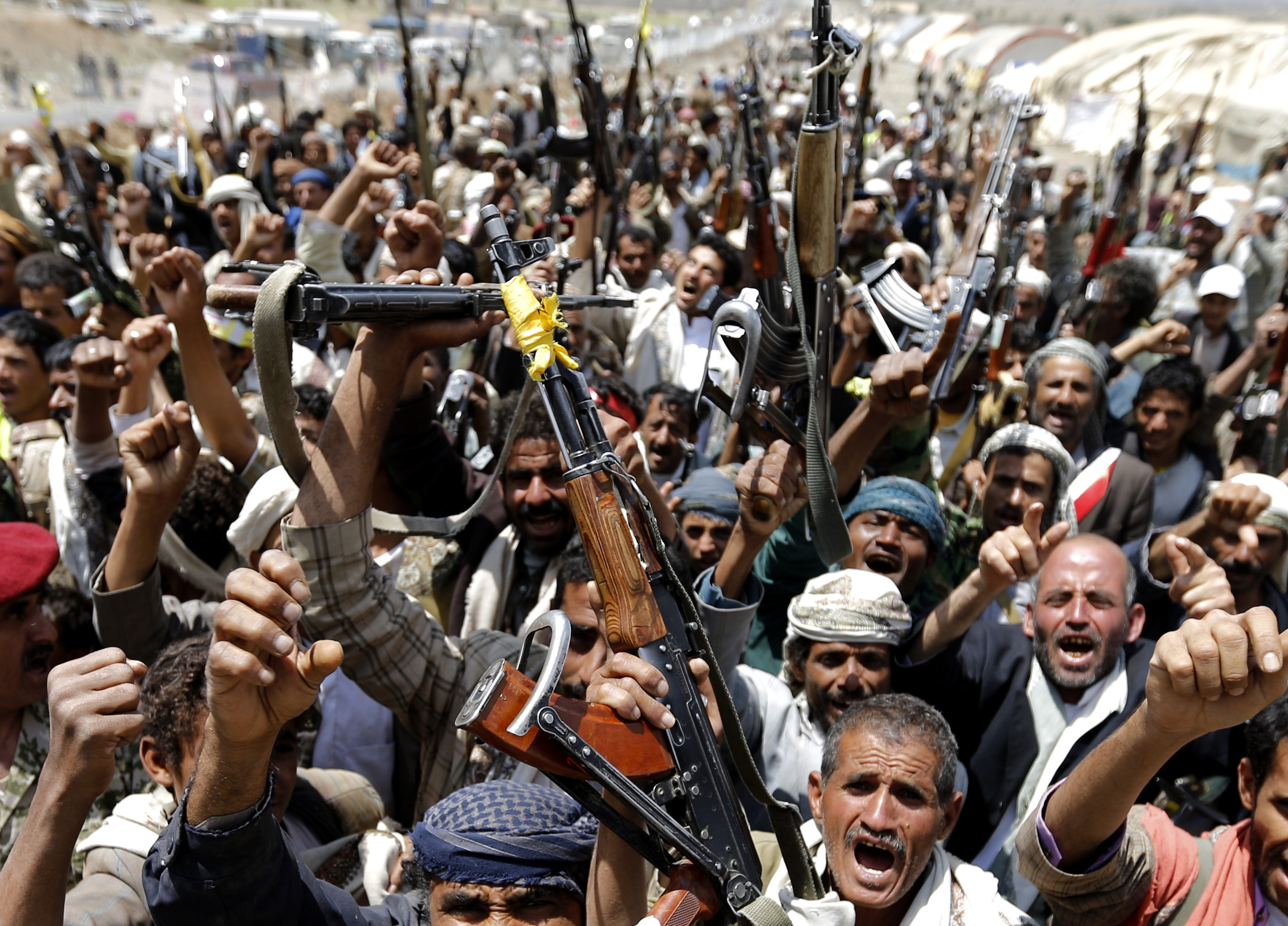
Followers aged between 15 and 25 were mobilized to demonstrate at mosques after Friday prayers, chanting slogans against America and Israel. During the Iraq War in 2003, a movement-organized march toward the US Embassy resulted in deaths.
These activities combined religious instruction with political mobilization and preparation for confrontation. They also helped establish a powerful distinction between those portrayed as defending the faith and those depicted as threatening it.
Al-Houthi’s writings nevertheless show that his confrontation with Yemen’s government was not always openly declared. Before the first Houthi war broke out in 2004 — a conflict he had not wanted at that point — he wrote to President Saleh.
“We are not working against you, and we hold you in great esteem,” he wrote. “What I do stems solely from my religious and national duty to oppose the enemies of the faith and the nation: America and Israel.
“Do not listen to the alarmist claims of those with ulterior motives and the hypocrites. Rest assured that we neither plot nor conspire against you.”
The letter illustrates how Al-Houthi presented his political activities as a religious and national duty, even while seeking to reassure a government with which his movement would soon go to war.
The influence of Khomeini’s revolution extended beyond the Al-Houthi family’s visits to Tehran and years of residence there, reflecting Iran’s wider strategy of “exporting the revolution.”
Khomeini’s wilayat al-faqih, or guardianship of the jurist, departed from traditional Twelver Shiite thought.
Zaydism has a different history — rising against unjust rulers is a foundational duty that need not await the imam’s return. Its tradition stretches from the uprising of Imam Zayd ibn Ali, who died in 122 AH (739-740 CE), to the Al-Haqq Party, which Badr Al-Din Al-Houthi and his sons helped establish.
Nevertheless, Hussein Al-Houthi was captivated by Khomeini’s ideas. In “The Danger of America’s Entry into Yemen,” he wrote: “We saw everyone who stood against the Islamic Revolution in Iran during Imam Khomeini’s time suffer the consequences of their actions, country after country.
“They supported Iraq against the Islamic Republic, which was and remains one of the staunchest enemies of the Americans and Israelis.
“Imam Khomeini, may God have mercy on him, was determined to free the Arabs and Muslims from the domination of America and Western countries, and sought to eliminate Israel. Yet everyone stood against him.
“We saw how those who opposed him were struck by the very powers they had helped and whose interests they had served. Kuwait was struck, and Iraq was struck.”
At an International Quds Day event, he called Khomeini “a mercy from God to the Arab nation, a blessing the Arabs failed to benefit from.” He added that the Arabs “did not appreciate this blessing; instead, they stood against him and shielded America and Israel from him.”
The language reveals how Al-Houthi interpreted regional conflicts through the prism of Iran’s revolution, presenting loyalty to Khomeini’s project as inseparable from resistance to American and Israeli power.
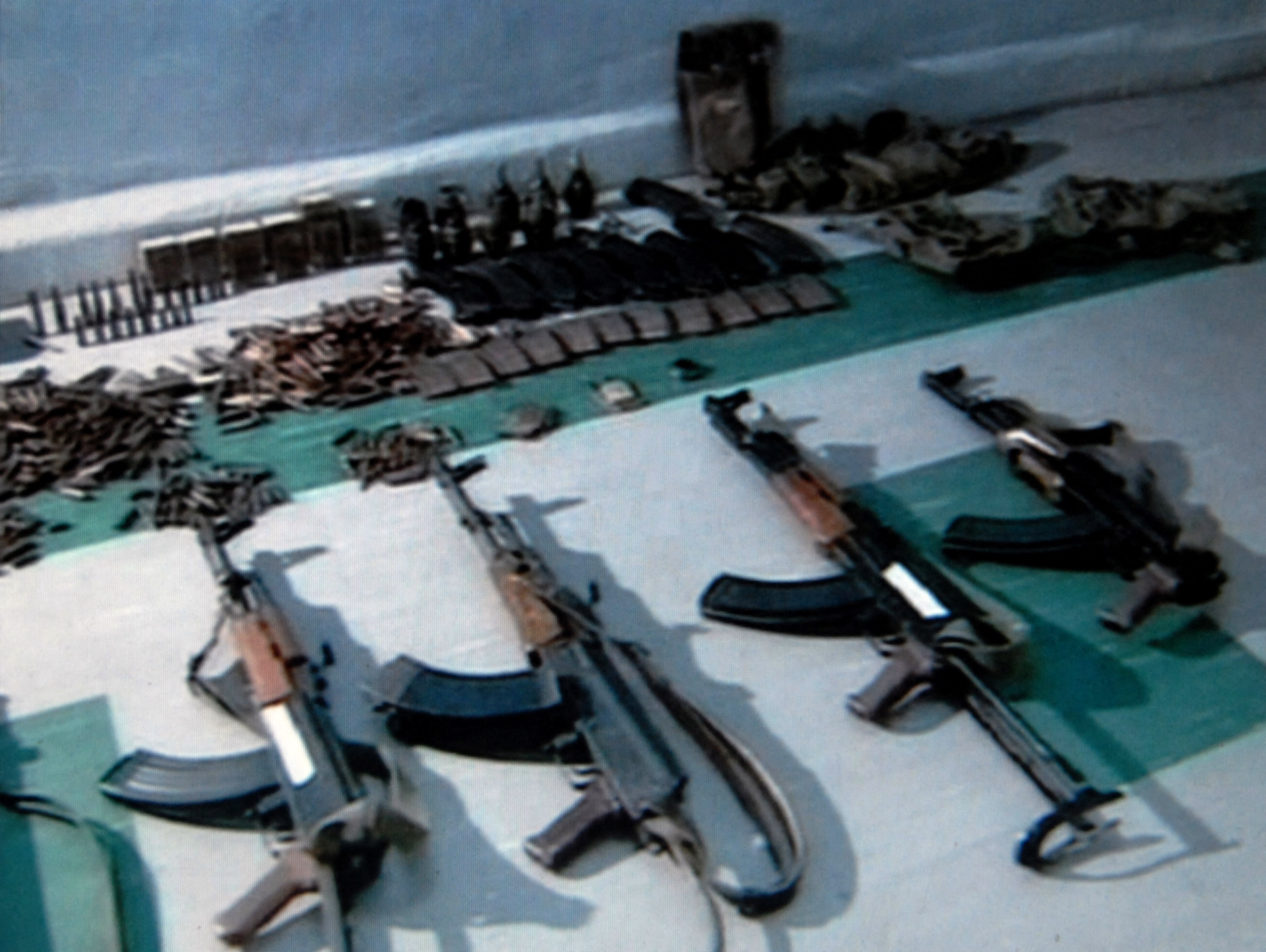
On Feb. 23, 2012, the Houthis issued a document signed by their leader, Abdul Malik Al-Houthi, setting out their religious principles and political positions.
Drawing on Hussein Al-Houthi and his father, it asserted an exclusive claim to Islam and correct belief, declaring other Muslims unbelievers. It also claimed that God had chosen the movement to revive the Muslim nation and renew the faith.
That assertion of divine selection reinforces the movement’s claim to a privileged religious mandate.
Combined with its doctrine of loyalty and enmity, it offers a way of presenting political struggle as more than a contest for power — opponents can be portrayed as enemies of a religious mission rather than simply adversaries in a conflict.
This is the ideological danger at the heart of the Houthi project. By claiming exclusive religious legitimacy, delegitimizing rival beliefs and elevating confrontation with designated enemies into a sacred obligation, its founding doctrine creates a framework that can normalize hostility and help rationalize violence, including against civilians.