
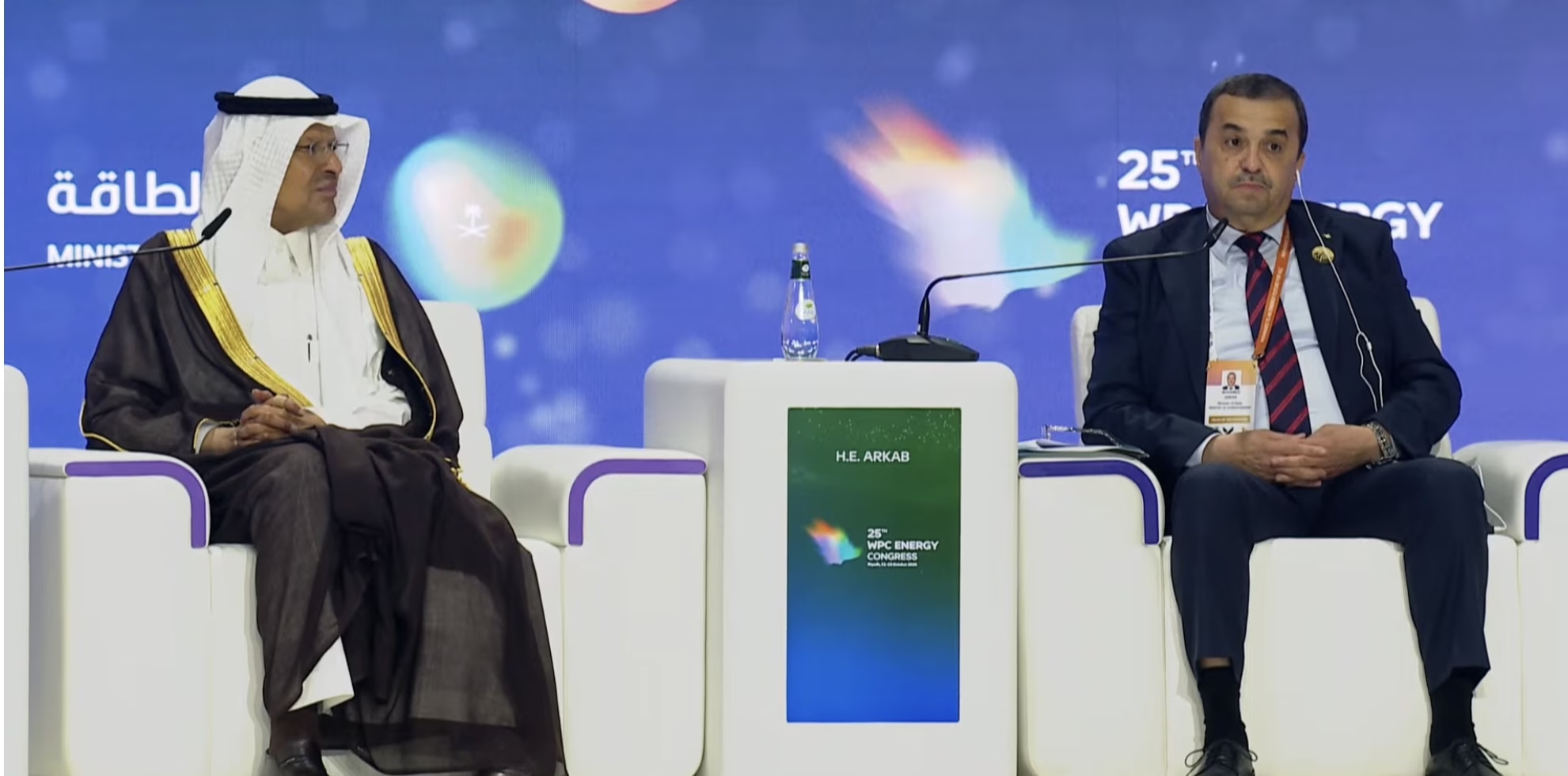
RIYADH: Saudi Arabia’s practice of preparing for the most severe scenarios helped it overcome the longest energy crisis it has faced, the minister responsible for the sector has said.
Speaking at the 25th WPC Energy Congress in Riyadh on Monday, Prince Abdulaziz bin Salman said that Saudi Arabia’s “mindset” has allowed it to show resilience in the face of events such as the US-led conflict with Iran.
The war, which began at the end of February, has continued to disrupt oil flows in the region and raised concerns about global energy security.
Prince Abdulaziz said: “If your mindset says that there is will be always some type of energy security issue, then you have to place yourself and prepare yourself for them.”
The minister was asked whether markets would return to normal after a run of crises, from the 2019 Abqaiq and Khurais attacks to the COVID-19 pandemic and recent events.
“The way we do it is that we create all sorts of scenarios, and then we ask ourselves, how are we going to react to these scenarios. It it puts us in a place, better place of knowing our capabilities, and how can we improve those capability to attend to these futuristic scenario that we create, and we go to the severest of the severest,” he said.
Prince Abdulaziz added that no one had experienced a situation like the one of the past eight months, saying: “We never had an energy crisis as long as this one.”
He said the months from March through August had been a period of hardship for everyone trying to mitigate the situation.
“The essence of how to attend to the crisis is that you have to focus on your resilience and creating options,” he said.
Prince Abdulaziz said the Kingdom had managed to overcome the situation and hinted that its export figures, once disclosed, would surprise many.
“I don’t want to brag about how much we are exporting, but … I’m sure that so many of our friends here will be shocked that we are doing what we are doing today,” he said.
OPEC’s view
Also at the event, OPEC Secretary-General Haitham Al-Ghais was asked why oil prices had not reached the $200 a barrel some had spoken about.
He said OPEC does not talk about prices, but pointed to Saudi Arabia’s East-West Pipeline as a key factor.
“In this country here, the Kingdom of Saudi Arabia, we have the best example of providing an insurance policy for energy security,” he said, adding: “People hardly knew that it existed until crunch time came about,”
Al-Ghais also cited lower Chinese oil imports following earlier stockpiling, releases from strategic petroleum reserves in many countries, especially in the OECD, and slowing demand.
He said OPEC had revised its demand forecast for this year down since the beginning of the year, in tandem with unfolding events.
“We are now seeing demand growth this year at 400,000 barrels a day, versus in the beginning of the year we had it at 1.4 million barrels a day,” he said.
He added that this demand had been deferred to 2027, when OPEC believes there will be pent-up demand, and that it now forecasts growth of 1.7 million barrels a day for 2027.
International support for Saudi Arabia
Mohamed Arkab, Algeria’s minister of state and minister of hydrocarbons, opened his remarks to the congress by expressing support for the Kingdom.
“Algeria stands in solidarity with the Kingdom of Saudi Arabia, first and foremost,” he said.
He said a great number of energy facilities around the world are moving to increase production to help balance the global market.
Arkab said Algeria is preparing a 2026 bidding round aimed at increasing oil and gas production, pointing to rising demand for natural gas in Europe.
Heineken Lokpobiri, Nigeria’s minister of state for petroleum resources, expressed solidarity with the Kingdom over the recent attacks.
He said Nigeria’s president had directed the delegation to travel to Saudi Arabia to show that solidarity and the consensus at the congress was that the world is going through an energy crisis because of what is happening in the region.
“It’s everybody’s problem,” he said.
He said Nigeria and Africa as a whole are ready to contribute to global energy needs, and called for collaboration and investment across the upstream, midstream and downstream sectors.
