
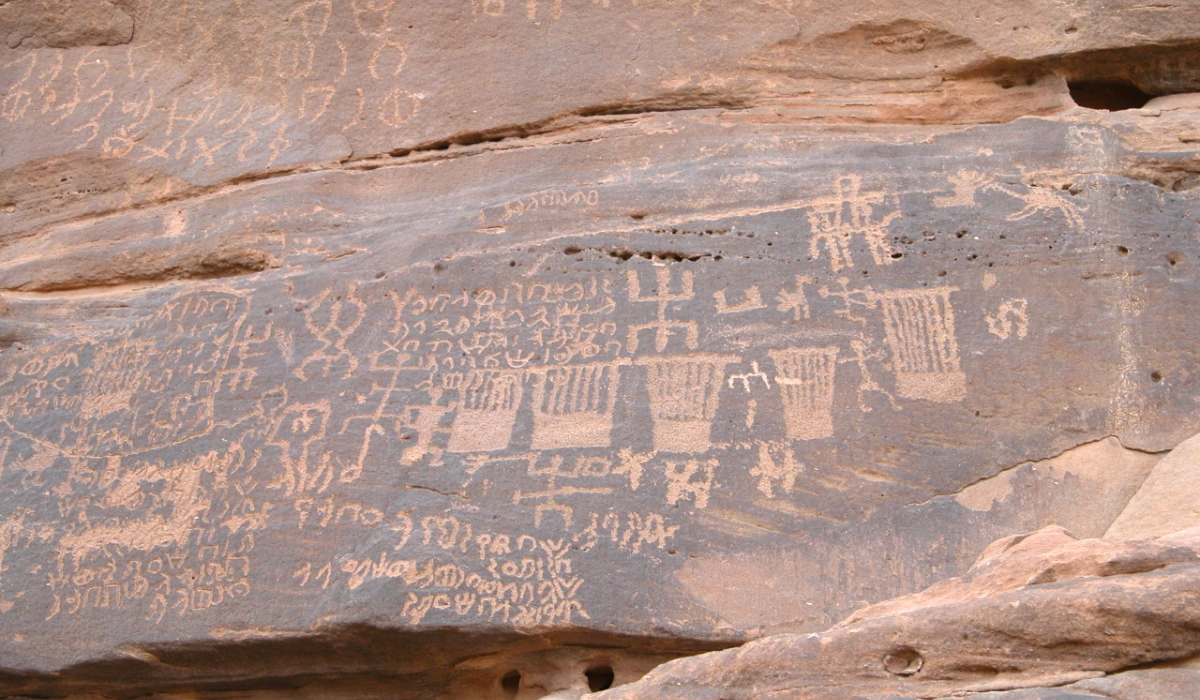
JEDDAH: Long before AlUla became a thriving tourism and commercial hub, archeologists quietly spent decades searching, researching and meticulously documenting the remnants of ancient prosperous civilizations that flourished in the region.
Among them was Dr. Laila Nehmé, a French archeologist who has worked in AlUla since 2002 on various projects as a research fellow with the French National Centre for Scientific Research, in cooperation with the Saudi Ministry of Culture.
The now 60-year-old expert’s main research interest is the civilization of the Nabataeans, an ancient Arab people. “Working at Hegra was a dream for someone specialized in the Nabataeans,” she told Arab News.
Before working at the site of Hegra, also known as Madain Salih or Al-Hijir, Nehmé worked in Syria and at the ancient city of Petra in Jordan — the once capital of the Nabataeans — during the late 1980s and 1990s. “So, it was only natural for me to carry out archeological research here (AlUla),” she said.
“The richness and diversity of its heritage, as well as the extraordinary length of time during which people lived in or passed through AlUla, from the Paleolithics around 200,000 years ago to the period when people were still living in the Old Town in the 1980s … this provides a unique window onto the societies that developed over time: Their political systems, economies, technological advances and much more,” she added.
Nehmé, who loves languages and the science of ancient writings (epigraphy), has studied ancient Greek and Aramaic, and specialized in Nabataean Aramaic, the language and script used by the Nabataeans for their inscriptions on stone and papyri.

“In this respect, the AlUla region is truly exceptional. Its sandstone cliffs and outcrops bear inscriptions in a wide range of scripts and languages, as well as some of the most beautiful and fascinating rock art, from prehistoric cattle to standing human figures and numerous representations of camels, Arabia’s iconic animal,” she said.
The passionate archeologist shared with Arab News one of the many discoveries she was part of at Hegra.
“The excavation of several monumental tombs yielded dozens of skeletons, some of which were remarkably well preserved thanks to the extremely dry climate and low humidity. Some skulls still had hair attached, and traces of skin were preserved along the spine. Fragments of textile and leather shrouds had also survived,” said Nehmé.
These seemingly small discoveries, buried for centuries, revealed a hidden story as archeologists painstakingly put together pieces from the past. Even then, it only gave a glimpse of how people lived thousands of years ago.
Meticulous raw documentation, collection and storage is important for experts in other disciplines to get answers.
Highlighting one example, Nehmé said: “In a monumental tomb at Hegra, we discovered a small fragment of colored textile. After examining it visually, the textile specialist thought it might be silk — but wild silk. We therefore carried out further chemical analyses to confirm the identification, studied the dyes used to color the threads, and conducted proteomic analyses — that is, analyses of proteins — to identify the species of moth that had produced the silk. This tiny fragment, insignificant in itself, ultimately shows that the Incense Route and the Silk Road intersected at AlUla.”
Field archeologists often spend years in the desert, braving the dust and heat to bring to life the forgotten chapters of history.
Therefore, to excel in the field, aside from patience, rigor, dedication and passion, Nehmé described “sensitivity to the soil and to what it contains — its materiality, color, texture and appearance” as important.
“Interpreting intertwined layers of soil, stones, mud bricks and other materials is not an easy task, and can give even the most experienced archeologists a headache,” she added.
Working at Hegra was a dream for someone specialized in the Nabataeans.
Laila Nehmé, French archeologist
“It is rather like a three-dimensional puzzle that allows you to move back through time as you dig down through the archeological layers.
“I once said that archeologists are the architects of deconstruction: They undo what was done in the past. Once the layers they excavate have been removed, they are lost forever, which is why systematic and rigorous recording is absolutely essential,” Nehmé said.
Before excavation begins in expansive sites of archeological interest, archeologists first have to understand precise boundaries, areas and visible structures.
“To understand all these aspects, it is necessary to carry out surveys, collect pottery, as well as record and map the features visible on the surface. This phase can also include a few limited soundings — small-scale excavations — in order to establish the chronology of the site.
“It is only once this initial phase has been completed that excavations proper can begin, in areas selected for their potential or according to the type of structure they contain — a tomb, a house, a temple and so on,” said Nehmé, who has explored several other areas in the Kingdom, including the ancient route between Hegra and Petra in 2004, and the Farasan Islands in 2006.
“Since 2019, I have also been leading desert expeditions in search of ancient caravan routes, including one between Hegra and Tayma on camelback,” she added.
Two of these expeditions resulted in acclaimed documentaries, one of which was broadcast on the French-German TV channel Arte.
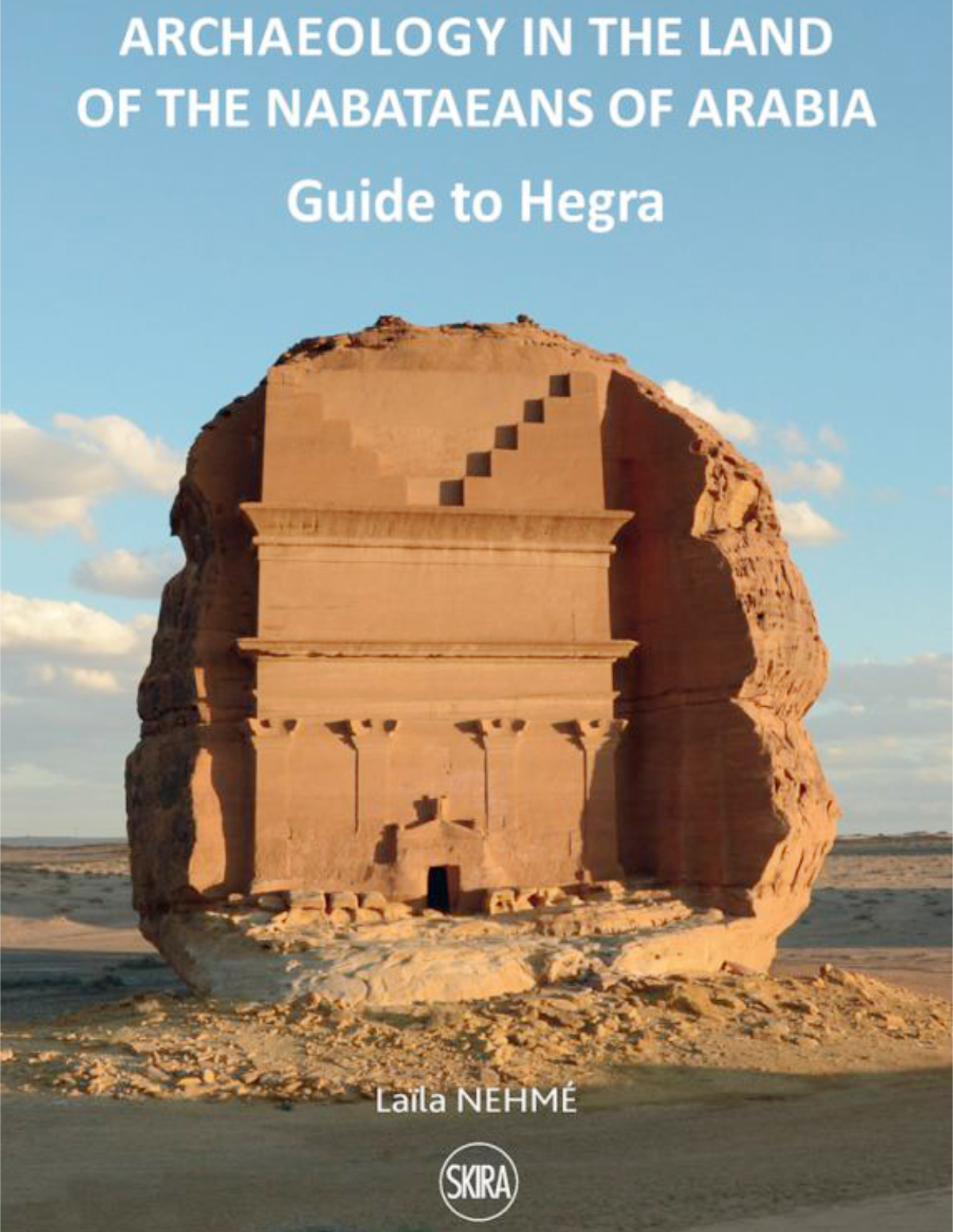
Nehmé’s book, “Guide to Hegra: Archeology in the Land of Nabataeans of Arabia,” comprehensively and illustriously documents her decades of work in Hegra for archeology and history enthusiasts, as well as researchers.
The archeologist also co-curated an exhibition, “AlUla: Wonder of Arabia,” in both Paris and Beijing.
