
WASHINGTON: The International Monetary Fund said on Wednesday it had approved an 18-month program to help war-ravaged Yemen achieve economic stabilization and strengthen its macroeconomic frameworks, even as its civil war rages on.
The IMF’s “Staff-Monitored Program” offers technical assistance but does not have a financial component.
Yemen is among the poorest countries in the world and has been combatting the Houthi militia for years, with an international coalition that has been fighting the Iran-backed group since 2015.
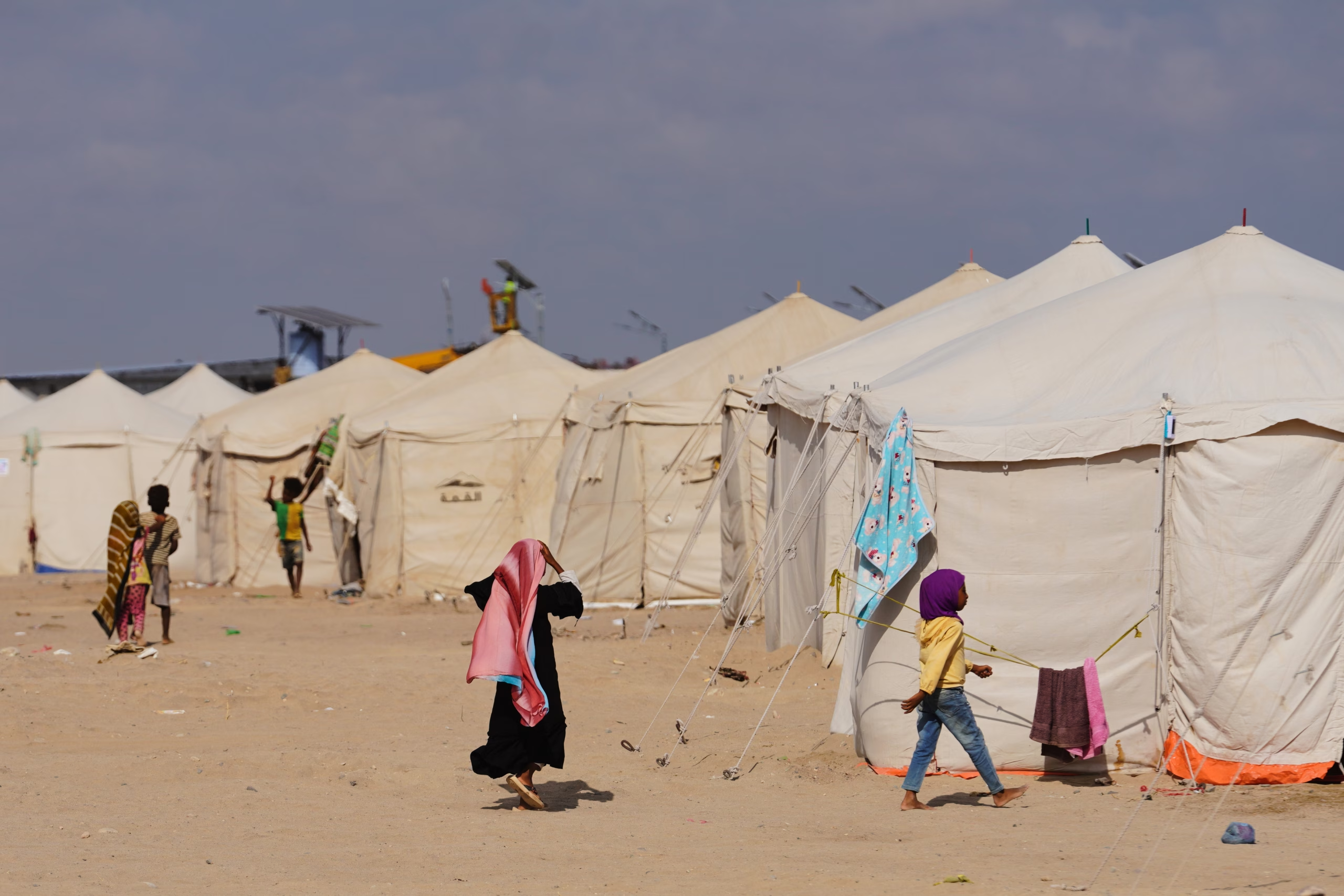
The war has caused a humanitarian crisis that has left most of the population dependent on aid to survive.
The Houthis, who control most of northwest Yemen, captured swathes of coastal land from Yemen’s pro-government forces in September after the civil war reignited in July.
The new fighting has displaced more than 200,000 people within the country, the United Nations said on Wednesday. In total the country has more than 5.2 million internally displaced people, with nearly two-thirds of the total population in need of humanitarian aid.
Yemen’s government says it is aiming to retake all Houthi-controlled territory.
The IMF noted that Yemen’s economic outlook was “challenging,” after five straight years of contraction.
Real GDP contracted by 1.5 percent in 2026 “amid deteriorating terms of trade linked to the conflict in the Middle East, persistent energy shortages, and weak domestic demand,” the Fund said in its statement.
The IMF noted that the country remained heavily dependent on remittances and donor assistance to finance its humanitarian-driven import bill.
The country’s reserves are slated to remain below adequate levels, even with Saudi budgetary support.
The Fund said the new program aims to “strengthen public finances” in the next year, focusing on increasing domestic revenue mobilization and rationalizing government spending.
Even before the latest round of violence and displacement, Yemeni faced one of the most serious humanitarian crises in the world, according to the UN.
More than 18 million people nationwide face acute food insecurity, with around 2.2 million children under five classified as acutely malnourished, as per World Food Program figures.
The WFP warned on Friday of an “absolutely devastating” food crisis and said it needed $109 million to provide emergency food and nutrition assistance for up to 1.5 million people affected by the escalation.
