
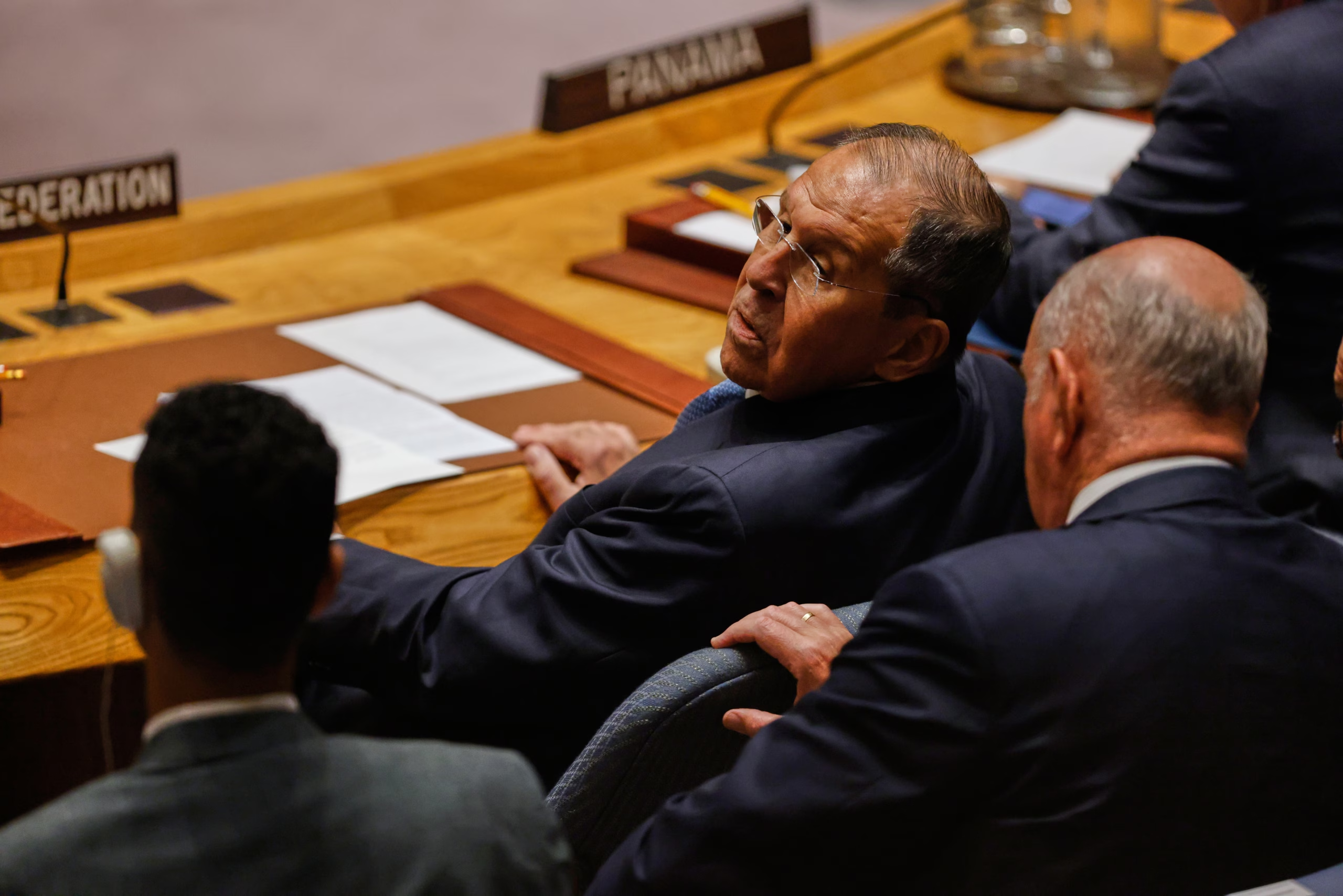
GENEVA: The UN Human Rights Council voted Tuesday to extend its monitoring of abuses in Russia, citing the “continued significant deterioration” of rights.
The UN’s top rights body voted 21-5 to prolong by a year the mandate of its special rapporteur on rights violations in Russia.
Ireland presented the resolution on behalf of the European Union, calling it “a lifeline for Russian society.”
“Extrajudicial killings of government critics, erosion of political pluralism, systematic crackdowns on civil society, independent media, journalists, indigenous peoples and minorities in Russia are met with impunity,” Dublin’s ambassador Laurence Simms said.
In October 2022, the council decided a special rapporteur was needed for Russia, amid concerns over an intensifying crackdown by Moscow during its war in Ukraine.
Bulgarian human rights expert Mariana Katzarova is the first UN-backed monitor of the rights situation in any of the UN Security Council’s five permanent member states.
Countries backing the extension included Britain, Chile, France, Italy, Japan and South Korea.
Japan’s ambassador Atsuyuki Oike said Tokyo remained concerned about the “continued shrinking of civic space” in Russia.
Spain’s ambassador Marcos Gomez Martinez spoke in Russian to tell the country’s human rights defenders: “We have not forgotten you; you are not alone.”
Britain’s ambassador Eleanor Sanders said the mandate was about “standing with those inside Russia whose voices are being denied, and ensuring that… their suffering remain visible to this council.”
The resolution urged Russia to uphold the fundamental freedoms of thought, conscience, religion, opinion, peaceful assembly and political participation and urged Moscow to give Katzarova “full, free and unhindered access.”
The council voiced deep concern at the reported “mass arbitrary arrest, detention and harassment” of people speaking out against Russia’s war in Ukraine, “resulting in the widespread and systematic criminalization of peaceful dissent.”
Brazil, India, Mexico and South Africa were among the 21 countries which abstained.
Burundi, China, Cuba, Ethiopia and Vietnam voted against the resolution.
China’s representative Bai Xiaohang said renewing the mandate would erode the credibility of the council and create “division and confrontation,” urging all 47 members to vote against it.
Cuban ambassador Rodolfo Benitez Verson said: the resolution would only lead to greater polarization, “which guarantees that in practical terms, it is useless.”
Russia did not wish to speak in the debate.
