
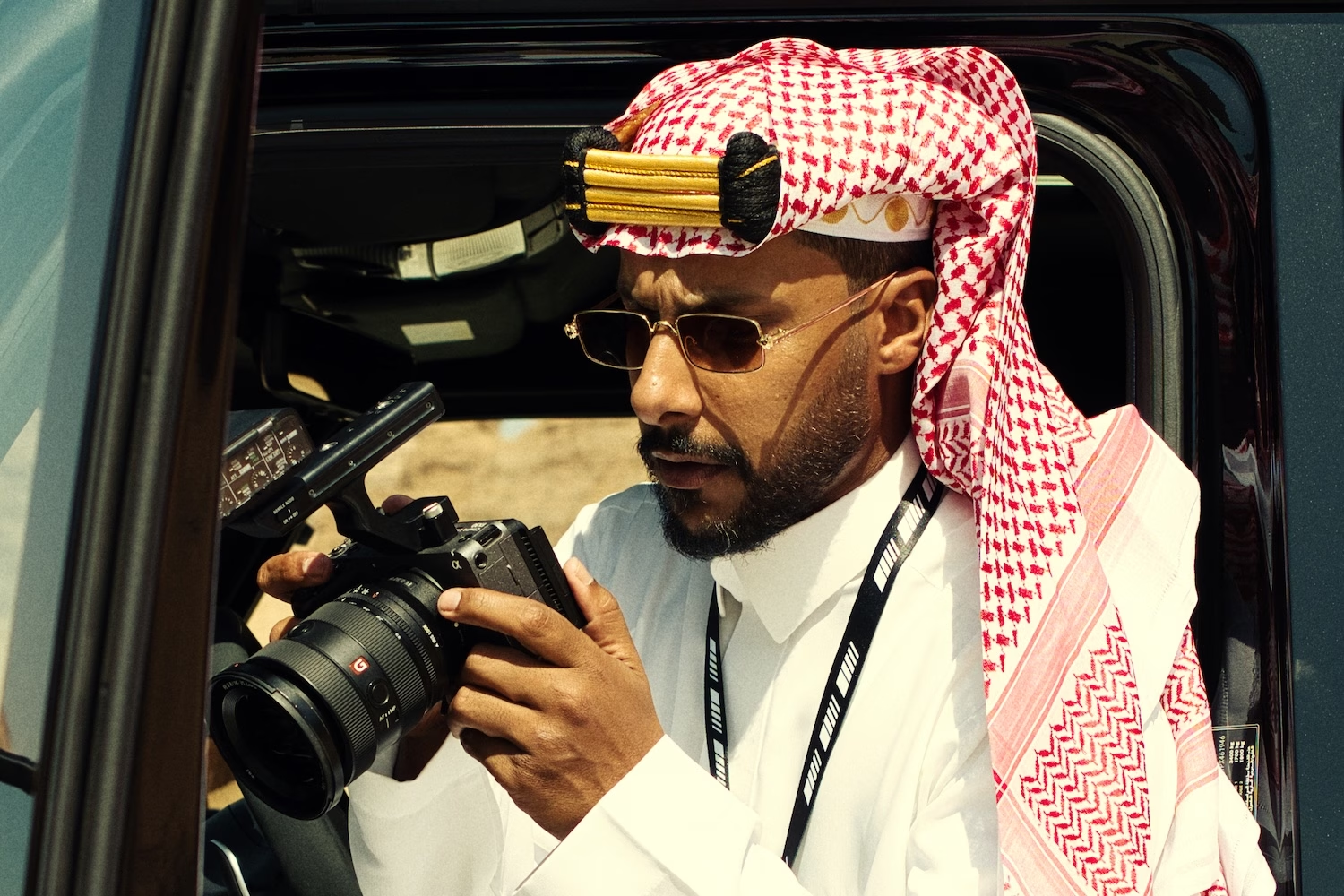
DUBAI: Saudi photographer Abdulaziz Al-Balawi, who works under the name Aziz AlUla, in honor of his hometown, was around 12 when he first held a camera.
“The moment I put my eye to the viewfinder and pressed the shutter, I felt something strange,” he tells Arab News. “I realized this small box held an extraordinary power; to trap light, to freeze time, and to keep the moment forever. From that day I no longer saw AlUla with ordinary eyes. I started seeing every scene and every angle as a living frame, waiting for the moment that would immortalize it.”
He never studied photography (“The desert was my open academy,” he says), instead learning from National Geographic and other magazines. But despite seeing stunning landscapes from across the world, “Every time I looked around me in AlUla I would say: ‘Our land is more splendid, older, richer in spirit.’
“Our rocks, our valleys and our night carry a deeper poetry that has not yet been told as it should be, and no one could decode it but a son of this terrain,” he continues. “So I decided to be its voice in light.”
He is used to making long, difficult treks to capture the beauty of the desert. But the exhaustion is worth it, he says.
“Exceptional pictures do not come to you on a plate of gold. They demand their price from you in patience and effort.”
Qasr Al-Farid, Hegra
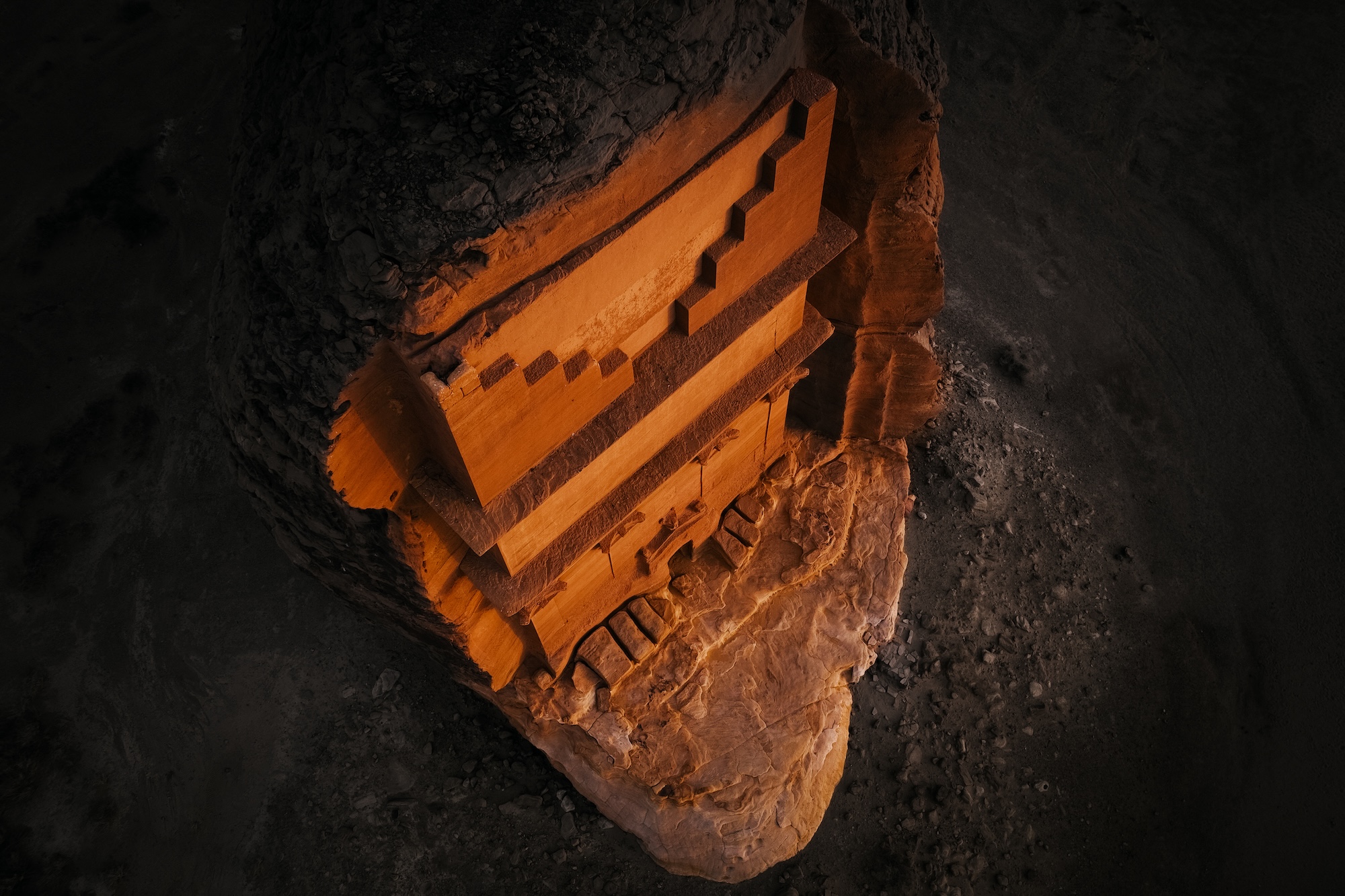
The facades of Hegra have been seen by the world in millions of photographs, and most lenses go automatically to the traditional, direct angles we are used to. This angle was an obsession of mine for a long time. Knowing the finest details of AlUla’s terrain, I wanted a perspective that presents this Nabataean legacy with a completely new face — an angle that breaks the pattern and shows how the carving of our ancestors meets the natural run of the rock, in a way nobody had noticed before. I drew the frame in my imagination first. This is the tomb of Lihyan son of Kuza, carved into a single rock standing alone in the desert. I do not consider that I have visited this place; I lived with it, and it is the greatest visual lesson I ever had in how light deals with stone.
The Camel Festival
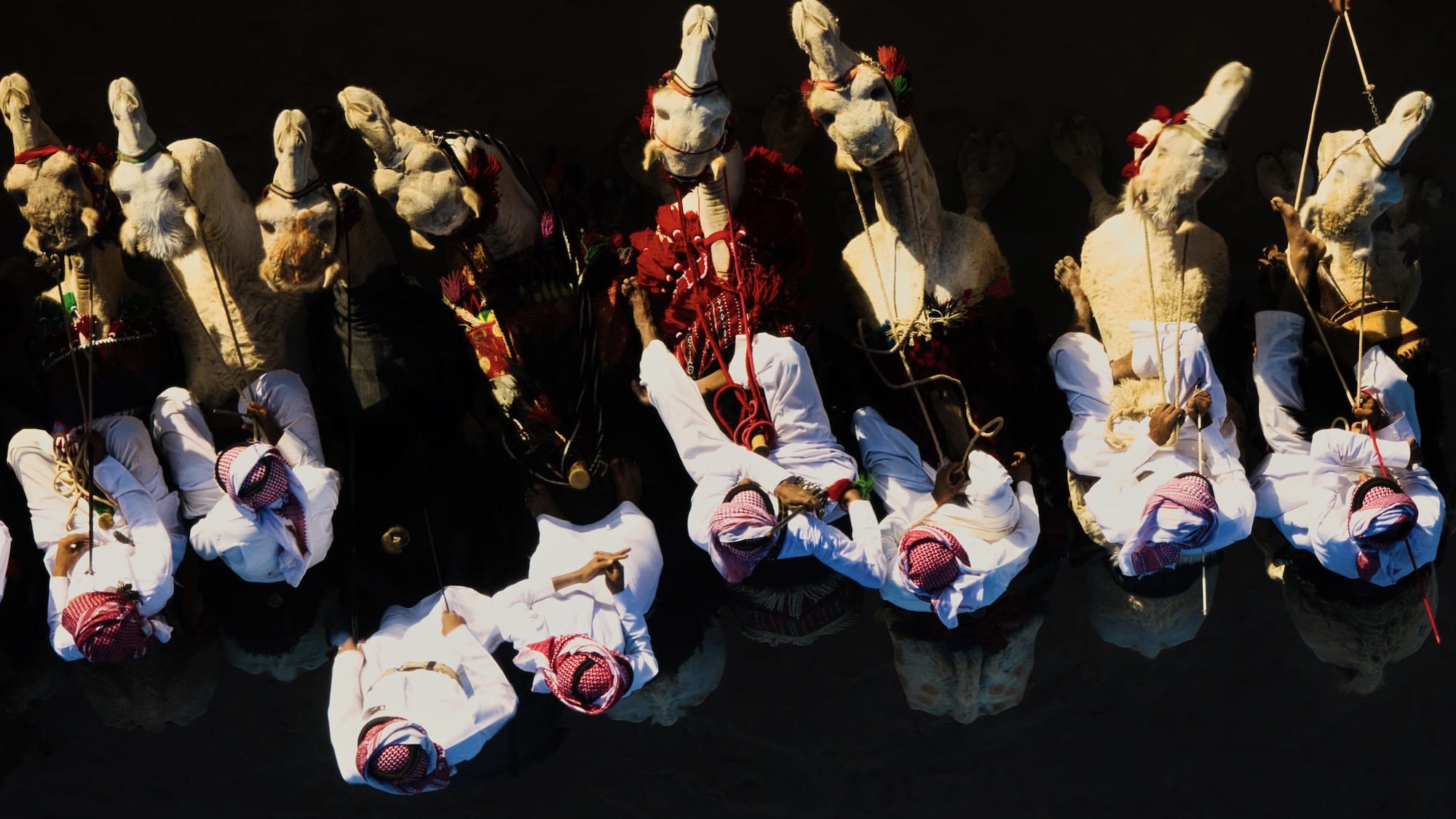
I took this in 2023, at a celebration held by the Bali tribe to mark its participation in the festival. Nothing about it was planned. At heritage occasions like this the emotion is alive and true, and it is hard to predict its movement or plan a frame in advance. The air was charged with a pride that words cannot describe: the chants echoing across the ground and shaking it, the dust of the procession rising, the necks of the purebred camels swaying with the winners’ sashes. It was a living painting of our Saudi Bedouin identity. In our history, camels were never simply mounts or a way of making a living — they were partners in survival. When I’m in the middle of these gatherings, I do not see races and prizes; I see our identity, carried forward.
Harrat Bani Rasheed, Khaybar
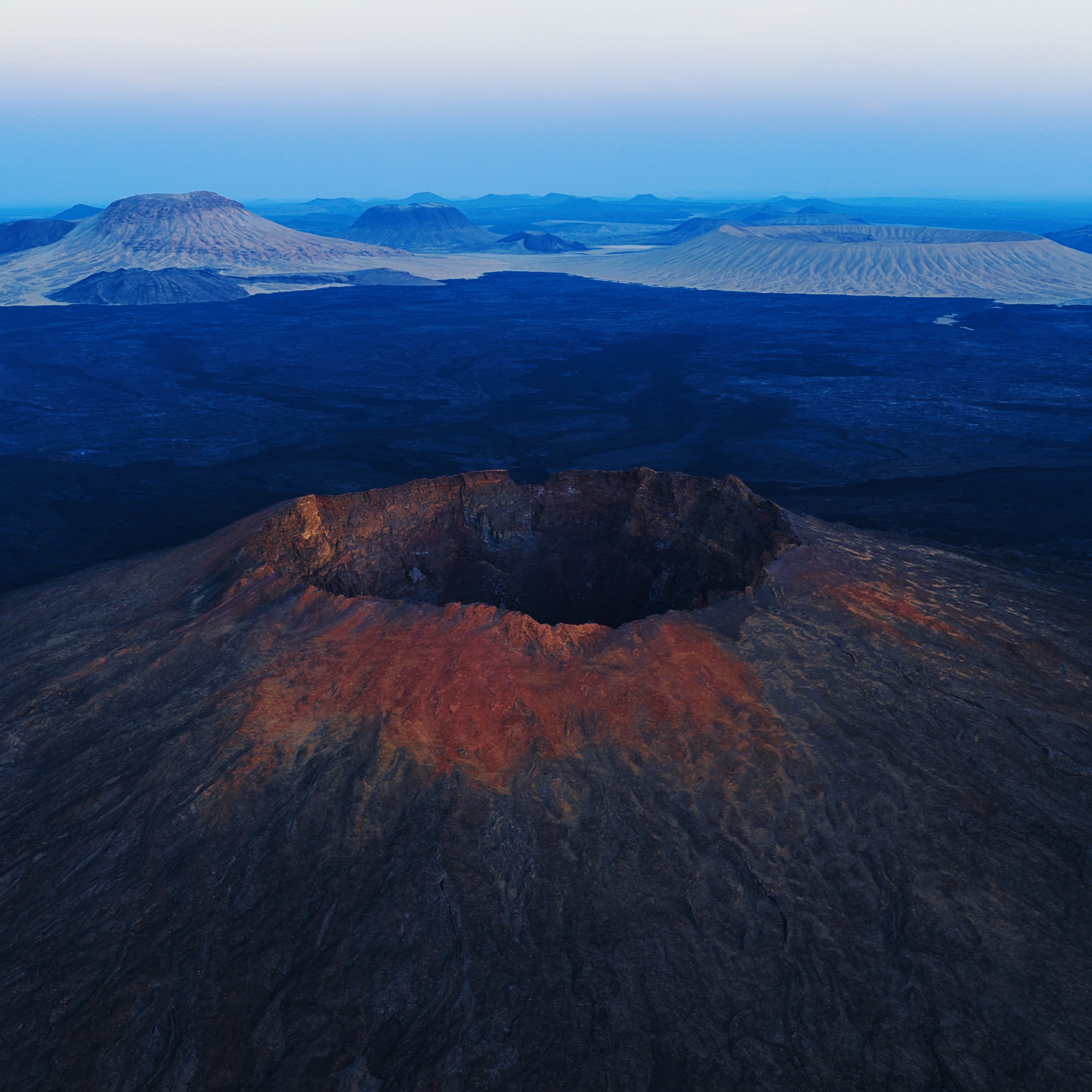
This was taken deep in the lava field of Bani Rasheed in Khaybar, among towering black volcanic formations and terrain so rough you feel you are on another planet. I shot it in December, when the cold air and the clarity of the sky give an exceptional purity and sharpen the contrast between the blackness of the basalt and the open desert horizon. The temperature was down around six to eight degrees Celsius. I was with a companion who knows Khaybar’s terrain inch by inch, because standing in places this rough alone carries real risk. AlUla taught me the language of sandstone and the warmth of its copper tones. The lava field imposes another language entirely: harsh contrast, mysterious gravity, and an epic beauty that doesn’t give up its secrets to someone just passing through.
Abha, Asir
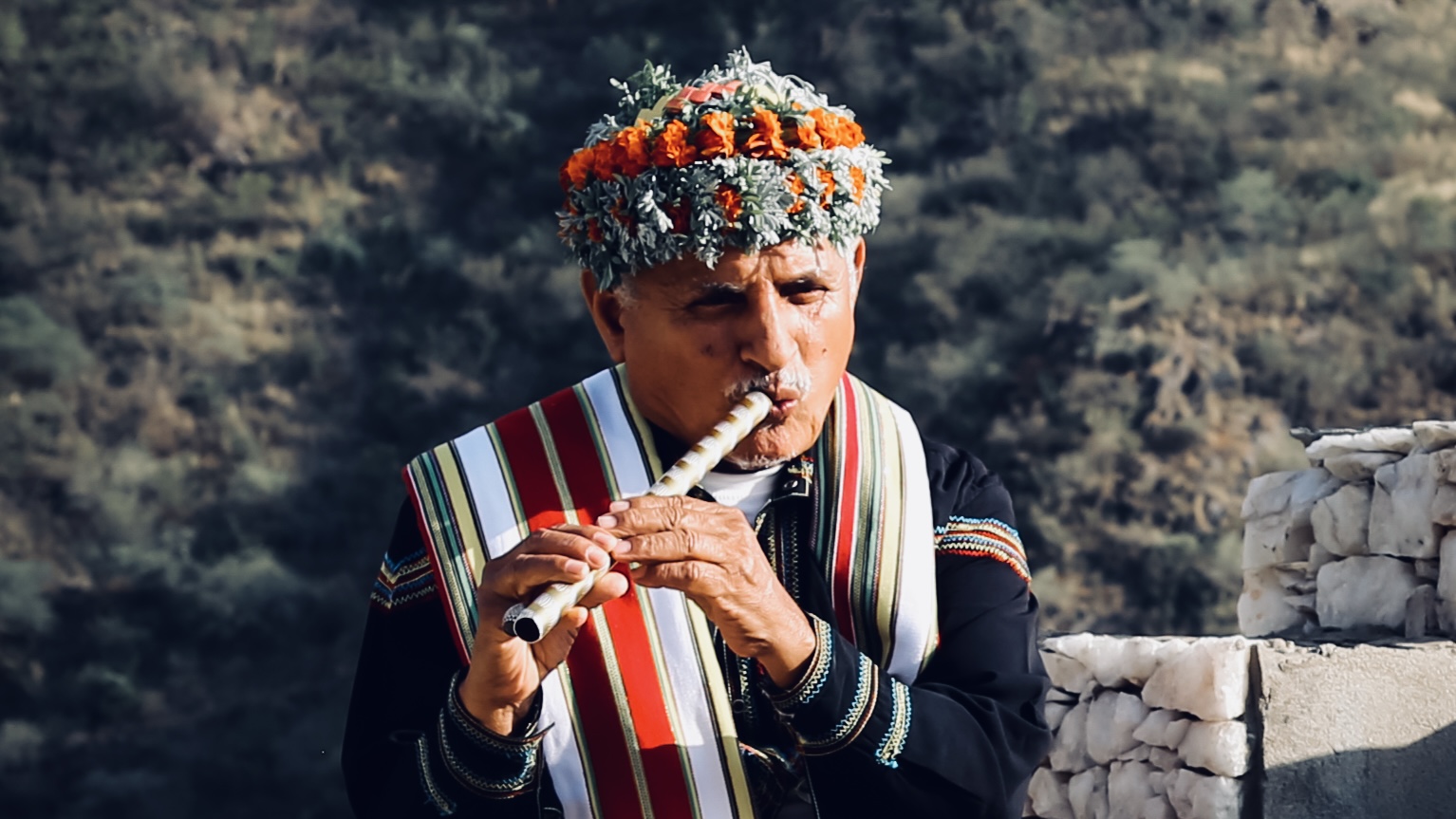
This is in the heart of Abha, among the peaks of the Sarawat mountains and the mist that embraces the clouds. The picture was not planned. The spring weather was beyond description — pure air carrying the smell of rain and mountain plants, low cloud and a light mist sliding quietly between the peaks and the green terraces. One of Abha’s own, in traditional dress and with a sincere smile, began playing a welcome on a traditional instrument, a tune of authentic Asiri heritage. The notes cut through the stillness of the highlands and mixed with the mountain breeze, with the terraces and the old stone houses behind him. Friends of mine visiting from abroad were completely taken by it. The music was a direct language that crossed every barrier and showed them what the generosity of this land’s people actually means.
Prince Mohammed bin Salman Royal Reserve
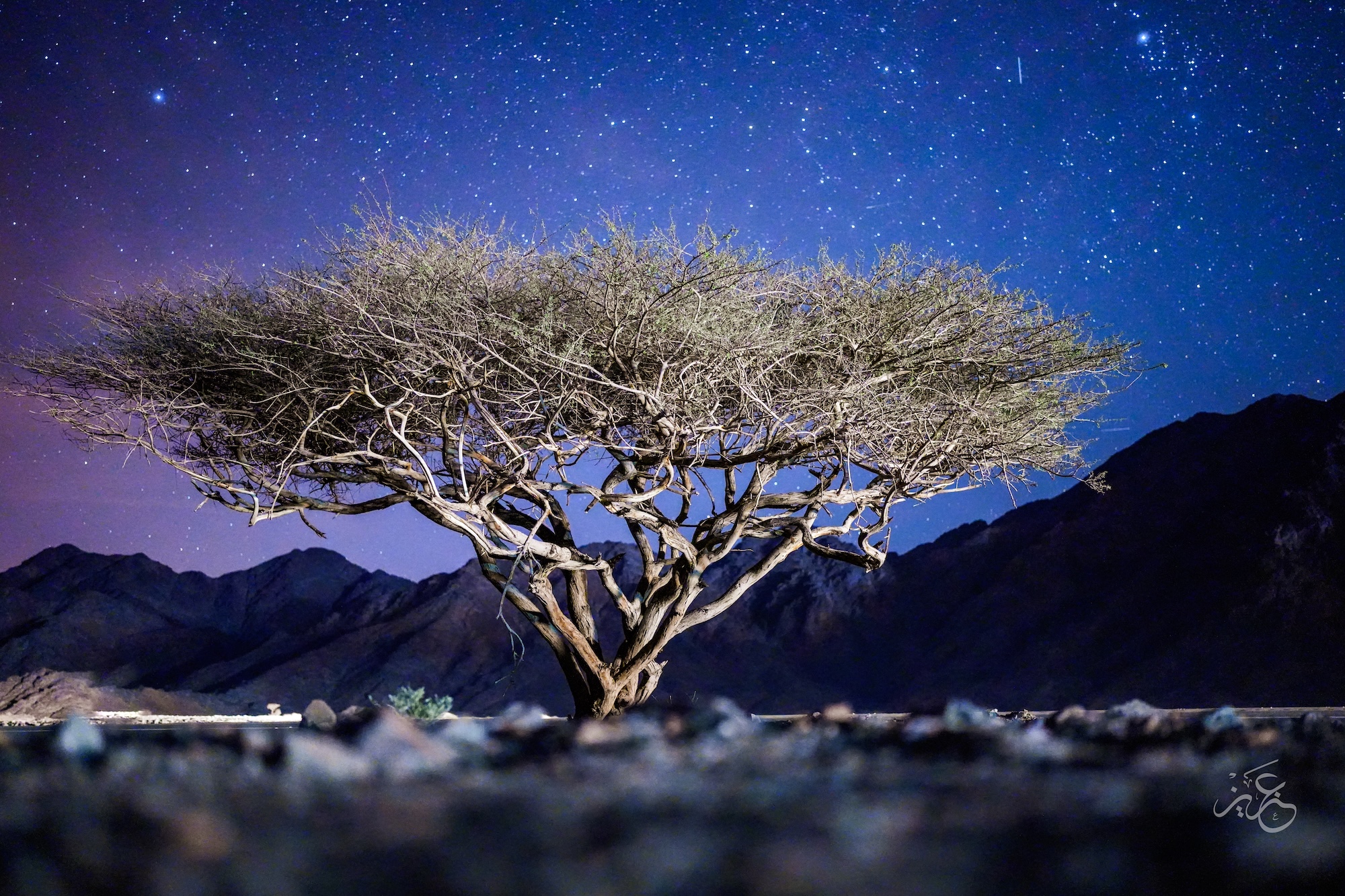
This shot was drawn in my mind in precise detail before I went. The reserve is exceptional by any measure — a pristine stretch where imposing rock mountains meet wide valleys and natural vegetation. I shot it in pitch dark, at an hour when the sky is free of any light pollution, so the reserve appeared in its full presence, like a guard standing over the calm of nature, with millions of stars above it. The silence was awesome, broken only by the rustle of a light night breeze, and the air was cold, clean and reviving. This place returns you to the first state of things: a land untouched, breathing freely. Standing there with my lens in that stillness, I was not simply taking a photograph — I was documenting something we are all entrusted with.
AlUla Old Town
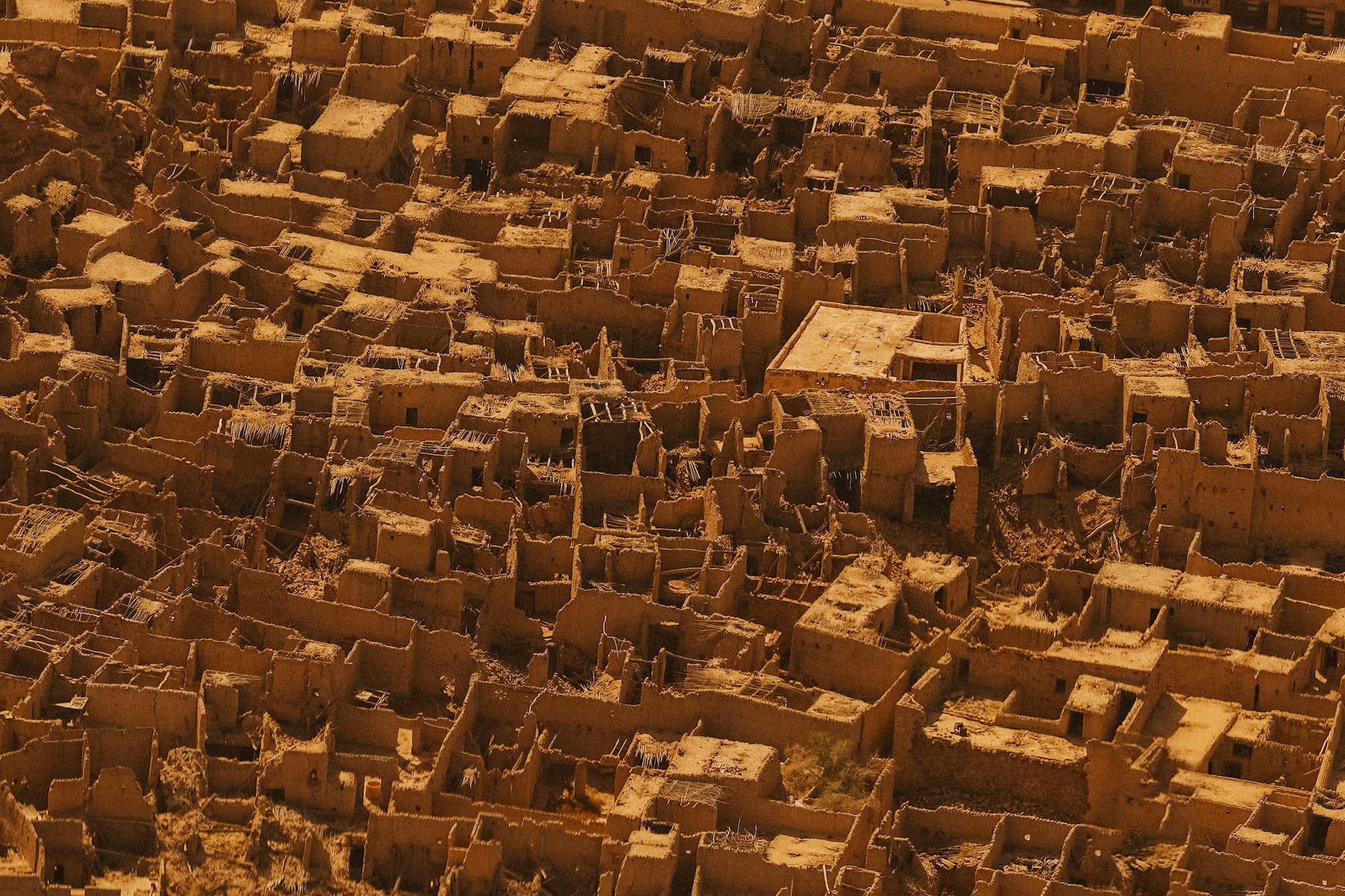
From this raised angle you get a complete panoramic scene that compresses the whole story of historic AlUla. The mud and stone houses appear pressed against one another, and the narrow winding alleys look like a maze made of time. This is a frame that tells the story of how our ancestors settled and how they lived in harmony with this land across hundreds of years. The Old Town is my roots; the warmth of the mud, and the breath of our ancestors still in every wall. Looking down on it, I see astonishing human engineering built on solidarity: houses that protect one another, and alleys built to shade whoever passes through the heat of summer. It is the harbor I return to in order to remember who I am.
Amaala
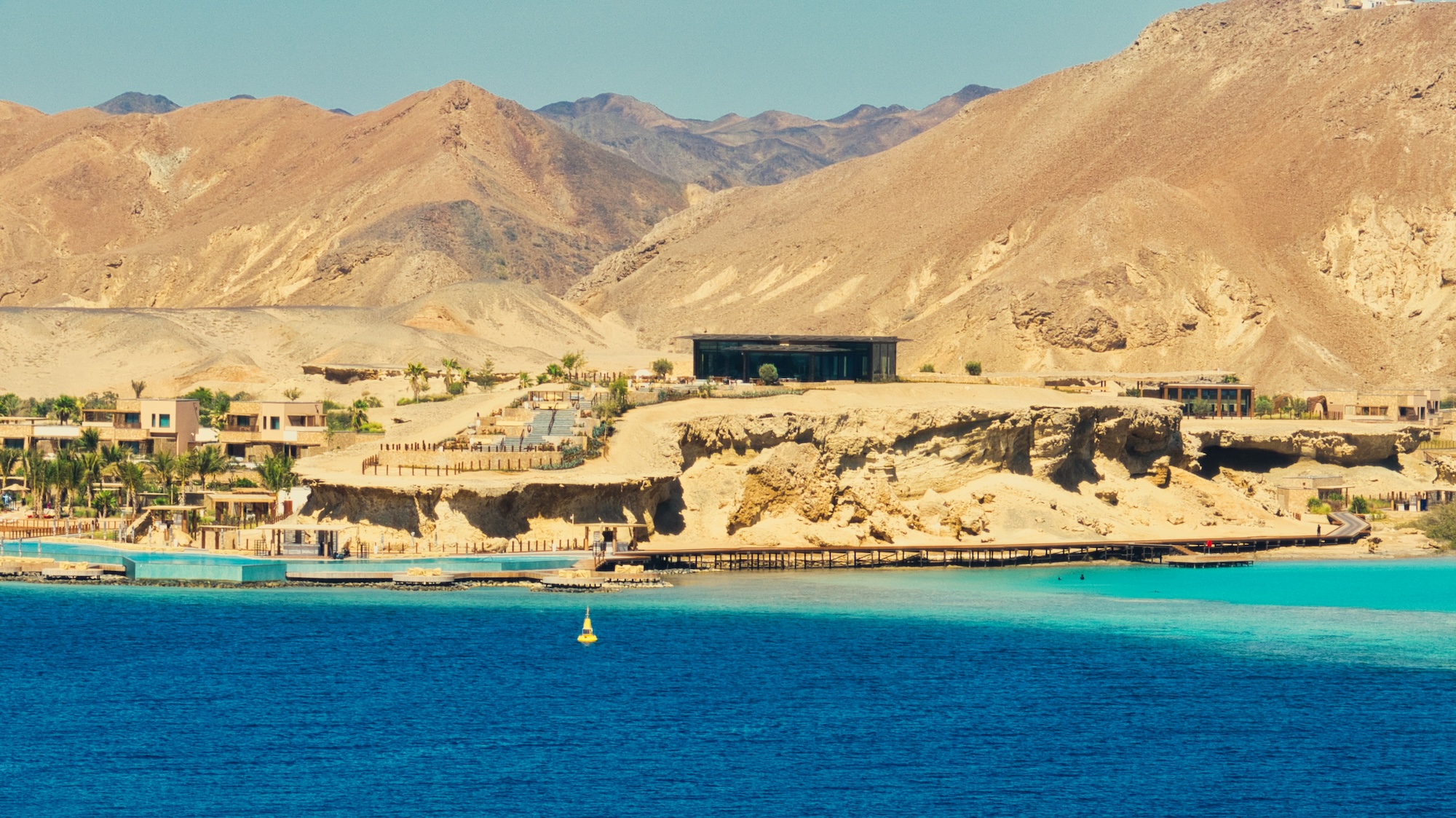
This was taken on the Amaala coast, along the Red Sea. The site is visually astonishing for the harmony between the turquoise of the clear water, the gradations of the untouched coral reefs, and the rock formations that come straight down to meet the beach. I framed it to bring out how unspoiled and quiet the coast is, at the point where the open horizon meets the sustainable architecture, which merges into the terrain without scratching the purity of the nature around it. When you stand on those beaches you feel a stillness that rearranges your soul, and you see how possible it is for human building to respect nature and fit itself into it with humility, rather than imposing on it. Documenting this coast is a way of showing the world that we can protect an environment this rich and still open a window onto it.
